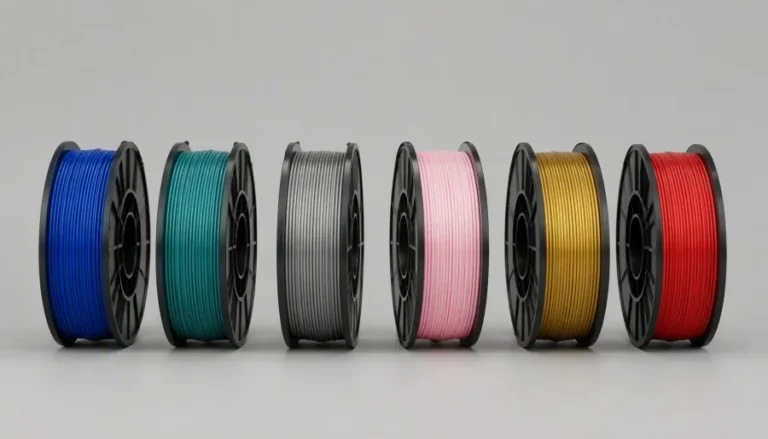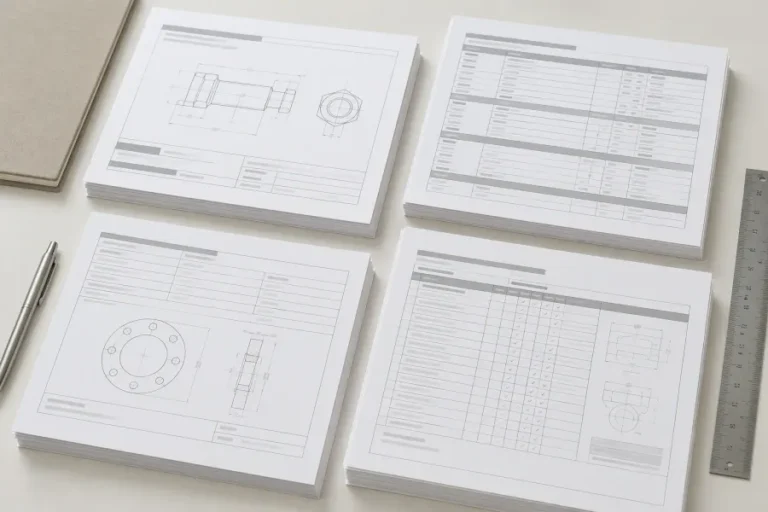
Somewhere right now, a filament line is running fine. The buyer it supplies has no reason to think about it, because nothing is wrong. And the honest version of supply-chain risk is exactly that: nothing is wrong, right up until the week something is, and the question that matters is what your purchasing file looks like on the day it happens.
Single sourcing is the practice of buying a category from one supplier by choice. It’s common, it’s sometimes even rational, and it carries a specific, well-documented set of failure modes that procurement literature has catalogued for decades. What that literature usually lacks is a working industry attached: what single-source risk looks like when the product is a hygroscopic, batch-sensitive, color-program material crossing an ocean to your shelf. That’s this page. It’s the hub of our supply-strategy coverage, and its destinations are concrete: the qualification walkthrough, the assessment-reading guide, the packaging and moisture piece, and the materials-first comparison, each linked where it does work.
What Single Sourcing Is, and Why It Feels Safe
The procurement taxonomy is worth thirty seconds, because the terms get blurred. Sole sourcing means only one supplier exists: a patent, a proprietary format, a certified material nobody else runs. Single sourcing is a choice: alternatives exist, and you buy from one anyway. Dual sourcing splits ongoing volume across two suppliers; multi-sourcing spreads it wider. The distinction matters here because sole sourcing is a constraint and single sourcing is a decision, and decisions can be hedged.
Why do teams choose it? The benefits are real. Volume concentrates, and with it pricing leverage. The relationship deepens, and with it responsiveness. Quality conversations happen with one partner who knows your specs, and administration stays simple, with one file, one invoice cadence, and one qualification maintained. For a small team, one good supplier can feel like the entire point of procurement done well.
The catch is structural, not personal: every one of those benefits assumes the supplier keeps operating exactly as it operates today. Concentration strengthens a supply chain while nothing changes, and weakens it the moment anything does.
Six Ways a Single Source Fails
Failures arrive in six recognizable shapes, and none of them requires anyone to be incompetent:
| Scenario | What it costs you | What a hedge would have done |
|---|---|---|
| Factory incident or shutdown | One to three months of full stockout; channels drift to competitors meanwhile | A qualified backup starts production within about fifteen days |
| Delivery slip on a hot SKU | Peak-season stockout; expedited freight eats the margin you planned to make | A second source absorbs thirty to fifty percent of critical-SKU volume |
| Batch quality drift on reorder | Rising returns and reviews; channel trust erodes quietly | Dual-source batch data enables objective comparison and rapid SKU-level switching |
| Price increase | Accept it, or restart a six-to-twelve-month qualification from zero | A verified backup on your AVL is immediate, real negotiating leverage |
| Currency, tariff, or geopolitical shock | A single-source structure has no buffer | A multi-source structure gives you an adjustment window |
| Supplier acquired; line discontinued | Forced restart of supplier qualification from scratch | A second source already qualified means a seamless SKU transfer |
Read down the first column and notice what’s missing: malice, error, bad faith. These are ordinary events in the life of any factory and any market. The difference between a resilient buyer and a fragile one isn’t forecasting which event happens; it’s whether any of them arrive at a structure with a shock absorber in it.
Two of the six deserve a closer look, because buyers consistently misjudge them. The acquisition row sounds exotic until you remember that supplier consolidation is a standing feature of manufacturing landscapes: a competitor buys your source, rationalizes the product line, and your SKU quietly disappears from the roadmap, announced or not. And the batch-drift row is the quietest of all, because it doesn’t announce itself as a supply failure at all. It arrives as three bad reviews, then a returns spike, then a channel manager asking uncomfortable questions, while the PO history shows every order delivered on time. A drift problem at a sole supplier is a quality crisis. The same problem with a qualified second source is a data point, because you have a baseline to compare against and somewhere to move the SKU while the primary investigates.
What the Downtime Actually Costs
The stockout row deserves its own arithmetic, because “one to three months” understates what a stockout does. The direct cost is the revenue on everything you didn’t ship. Around it sit the compounding costs: customers who try a competitor’s spool during your gap and don’t all come back; the listings that lost momentum and need advertising spend to recover position; the expedited freight on the eventual recovery order, paid at panic rates. A supply failure is never one cost. It’s one cost wearing four coats.
Put numbers of your own on the four coats before deciding the hedge is optional. Take the revenue of one stockout month, add the freight premium on the recovery order, add the advertising spend to rebuild listing momentum, and estimate the customers who tried a competitor and stayed. Most buyers who run this exercise once, honestly, stop debating whether the qualification trial is worth five hundred to two thousand dollars.
The price-increase row costs differently: silently, quarterly, forever. A buyer with no qualified alternative negotiates against a threat they can’t execute, and the annual increase lands because the alternative to accepting it is a six-to-twelve-month requalification with the same stockout risk in the middle. Leverage in procurement is the ability to walk, and single sourcing is the decision to give that up in exchange for the volume discount, a trade worth revisiting every year with numbers instead of inheriting forever.
Dual Sourcing vs a Qualified Second Source
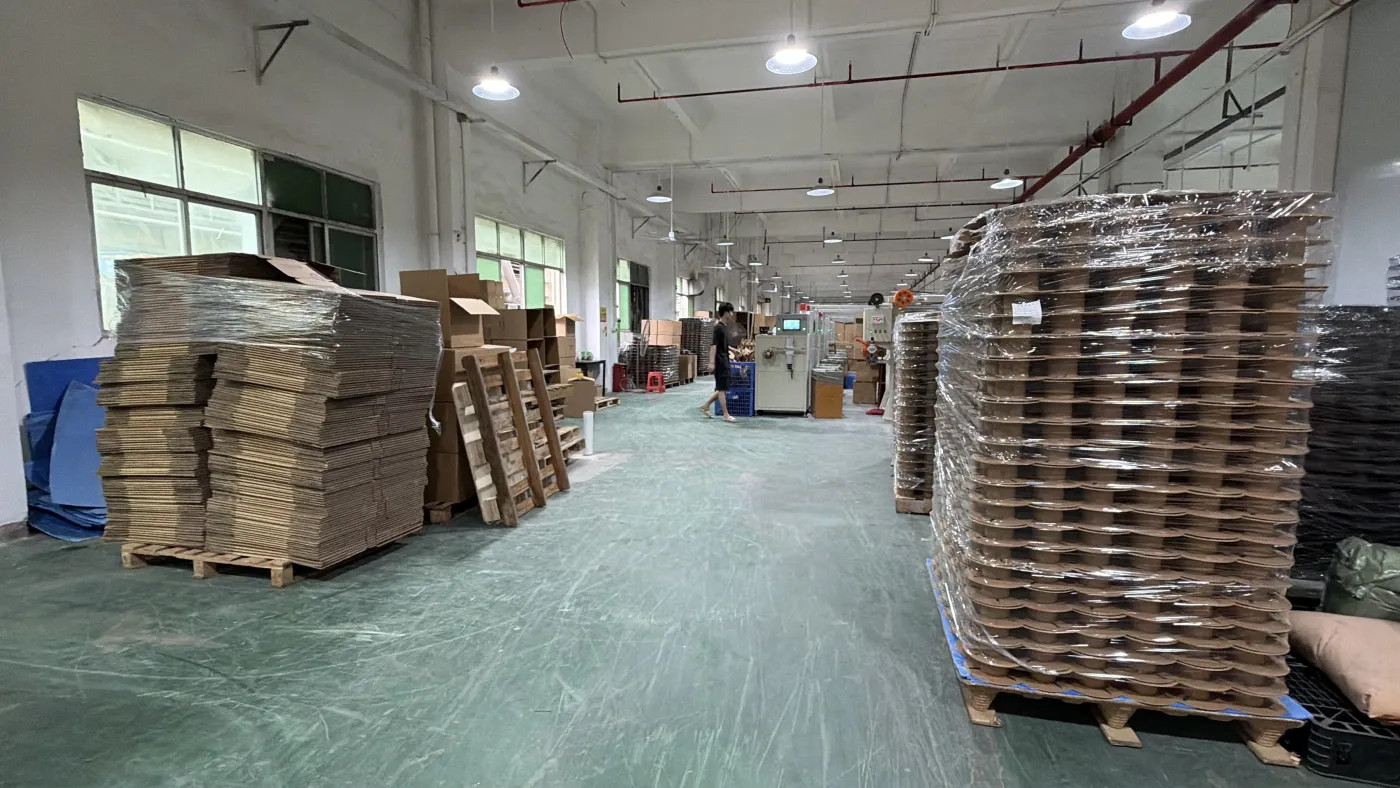
Buyers who hedge usually choose between two structures with different costs. Dual sourcing splits ongoing volume, commonly with a primary holding the majority and a secondary staying warm on a real share. It maximizes resilience and comparison data, at the cost of managing two live relationships and possibly two price tiers. A qualified second source is the lighter structure: the primary keeps everything, and a backup sits approved and ready, producing nothing until an event activates it.
The second-source model is what we built FilaSource on, so our bias is declared: we don’t ask you to move your catalog, and we’d rather earn specific SKUs with batch data than win volume with a pitch. For most buyers under a certain scale, the qualified backup captures most of the hedge at a fraction of the administrative cost: one qualification maintained, one relationship kept warm, zero change to daily purchasing. Buyers above that scale, or in channels where comparison data itself has value, often graduate to true dual sourcing, and the qualification work is identical either way.
The honest failure mode of the second-source model is staleness: a backup qualified two years ago, never ordered from, with a contact who has since changed roles. The maintenance is light but real: an annual sample check, a current contact, a file that reflects the supplier as they are today.
A practical maintenance rhythm for a filament backup: once a year, order a spool or two of the original qualification SKUs and print the same test parts against the same criteria; confirm the supplier’s assessment and certifications are still current; and verify the activation path still works, meaning someone specific still answers the phone. Run the maintenance against the revenue a stockout quarter would take, and the comparison makes itself.
Why Filament Buyers Feel This Harder
Every industry has supply risk; filament multiplies a few of the coefficients. The material is hygroscopic, so a supply failure isn’t just a stockout. The emergency replacement you airfreight in arrives only as dry as its packaging kept it, and a damp emergency spool solves nothing. The product is batch-sensitive, so a mid-stream switch of supplier shows up as re-tuned profiles and re-validated colors on your side. That is why the two-batch discipline exists, and why a backup validated in calm weeks switches cleanly in loud ones.
One more filament-specific coefficient: the product is light and voluminous for its value, which makes emergency airfreight proportionally brutal. A pallet of spools occupies real volume, and flying that volume costs multiples of what the same goods cost on the ocean. In categories where airfreight is a rounding error, single sourcing is recoverable at a price; in filament, the recovery price can exceed the product’s margin entirely, which moves the hedge from sensible to structural.
Color programs raise the stakes further. A channel selling dozens of colors has an approval reference per color with one supplier; qualification of a second source per color feels daunting until you scope it to the handful of SKUs where risk actually concentrates, which is where our qualification process begins. And the freight leg adds a time constant: an ocean reorder is weeks of lead time regardless, so a fifteen-day activation fantasy of the domestic-warehouse kind doesn’t exist here. The realistic hedge is a backup already qualified and already tooled, able to enter production within about two weeks of your call.
The Ninety-Day Fix
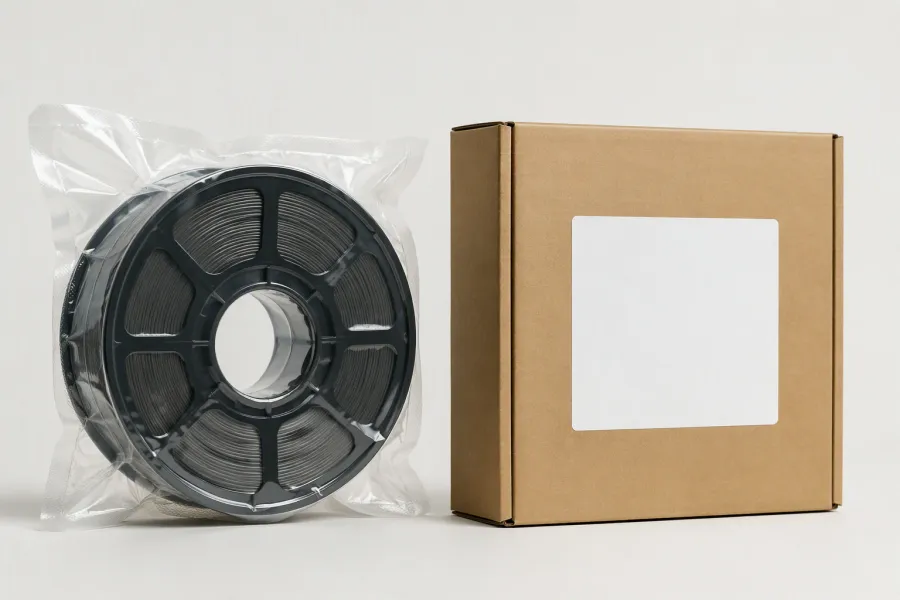
The repair for single-source exposure is boring, which is its best feature. Over roughly ninety days: pick the two or three SKUs where risk concentrates; validate production-representative samples from two independent batches on your own printers against written criteria; run a small mixed-SKU trial in standard packaging, checking batch consistency, lead time, and landed cost; then approve the supplier onto your AVL as a qualified backup. Total outlay for most buyers lands between a few hundred and a couple of thousand dollars, and the documentation that speeds it up, from the third-party assessment to batch QC records and traceability, is the same file our assessment-reading guide teaches you to check. The full stage-by-stage walkthrough lives in the qualification article linked above. Two scoping decisions determine how the ninety days feel in practice. First, SKU count: every SKU beyond the initial two or three adds sample cost and evaluation time without adding much information about the supplier, so restraint at the scoping stage is what keeps the calendar honest — and the material side of that choice is covered in which materials to qualify first. Second, criteria ownership: when your pass/fail standards are written before the samples ship, the evaluation runs itself, and the supplier can flag mismatches while declining is still cheap. Get both decisions right and the ninety days feel like procurement doing its job, which is the correct experience of a hedge being built. The qualification path itself sits on the OEM and private-label manufacturing page.
Objections, Answered Honestly
“My supplier is excellent.” Probably true, and irrelevant to the six scenarios above, all of which can hit an excellent supplier. The hedge isn’t a judgment of your primary; it’s insurance against events no judgment prevents. Professional suppliers know this: second sourcing is standard practice in mature procurement, and the good ones prefer customers who survive someone else’s bad quarter.
“I’m too small for this to matter.” Small buyers feel stockouts hardest, because your channel has the least slack and your customers have the most alternatives. The scaled-down version, with one backup, two SKUs, and ten trial spools, exists precisely for teams where procurement is one person with a spreadsheet.
“I don’t have time to qualify anyone.” The ninety-day calendar is mostly the supplier’s work. Your stages are a twenty-minute call, a test-print week, and a trial evaluation. The no-time option isn’t skipping the hedge; it’s buying the failure later at panic prices, with interest.
Frequently Asked Questions
What is single sourcing in procurement?
Buying a category from one supplier by choice, when alternatives exist. It concentrates volume, pricing leverage, and relationship depth — and it concentrates risk by exactly the same factor. It differs from sole sourcing, where only one supplier exists at all.
What’s the difference between single and dual sourcing?
Volume. Single sourcing gives one supplier everything; dual sourcing splits ongoing volume between two. Dual maximizes resilience and comparison data at the cost of managing two live relationships. A qualified second source sits between them: one live supplier, one approved backup.
How do I start hedging a single-source dependency?
Pick the two or three SKUs where a supply failure would hurt most, and qualify a second supplier on those alone, with samples from two independent batches, a small trial order, and written pass/fail criteria. The full path takes most buyers under three months.
How much does it cost to qualify a second supplier?
For filament, typically five hundred to two thousand dollars: a mixed-SKU trial starting at ten spools, plus your test-print time. Against a single expedited-freight invoice from a real stockout, the qualification is the cheaper event by an order of magnitude.
When should I activate my second source?
On events, not moods: a slipped delivery, a batch that drifts, an unexplained price increase, a capacity crunch in your peak season. Some buyers eventually move SKUs where the backup measurably outperforms, which is a call for production data over sales pressure.
Will my current supplier be offended?
A professional one won’t be. Second sourcing is textbook procurement practice against risks every supplier knows exist, and mature suppliers would rather keep a resilient customer than an exposed one.