Sooner or later, every serious filament buyer receives a PDF titled something like Production Assessment. It arrives with the quotation, it has a third-party logo on the cover, and it is almost never read the way it deserves to be — either waved through as proof of everything, or dismissed as decoration. Both reactions are expensive. The first accepts a factory you have not actually examined; the second discards real evidence because nobody explained how to weigh it.
This article is a reader’s guide to that document, written by a supplier using its own report as the worked example — including the sections where ours says No. An Intertek Production Assessment is a common audit document in this industry, and the way to read one is the same regardless of whose factory it describes. By the end you should be able to pick up any such report and know, line by line, what is evidence, what is context, and what is marketing in disguise.
Three Kinds of Evidence, Often Confused
Buyers lose the most money on a single confusion: treating one document as if it were three. A production assessment, a management-system certification, and product testing are different instruments that prove different things.
- Production assessment — a third party visits the facility on a dated day and records what it saw: processes, equipment, staffing, quality practices, traceability. It is a snapshot of a moment, with a validity window.
- Management-system certification (for example ISO 9001) — certifies that a documented management system exists and is followed. It addresses the system, not any specific product you are buying.
- Product testing — laboratory results for a specific SKU or batch against specific standards: RoHS, REACH, food-contact rules, mechanical properties. It travels with the product, not the factory.
None of the three substitutes for the others. A factory can pass an assessment and still ship you an off-spec batch; a product certificate proves a sample passed a test, not that today’s production matches it. When a supplier offers “certification” as a single word, ask which of the three they mean — the answer organizes the rest of the conversation.
What the Document Itself Records
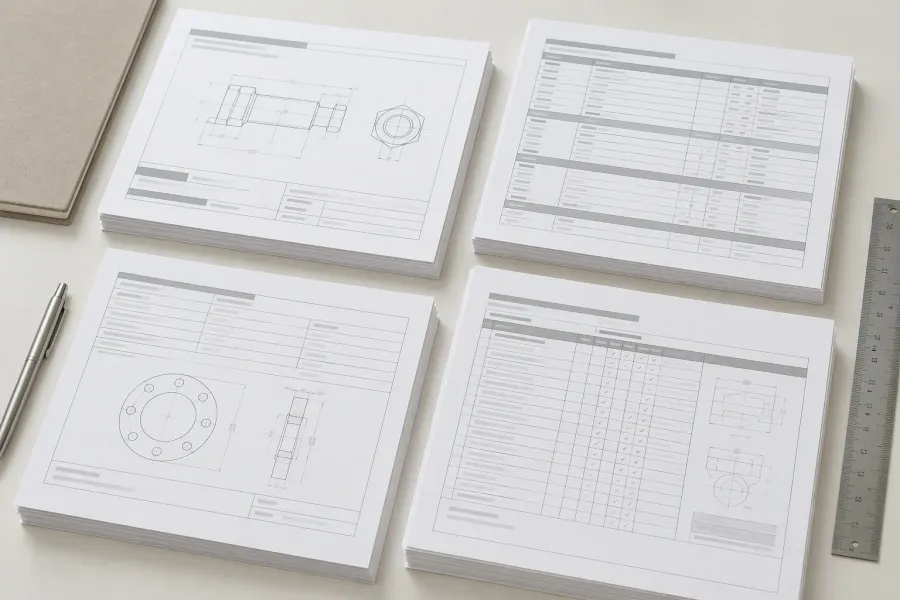
Start reading at the identity block, not the photos. The cover and header pages of an assessment carry the facts that make the rest verifiable, and they are the first place decoration falls apart.
Here is ours, stated plainly: an Intertek Production Assessment, Report No. 494309880_P, dated August 14, 2026, valid from August 15, 2026 through August 14, 2027, prepared by assessor Mark Zou and reviewer Roy Xiong, commissioned jointly by Alibaba and Shenzhen Mu Mao Trading Co., Ltd. The assessed entity is identified in the report as “Partner Company of Shenzhen Mu Mao Trading Co., Ltd.” — the assessed factory, in a cooperation relationship with the trading company that operates the FilaSource brand.
Three details in that paragraph do more work than they appear to. The report number and dates make the document checkable — Intertek maintains a verification service where report references can be confirmed, and a validity window tells you when the snapshot expires. The commissioner tells you who paid, which shapes what the document was for. And the entity naming carries weight: our report does not flatten the factory and the trading company into one legal entity, because they are not one. When a supplier’s paperwork blurs corporate boundaries to make a relationship look like ownership, every other claim in the file deserves a second read.
What Was Reviewed: Production, QC, Traceability
The substantive middle of an assessment records what the assessor actually walked through. Ours covers the three areas a filament buyer should insist on seeing in any such report.
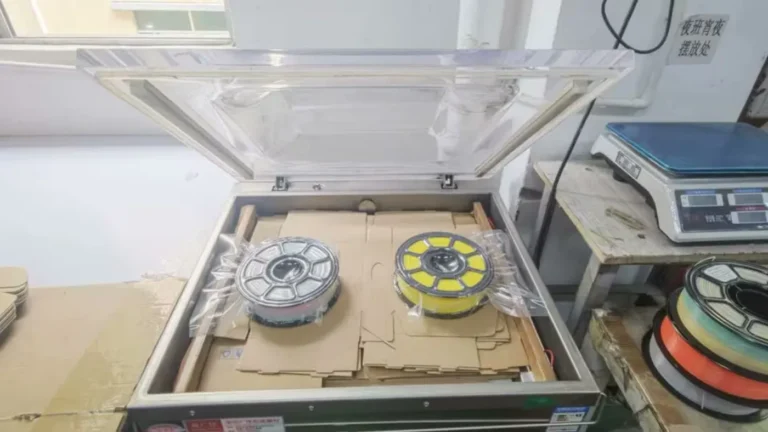
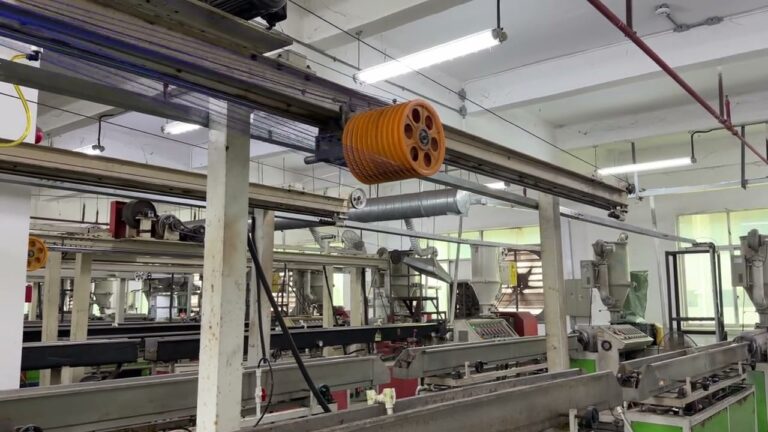
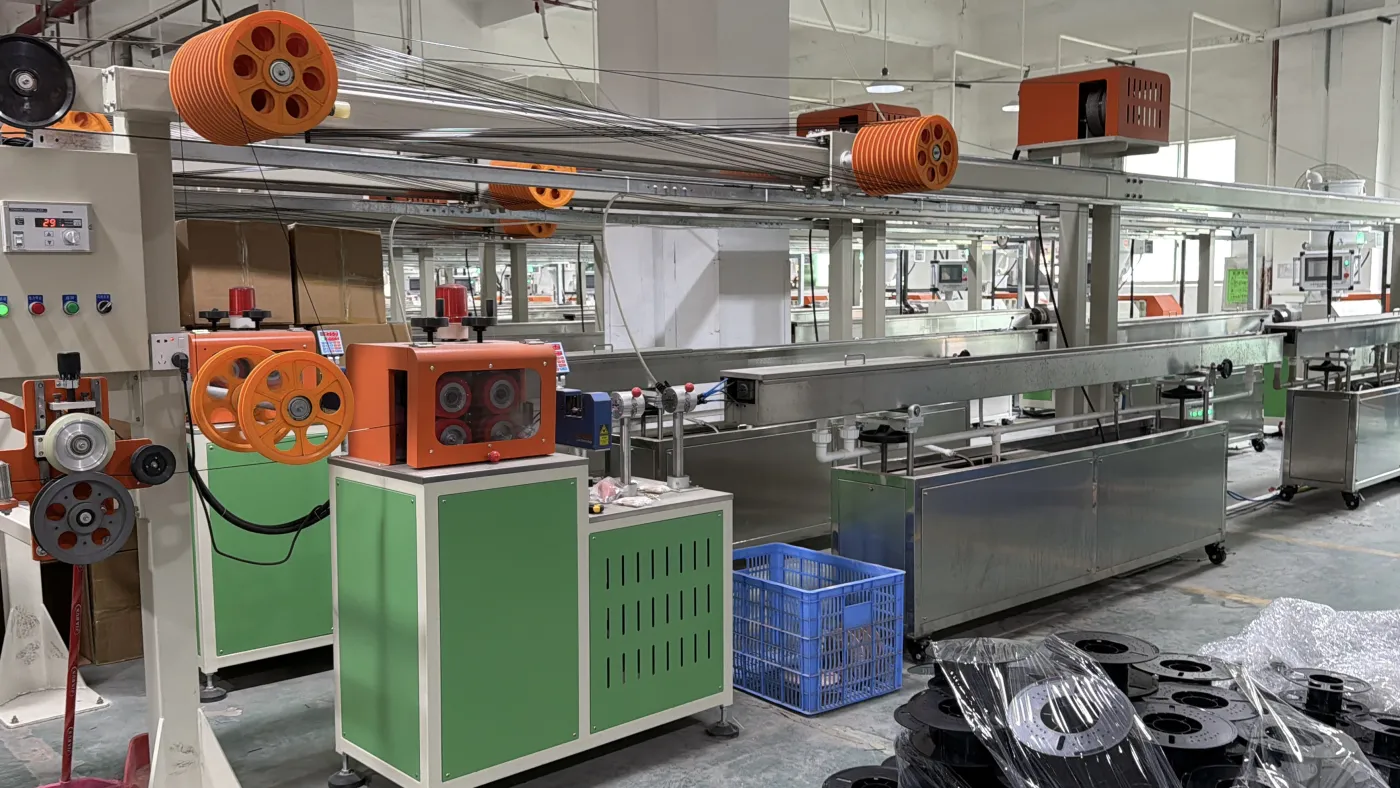
Production. The assessed production flow runs from raw-material handling through pellet drying, extrusion, vacuum sealing, and packing to finished goods, with work instructions and a production management system recorded as present. For a buyer, the flow section matters because every step in it is a place a batch can fail — the article on how filament is manufactured walks the same line from the process side.
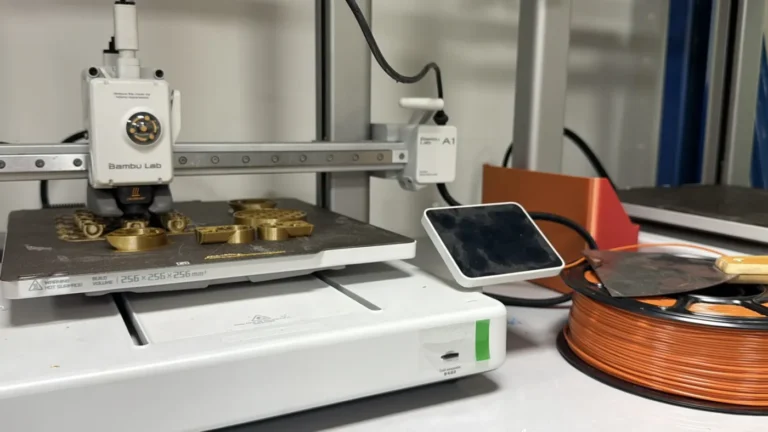
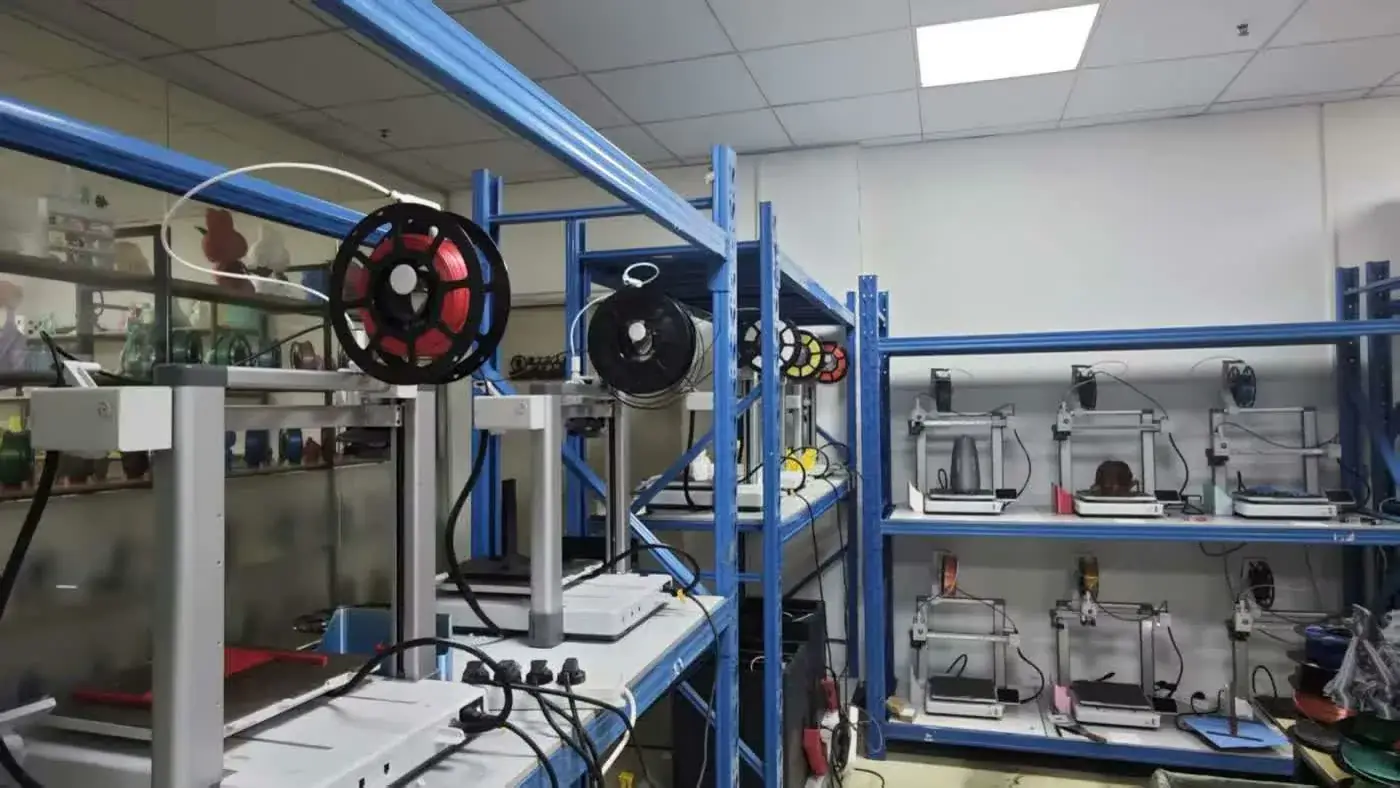
Quality control. The report records eight QA/QC staff, quality control on all production lines, finished-goods inspection on a 100% basis plus random sampling lot by lot, and fifteen 3D printers used as on-site test equipment — production spools are print-validated before release. That last item is worth demanding from any supplier: test equipment that actually exercises the product, rather than only measuring it.
Traceability. Finished and packed product can be traced through batch identifiers back to the corresponding raw-material lots, with a documented traceability procedure. This is the mechanism that turns a future complaint from an argument into an investigation — and its absence, in any report, is a silent liability.
Reading the Numbers: Reported vs Demonstrated
Assessments are full of capacity figures, and the honest way to read them is to separate what a facility reports it can do from what it demonstrably did. Our report lists a monthly production-line capacity of 1,000 tons — and, separately, actual output of 4,500 tons over the preceding twelve months. The first is a ceiling claimed at assessment; the second is throughput already achieved. A supplier quoting you delivery schedules off the first number without reference to the second is quoting capacity, not performance.
The same discipline applies to equipment counts. The report lists seventy-one extruder machines across two equipment groups (two and three years old at review), thirty pellet dryers, 101 total devices — and, notably, no brand or model information for any of them, because none was disclosed. We treat that as a boundary, not a boast: the counts tell you scale; the absence of brand names tells you the report is recording what it saw, not decorating it. Small numbers deserve the same skepticism in reverse — a historical case of a ten-piece order with seven-day turnaround is a record of what once happened, not a standing MOQ promise.
What the Report Does Not Prove
This is the section decoration never has. Our assessment, at its date, explicitly records absences: no supplier-evaluation program, no closed-loop corrective-action (CAPA) system, and no product alert or recall procedure at the facility. Equipment warranty terms were not applicable. These are not footnote items — they map directly to failure modes a buyer can feel: a factory that does not formally evaluate its own material suppliers inherits their variation; without closed-loop corrective action, the same defect can recur because lessons do not compound; without a recall procedure, a bad batch becomes a negotiation instead of a procedure.
We publish them anyway, for two reasons. First, a buyer can only weigh evidence that is actually stated. Second, gaps are actionable: each one is a question for your qualification file — what is your plan for supplier evaluation, how are corrective actions closed, what happens when a batch fails after shipment? The answers, and the speed and specificity with which they arrive, tell you more about a supplier’s management maturity than any capacity chart in the same folder.
One more boundary the report itself draws: a production assessment is not product certification. RoHS, REACH, product-level testing, SDS documents — those attach to specific SKUs and must be arranged per SKU, with lead time and cost quoted separately. A supplier who waves a factory assessment as proof of product compliance has just shown you which of the three evidence types they hope you will confuse.
How to Use Any Assessment in Qualification
Handled properly, a production assessment is a working document, not a door decoration. Work through the routine in one sitting, before the report goes in the file:
- Verify the document. Check the report number and validity dates, and use the assessor’s verification service where one exists — Intertek’s is publicly accessible at their ASV service page.
- Match the entity. The name on the report, the name on your contract, and the name on the export documents should reconcile. Cooperation structures are legitimate; name games are not.
- Read the No column first. The absences tell you where the supplier’s management system ends — and therefore where your own controls must begin.
- Convert gaps into questions at the qualification stage, and weigh the specificity of the answers.
- Pair the paperwork with a two-batch test. Validation on at least two independent production batches, with pass/fail criteria you define, checks repeatability — the one thing no snapshot can certify.
The underlying file our articles reference — the assessment report, batch-level QC records, raw-material traceability, retained-sample policy, and facility overview — is part of the standard documentation package on the OEM and private-label manufacturing page. The wider second-source model behind FilaSource is on the homepage.
Frequently Asked Questions
Is an Intertek production assessment a certification?
No. It is a dated third-party review of what a facility demonstrated on assessment day — processes, QC practice, traceability. Certifications audit a management system or a product against a standard; an assessment records observed capability with a validity window. Confusing the two is how overclaiming starts.
How do I verify an assessment report is real?
Use the report number and dates against the assessor’s verification service — Intertek’s ASV page is public. Then reconcile the assessed entity’s name with your contract and export documents. A report that cannot be verified, or names that do not match, ends the conversation on its own.
What is the difference between a production assessment and ISO 9001?
ISO 9001 certifies that a quality management system exists and is followed; it speaks to the system, not to a specific product. A production assessment records what was observed at the facility on a given day. They answer different questions, and serious supplier files eventually contain both kinds of evidence.
Does a factory assessment cover product compliance like RoHS or REACH?
No. Product compliance is per SKU, per market, established by product-level testing and documentation — arranged separately with lead time and cost. A factory-level document can speak to process control; it cannot certify the chemistry of the spool you are buying.
Why does the assessed entity say “Partner Company” instead of the brand name?
Because the assessment describes the legal entity that was physically audited. Brands, trading companies, and manufacturing partners are often distinct entities, and accurate paperwork keeps those boundaries visible. Precision here is a feature — ambiguity about corporate structure is a documented red flag in supplier qualification.