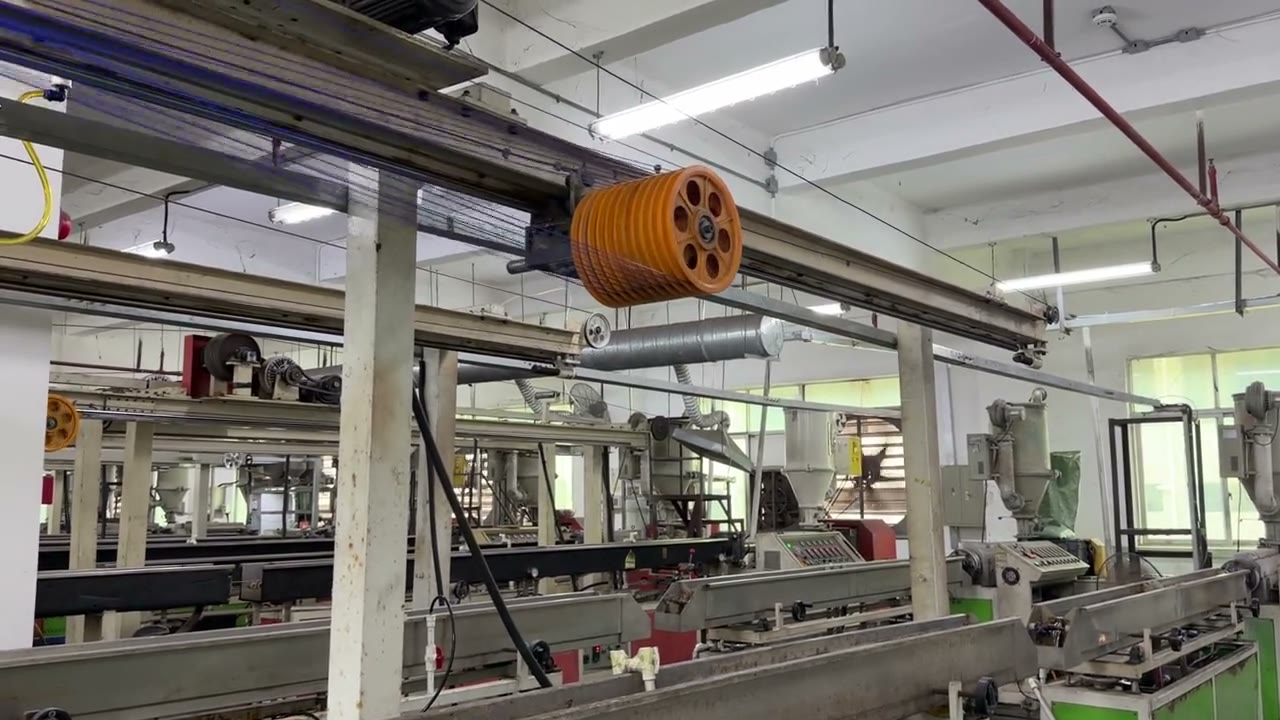
Stand at the winder end of an extrusion line and wait. Eventually a spool fills. The operator steps in, cuts the strand, tapes the end down, loads an empty spool, resets the counter, and walks away, and the line never slowed. That unhurried choreography is the last few seconds of a process that began back at the hopper, at the other end of the hall. If you have ever wondered what happens in between, this is the pellet-to-spool walk.
The filament extrusion process is the heart of this industry, and it is oddly invisible: search results for it lean toward graduate papers and forum threads from the home-extruder crowd, with almost nothing written from an actual production floor. So here is one, zone by zone, from hopper to winder, with the operator’s view of what each zone controls, and the record a buyer can ask for from every one of them. The companion piece on how filament is manufactured end to end covers the full process including QC and packaging; this one goes deep on the line itself.
The Filament Extrusion Process, Zone by Zone
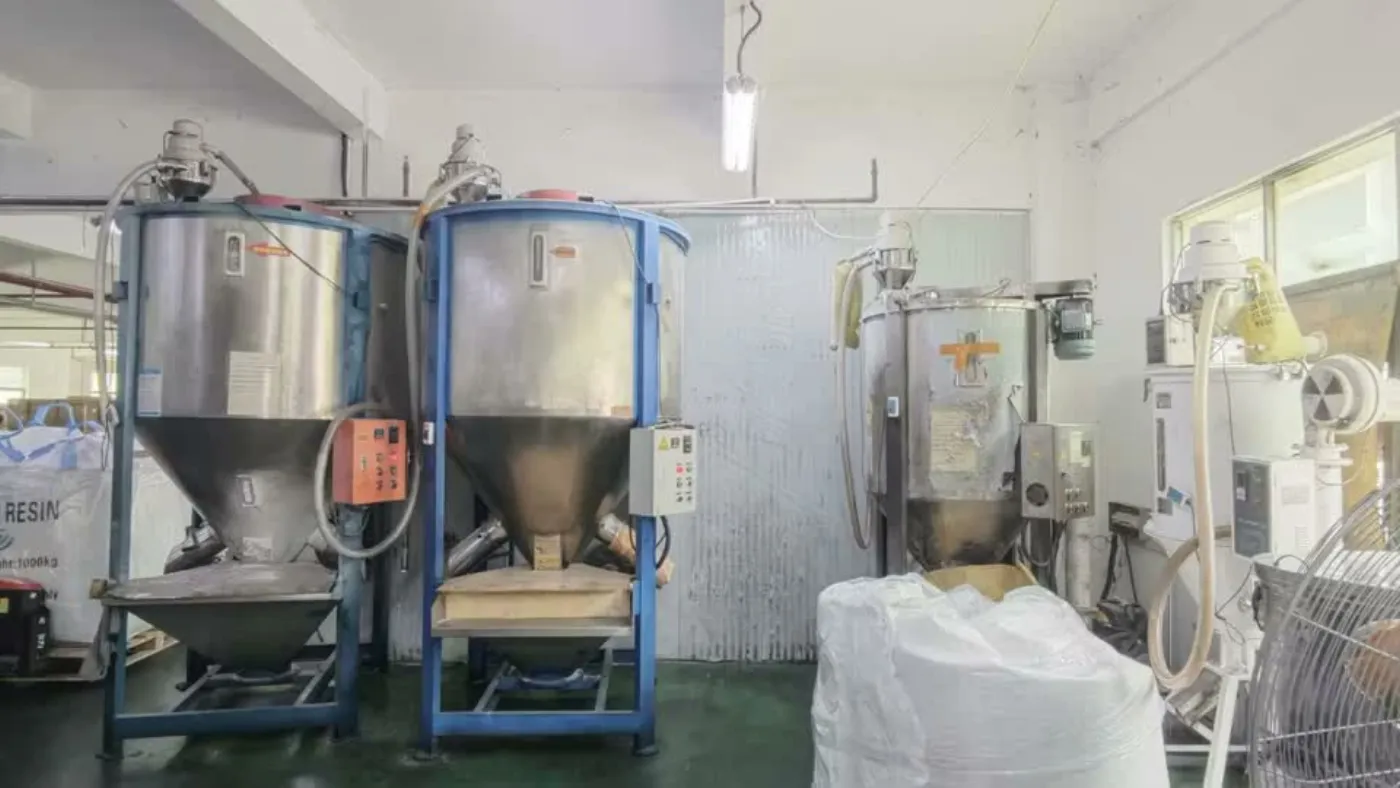
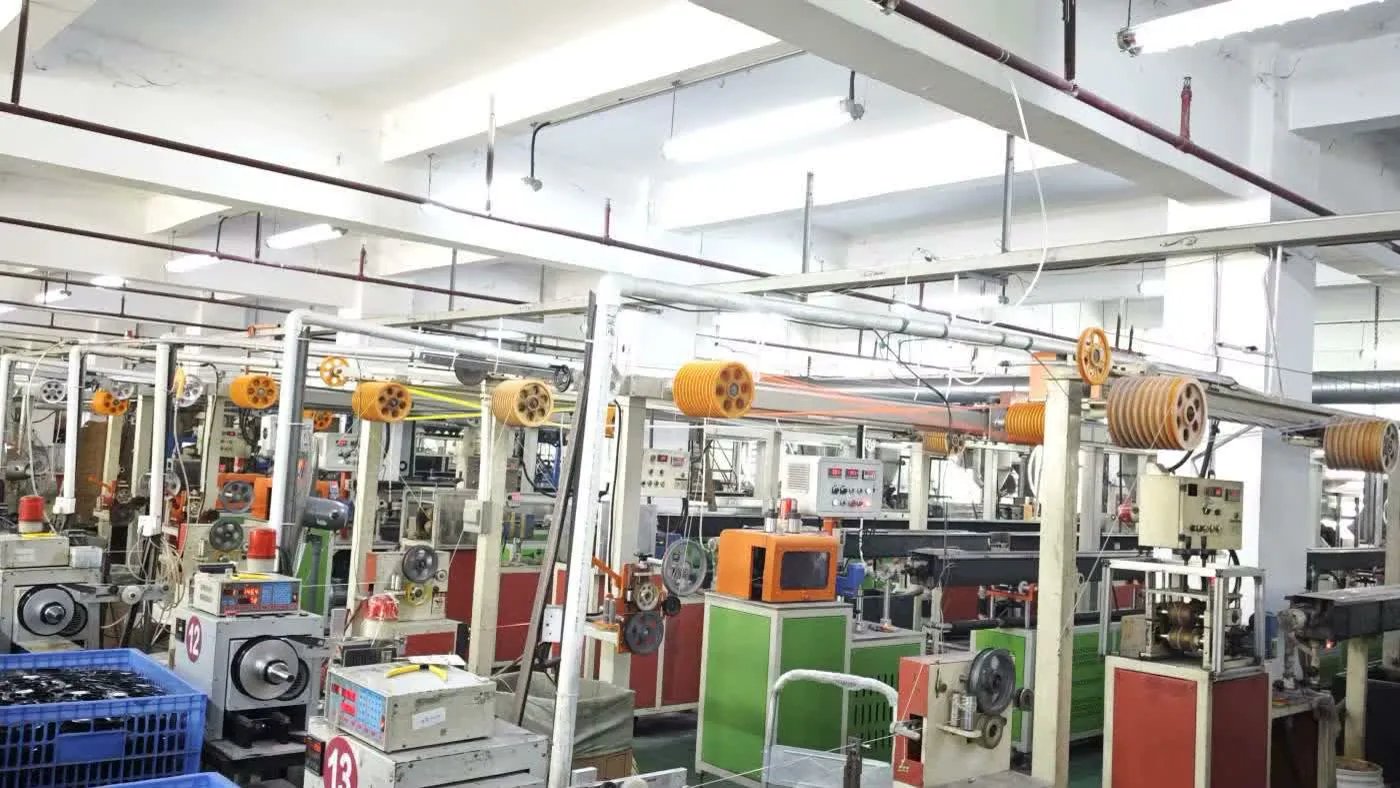
Every production line for FDM filament, whatever its age or origin, solves the same six problems in the same order. Zone one stores and dries the pellets. Zone two melts and mixes them in a heated barrel around a rotating screw. Zone three pushes the melt through a die that shapes it into a strand. Zone four cools the strand until it holds its dimensions. Zone five measures the diameter, continuously, with a laser gauge. Zone six winds the finished filament onto a spool under controlled tension.
Before the barrel, there is one more input worth knowing about: color. Pigment reaches the line as masterbatch — concentrated color granules blended into the base pellets at a defined ratio in the feed section. The ratio has to hold, because drift it and the next batch of your signature gray is a different gray. Color consistency questions at the extrusion stage are really dosing questions, and suppliers who control color well answer with color standards and retained samples rather than batch photos.
That’s the whole machine. The craft is in how each handoff between zones is managed, because a problem never stays where it starts. Damp pellets become bubbles in the barrel. A worn die becomes ovality at the gauge and jams in your customer’s printer. Walk the six zones with that in mind.
Inside the Barrel: Where Heat Does the Work
The barrel looks like a steel pipe and behaves like a slow oven with opinions. Pellets enter at the feed throat, get dragged forward by the screw, and pass through the classic three regions of a single-screw extruder: a feed section that merely moves them, a compression section where heat and pressure collapse them into a melt, and a metering section that evens the flow before the die. No drama anywhere; just viscosity being managed.
What operators actually fight is temperature. The barrel is divided into heated zones, each with its own setpoint, because the melt needs to be fluid enough to shape but never so hot that it degrades. Each material has its own profile; PETG and PLA do not share one. On a mature line those profiles live as saved recipes on the controller, one per SKU, rather than as a handwritten note taped to the cabinet. That is the difference between a process and a habit. When a zone drifts high, the melt thins and the diameter starts wandering. When it drifts low, you get unmelted specks that later become the lumps that clog nozzles. This is why “what are your zone setpoints per material, and who is allowed to change them?” is a better tour question than anything about capacity.
The Die and Pull Speed: How Diameter Gets Set
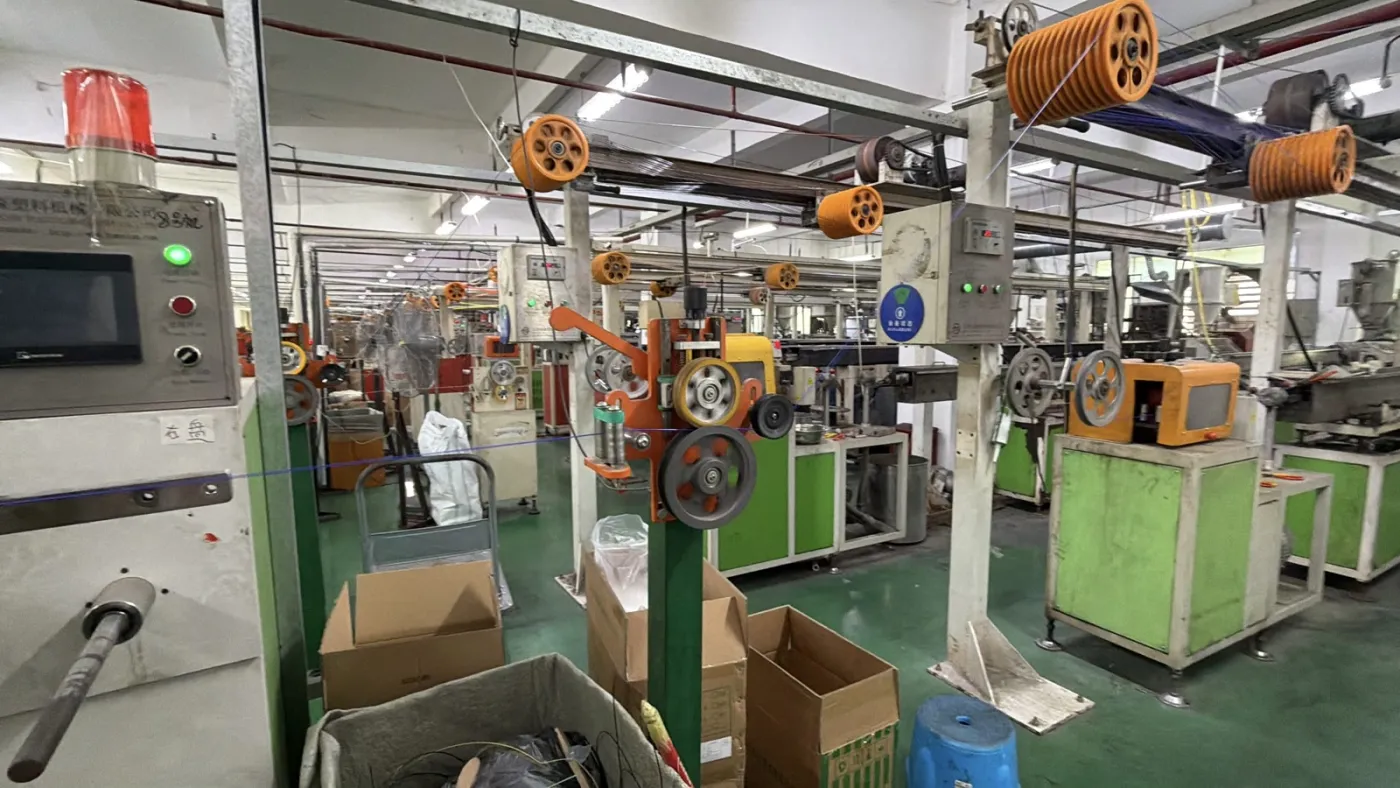
The die doesn’t set the diameter. The die sets a starting point; the puller finishes the job. Melt comes through the die at whatever volume the screw delivers, and a tractor downstream pulls the strand at a fixed speed. Make the strand faster than the melt supplies it and it stretches thin. Slow the pull and it swells. Diameter is that balance, expressed in millimeters.
Production lines aim at 1.75 mm, hold it within a tolerance of ±0.02 mm, and police it with the gauge in the next zone. What the die itself contributes is roundness and surface quality — a scratched or worn die leaves marks and ovality that no downstream correction fixes. So when a supplier quotes you a tolerance, the honest supporting question is what happens when the balance momentarily tips: how fast is the deviation caught, and does the line correct itself or wait for a person to notice.
Cooling: Water Bath or Air Track
The strand leaves the die hot and structurally ambitious. Cooling has to set its dimensions without freezing stress into it, and the method follows the resin and the line speed. Slower lines running heat-sensitive resins can shed enough heat in moving air. Faster lines need a temperature-controlled water bath, because air simply cannot pull heat out of the strand quickly enough at speed. Note the word controlled: bath temperature is itself a setpoint with a profile per material, and an unregulated bath trades speed for stress. Cool too aggressively, or leave the strand’s core under-cooled, and the stress comes back later as ovality readings and inconsistent feeding.
The buyer’s question here is short: which cooling method for the specific material you’re ordering, and how is roundness confirmed afterward? A supplier who knows their own line answers in one sentence.
The Gauge and the Loop
After cooling, the filament passes a laser micrometer that reads its diameter continuously along the length, where an end-of-batch sample would miss everything in between. Modern lines close the loop from the gauge back to pull speed: when the reading drifts, the tractor pulls it back without anyone touching anything.
I’ll admit to watching the gauge readout longer than most operators think necessary. It is the one place on the line where the whole process becomes a number you can see moving, and after enough batches you learn the personality of a stable line — small deviations, corrected quietly, nothing dramatic. What you never want to see is slow drift that nobody corrects, because that is the signature of a line running open-loop with a person who has stepped away.
If you tour a plant, ask to stand at the gauge screen for a few minutes. A stable line is quietly boring to watch, and boring is exactly what you want. For buyers, this zone also produces the single most requestable document in filament manufacturing: the per-batch diameter log. A usable one reads like a strip chart: diameter tabulated along the length of the batch, with timestamps, so you can see stability instead of trusting a summary number. Our specification of 1.75 mm at ±0.02 mm, monitored in-line during production, is a claim that log either supports or doesn’t.
Winders and Changeovers
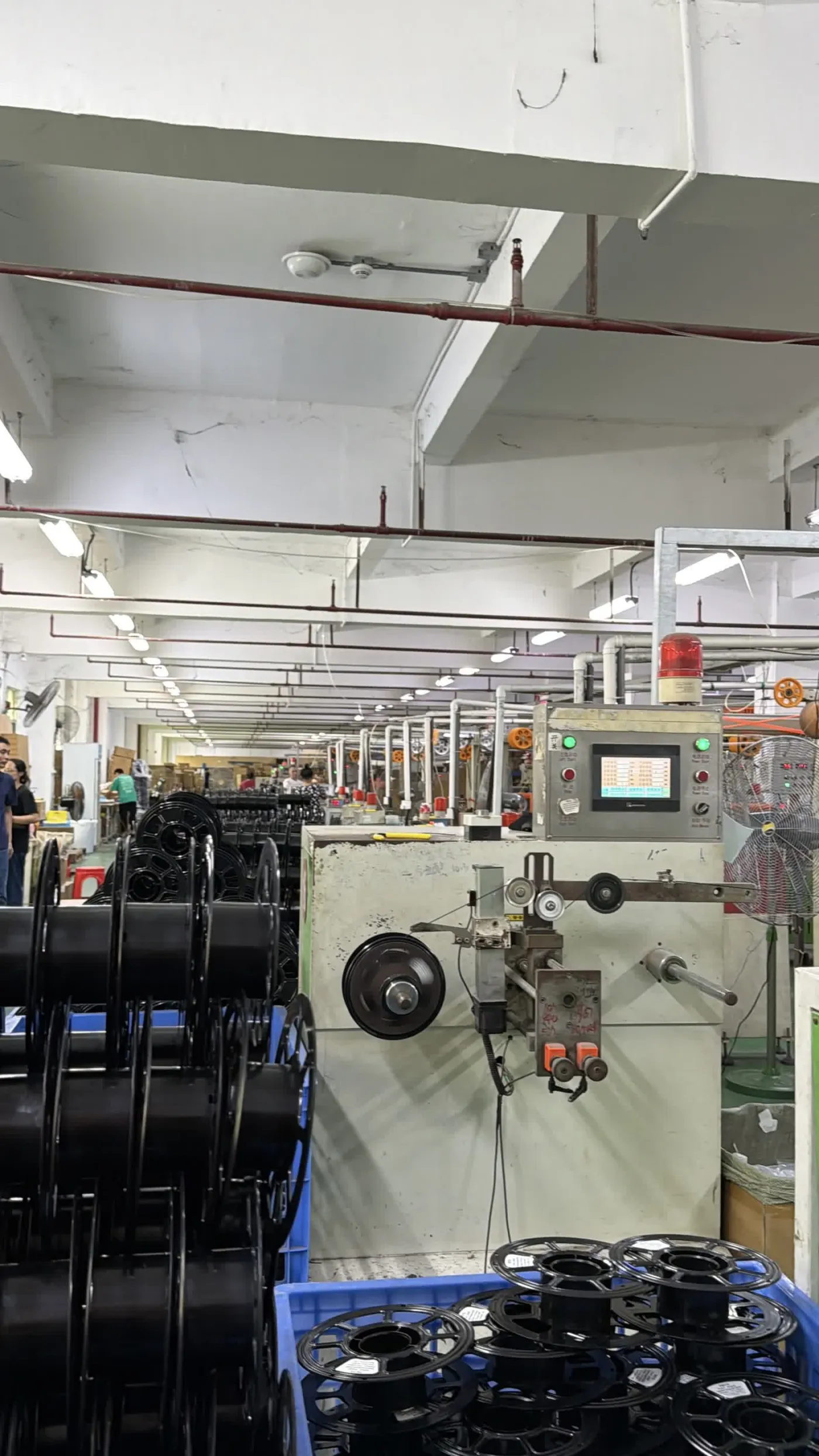
Back where we started. The winder lays filament onto the spool in even layers under controlled tension. The part worth watching is the traverse: the guide that moves the strand back and forth across the spool width, laying each layer at a slight angle to the one beneath it. Set the traverse badly and the wind looks fine for half a spool, then digs; a crossed wind or a tucked-under end becomes a tangle halfway through someone’s fourteen-hour print. Ends get fixed, spools get labeled and weighed (net weight recorded separately from gross, because that distinction is where short-weight complaints hide), and the changeover happens the way the opening described: cut, tape, load, reset, walk away.
Changeovers are where good lines prove themselves. Switching color or material means purging the old melt and confirming the first meters of the new run, and a rushed changeover is where cross-contamination and inconsistent first-wind product come from. First-article checks at the batch boundary are the control: someone confirms the new run’s start against spec before the line is left alone. Line count matters for exactly this reason: the facility assessed for FilaSource runs 71 extruder machines across two equipment groups, per the Intertek Production Assessment, which is enough capacity that changeovers get scheduled instead of improvised. Ask a supplier with three lines how they handle a Friday afternoon color change.
What a Buyer Should Take from the Line
Every zone on the line generates a record:
- Feed and drying: the per-material drying specification, and confirmation drying actually ran before your batch.
- Barrel: zone setpoints per material, and who is authorized to change them.
- Die and pull: the tolerance spec, and how deviations are caught and corrected.
- Cooling: the method matched to your material, with roundness confirmed after it.
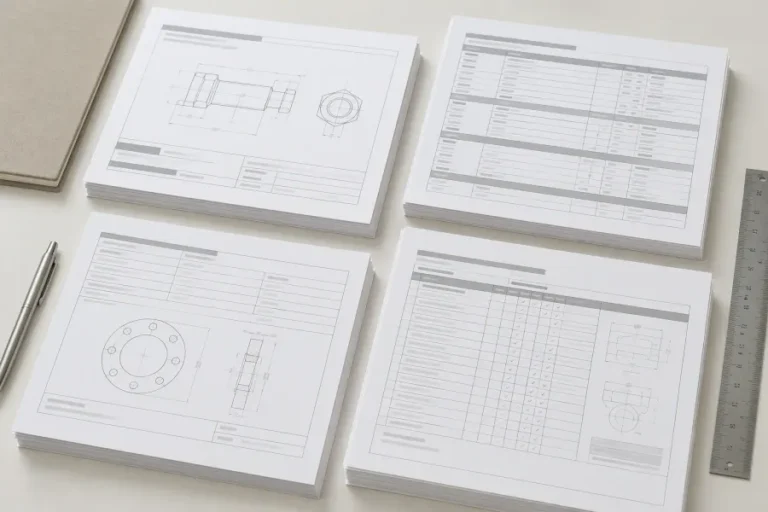
- Gauge: the per-batch diameter log: the document that turns a tolerance claim into evidence.
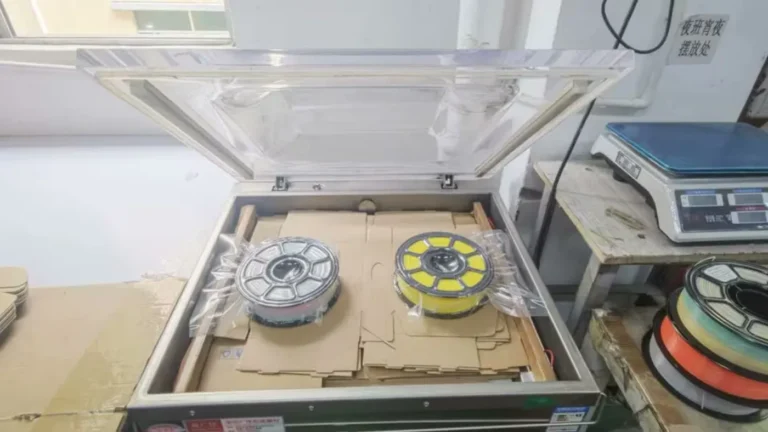
- Winder: changeover procedure and first-article checks at batch boundaries.
That list is also the skeleton of a qualification. Run your trial order against it, on at least two independent production batches, and the line reveals itself: either the records exist and agree with your prints, or the gaps show you exactly where this supplier’s process ends and your risk begins. One boundary worth stating plainly: record granularity — what the log captures and how often — is confirmed per SKU at quotation, so the documents you receive match what was actually produced. The full document set, including the third-party assessment behind the equipment figures in this article, is covered in our piece on reading an Intertek Production Assessment. The qualification path starts with a filament manufacturing partner conversation on the OEM and private-label page. More about FilaSource is on the homepage.
Frequently Asked Questions
Can you extrude filament at home?
Yes — desktop extruders exist and the forums documenting them are genuinely useful. What home setups rarely achieve is the boring part: diameter that holds, batch after batch. Demonstrating the process and supplying a market are different skills.
What are temperature zones in filament extrusion?
Heated segments along the extruder barrel, each with its own setpoint. Pellets move from a feed section through a compression section into a metering section, and the zone profile — different for every material — keeps the melt fluid enough to shape without degrading it.
Why does filament diameter drift during production?
Usually a disturbance to the balance between die output and pull speed: a barrel zone drifting off setpoint, or a feed hiccup. Drift happens; what matters is whether anything corrects it.
What is pull speed in filament extrusion?
The speed of the tractor pulling the strand after the die. Together with the volume of melt the screw delivers, it sets the final diameter: pull faster and the strand thins, slow down and it swells. Closed-loop lines adjust it automatically from the gauge reading.
How can a buyer verify extrusion quality before committing?
Ask for the per-batch diameter log and the drying record for your material, then validate on at least two independent production batches with pass/fail criteria you define. Compare what the records say against what your own printers produced.