Ask a supplier for documents and one email can bring three acronyms: a filament TDS, an SDS and perhaps a COA. They arrive as PDFs, they look official, and they aren’t interchangeable. Each answers a different buyer question and leaves a different gap. The request that matters is the same every time: per SKU, for the exact grade I’m ordering.
A supplier who offers “the certificate” without saying which one has already told you something.
What Each Document Actually Covers
TDS (Technical Data Sheet). The material’s identity card: typical physical and print-related properties, processing ranges and storage guidance for the grade. It tells you what the material is designed to do and says nothing about a particular batch. A TDS describes the family, not the lot in your box.
SDS (Safety Data Sheet). The safety and handling document: hazards, first aid, storage and transport classification. Your compliance people and your shipping department want it. It says nothing about whether this batch prints like the last one, because that’s a different subject.
COA (Certificate of Analysis). The batch-level document, with measured results for one production lot compared against the specification. It’s the one that ties a shipment to numbers, for the lot it names and no other. A COA for batch A tells you nothing about batch B, which is why buyers ask for the pattern across batches instead of a single sample.
Three documents, three questions. TDS: what is this material? SDS: is it safe to handle and ship? COA: does this batch meet the spec? None of them stands in for another.
Why Per SKU Matters
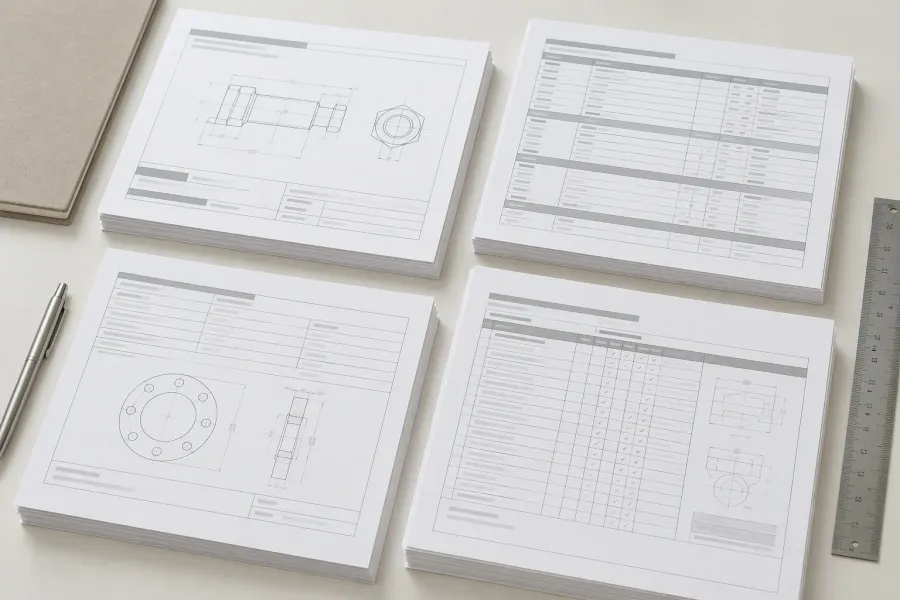
Filament grades differ in formulation, and documents follow formulations. A TDS for plain PLA doesn’t describe a filled or specialty grade, an SDS for one color masterbatch may not cover another, and a COA is tied to its lot by definition. So the professional request is a document set per SKU: every grade you buy gets its own paperwork, with versions kept as the formulation or packaging changes.
Version control is the quiet half of the job. When a supplier updates a TDS, keep the old one, because the difference between versions is sometimes exactly the change you needed to hear about. Ask how document versions are managed, and file dated copies with your order records. Our quality records approach, including batch identifiers that trace finished goods back to raw-material lots, is described in the quality control guide.
The Honest Status Question
Most sourcing content skips this part: documents can be in progress, out of scope or just not issued yet, and an honest supplier tells you which. Arranging TDS, SDS and COA documentation per SKU takes lead time and may carry a cost quoted separately, and until a document has been signed and verified, it isn’t claimed as held. That’s our own position, and we state it plainly because it’s the correct one. A supplier who claims every certificate for every grade, instantly, is telling you what you want to hear.
Put document status on the qualification checklist from the start. For each SKU you’re serious about, ask which documents exist now, which are being arranged, how long that takes, and what happens if a document can’t be provided. Get the answers in writing, in the same file as the rest of your qualification evidence. The framework is in the second source qualification guide.
Reading What Arrives
When documents do arrive, three checks catch most problems before they become disputes.
- Entity match. The issuing or testing entity should be identifiable and consistent with who you’re buying from. A document with an unclear chain of custody tells you less than it seems to. Who you’re actually buying from is a question of its own, covered in our manufacturer verification guide.
- Scope match. Does the document name your SKU, or the supplier’s whole catalog? Scope drift is common: a report on one grade presented as coverage for all. Find the field that names the product.
- Date and version match. Is the COA for the lot you received? Is the TDS the current version for the formulation you’re buying? Dated filings set against dated orders settle both in seconds.
None of this is bureaucratic suspicion. It’s the same habit as checking a diameter log against a spool: paperwork and product should point at each other, and usually they do once both sides file by SKU and date. The commercial ladder in the bulk buying guide shows where document requests belong in the order sequence, which is before the first commercial order and not after the first problem.
Where the Document Conversation Starts
Document availability is part of the supply relationship, so the request belongs in the same conversation as samples and specifications. SKU-level document status is confirmed through the filament distributor relationship, where per-SKU arrangements, lead times and scope are put in writing. More about FilaSource is on the homepage.
Frequently Asked Questions
What is a TDS for 3D printing filament?
A Technical Data Sheet: the grade’s typical properties, processing ranges and storage guidance. It describes the material family and not a specific batch, so it answers “what is this designed to do” instead of “what does this spool measure.”
Do I need an SDS for filament?
If your organization handles compliance, ships material or answers to a safety process, yes. The SDS covers hazards, handling and transport. It says nothing about print performance, so it sits alongside a TDS or COA and doesn’t replace them.
What is a COA and how is it different?
A Certificate of Analysis covers one production batch: measured results against the specification, for the lot named on it. The TDS describes the design and the COA reports the delivery. Batch-to-batch questions need a COA for each batch.
Should documents be requested per SKU or per supplier?
Per SKU. Formulations differ between grades, so a document for one doesn’t cover another, and a COA is lot-specific anyway. The professional standard is a document set for every grade you buy, with versions controlled as things change.
What if a supplier doesn’t have the documents yet?
Ask for the honest status: which documents exist, which are being arranged, how long that takes, and the cost if it’s quoted separately. Documents that haven’t been issued and verified shouldn’t be claimed as held, and a straight answer on that is a good sign in itself.