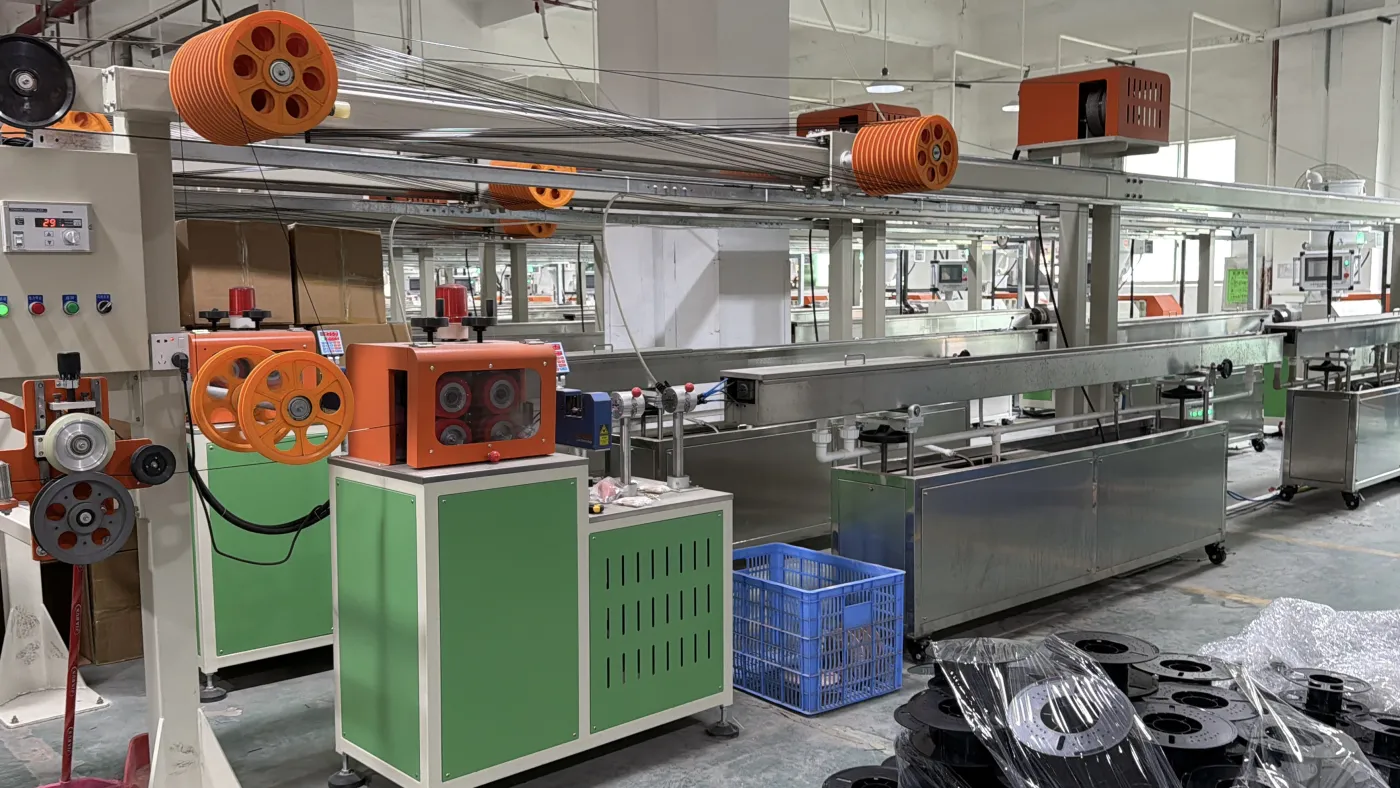
Almost every filament supplier calls itself a manufacturer. The word sits in the tagline and the page title, beside photos of extrusion lines and stacked cartons. Some of those companies really do run the machines in the photos. Others buy from the people who do. Either can ship you good filament, but the word alone doesn’t tell you which one you’re dealing with.
The difference matters because it sets what your checks have to cover. With a factory, you can ask about the lines directly. With a sourcing partner, your questions travel one step further, and how well the answers come back shows how closely they know their source. If you’re looking for a 3D printer filament manufacturer, the first thing to settle is which of three structures you’re dealing with. Most pages on this topic skip the next step, so we’ll put our own structure on the table, assessment report included.
The Three Structures You Will Actually Meet
The factory. It extrudes filament on its own lines, in a plant it operates. What you can verify is physical: the plant, the machines, the people, and the records they’ll show you.
The factory-plus-partner structure. A brand with its own factory relationship (our factory, in our case) where production runs at a manufacturing partner to agreed specifications. It’s common in the industry and perfectly sound when it’s disclosed. The seller owes you an honest description of the relationship, and you owe it the same checks you’d run at any factory, aimed at the right entity.
The sourcing partner. It holds no lines of its own, so its value lies elsewhere: gathering materials across factories, keeping stock for urgent needs, handling export paperwork, and knowing which sources hold tolerance and which drift. For a buyer testing a market at low volume, that can be the quickest competent route. The one condition is that the structure is named early, so every verification question reaches the party actually responsible for it.
None of the three is disqualified by category. What differs is who answers your verification questions. A factory answers questions about screw design and die maintenance from its own line, while a partner relays them from theirs, and you can measure how deep that relay goes. The PETG-CF qualification guide shows how for one material family. Trouble starts when the structure and the description don’t match.
Six Signals That Survive Scrutiny
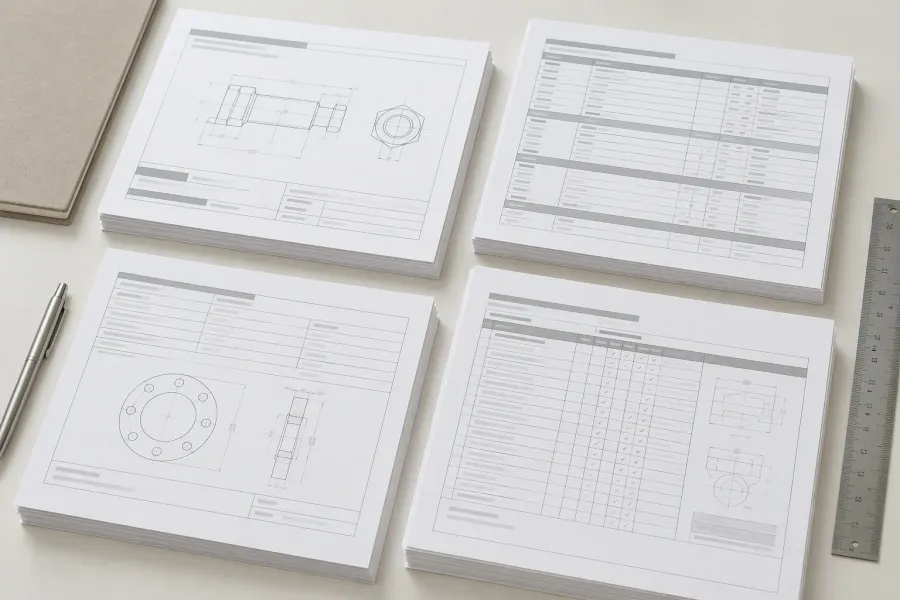
- Third-party assessment, read properly. A report names the assessed entity, the date and what was actually assessed. A certificate image on a web page names none of them. Check that the entity matches the company you’re negotiating with, because buyers sometimes find the impressive document belongs to somebody else in the chain.
- The business license scope. In most jurisdictions a company is registered for specific activities. A license whose scope includes manufacturing, held by the entity you’re paying, says more than any adjective on a website. In China, ask for a copy of the license and check the unified social credit code against a public registry lookup.
- A live video walkthrough on request. Not the produced factory video: a live walk, on your schedule, with the camera pointed where you ask. A factory can do this any afternoon, and a string of excuses is information in itself. If video is genuinely impossible, a third-party assessment of the same entity is the fallback evidence. A supplier who offers neither hasn’t answered the question.
- Numbers with a source attached. Self-reported capacity, defect rates and tolerance claims give you a starting point. The same figure from an assessment report, or from a per-batch record you can inspect, is a different kind of evidence.
- Sample-to-batch traceability. Ask how the approved sample connects to the batch that ships. Lot identifiers, batch records and retained samples are what let your eleventh order match your first.
- Gaps disclosed unprompted. The rarest signal. A supplier who tells you what their assessment didn’t cover, without being asked, has shown you how they’ll behave when something goes wrong.
Our Own Structure, Disclosed
Here’s the worked example, using ourselves. FilaSource works through our factory relationship: production happens at our manufacturing partner, an arrangement the industry uses widely. That partner was assessed by Intertek in a Production Assessment, Report No. 494309880_P, dated August 14, 2026, valid through August 14, 2027. A production assessment is not a certification. It’s a third party walking the plant and recording what they saw, which is why it’s useful to a buyer.
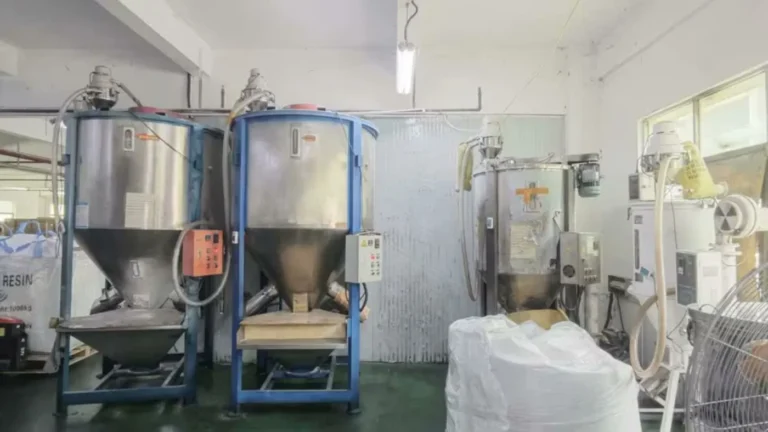
The report records the assessed entity as the Partner Company of Shenzhen Mu Mao Trading Co., Ltd. Reported production capacity is 1,000 tons per month, while actual output across the preceding twelve months was 4,500 tons. We quote the reported figure as reported and the actual figure as actual, because keeping them apart is the whole point of reading an assessment. The equipment and QC census, from extruder groups and dryers to inspectors, validation printers and traceability, is itemized in the walkthrough linked below.
Now the gaps, stated as gaps. At the time of the assessment, the plant had no supplier-evaluation program, no closed-loop corrective-action system, and no product-alert or recall procedure. The report also didn’t disclose equipment brand and model information. If a supplier’s marketing gives you only the numbers and none of the limits, you’ve learned something about the supplier.
Questions That Reveal the Answer
Ask these in order. Each one narrows the structure down without accusing anyone of anything.
- Which entity will appear on my invoice, on the assessment report, and on the shipping documents, and are they the same company?
- May I see the business license of the entity that operates the production lines, and does its scope include manufacturing?
- Can we schedule a live video walkthrough of the line that will run my order?
- Which of your claims come from your own testing, and which from a third-party assessment? May I see the report’s entity name and date?
- How does my approved sample connect to the batch that ships: lot identifiers, retained samples, batch records?
- What does your current quality system not cover yet?
The last question does the separating. Every supplier has an honest answer to it, and the ones who say “nothing, we cover everything” have told you the most important thing about the relationship before it starts.
You can run this process on us. Our Intertek production assessment walkthrough covers what the report does and doesn’t cover. Once the structure question is settled, the qualification framework for a second filament source and the commercial ladder in the bulk buying guide cover what comes next. The relationship itself starts on the filament manufacturer page. More about FilaSource is on the homepage.
Frequently Asked Questions
How do I know if a filament supplier is a real manufacturer?
Look for evidence that matches the entity you’re paying: a business license with manufacturing scope, a third-party assessment report naming that same entity, a live video walkthrough on request, and sample-to-batch traceability. The word “manufacturer” on a website isn’t evidence of anything.
Is buying factory-direct always the better deal?
Not necessarily. Direct suits buyers who want questions answered on the line itself. A sourcing partner can gather materials, hold local stock and handle export paperwork, which is real value and is priced into the margin. Decide by the value you need, then make sure the structure is named early so verification reaches the right party.
Does it matter which entity the assessment names?
Yes, it’s the core of the check. The assessed entity should be the company operating the lines that will run your order. If the report names a different company in the chain, it tells you whose plant was actually seen, and a supplier quoting numbers from someone else’s report has answered your structure question for you.
What should I ask for after confirming a supplier is a manufacturer?
The same evidence you’d want from any source: the diameter specification and its records, two-batch consistency validation, packaging and moisture discipline, and the commercial ladder from trial to volume. Structure tells you who runs the line. Qualification tells you whether the line runs well.
Why do supplier websites all claim to be manufacturers?
Because buyers search for the word and search rewards it. The claims are cheap to make and rarely checked, which is why the checkable signals (license scope, assessment entity, live video, traceability) separate relationships that hold up from those that don’t.