Every private-label program starts with the same seductive shortcut: put our logo on their box and we have a brand. What arrives six months later, for the buyers who took that shortcut, is a brand with three problems the box couldn’t solve: colors that drifted between orders, packaging that arrived wrong, and a quality question they can’t answer because nobody defined what “right” was. The logo is the last step of a private-label program. The steps before the logo carry the substance of the program.
Private label 3D filament is a manufacturing relationship in which the product is proven, the brand is yours, and every element between spool and shelf is approved in writing before volume runs. The approval chain, run in order, with documentation that keeps reorders consistent, because the hard part of private label is the twelfth order matching the first.
Step One: Prove the Product Before You Brand It
The first discipline of private label is sequencing: validate the product before any packaging conversation begins. The product is what your customer opens and prints with; the brand promise attaches to the material’s behavior, with the box secondary. A private-label program built on an unvalidated product inherits every inconsistency the supplier’s process has, with your name on it.
The validation is the standard one: production-representative samples from two independent batches, tested on your machines against written criteria, and it anchors everything downstream: the SKU specifications, the retained color standards, the reorder comparison reference. Our supplier qualification guide covers the full path; private label simply refuses to skip it.
The Cost of Skipping Steps
The shortcut version of private label, logo first and questions later, fails in patterns consistent enough to name. Color drift between orders, because no golden sample was retained. Barcode errors at the fulfillment center, because the proof was approved over email screenshots. Packaging that photographs differently from the listing, because nobody signed a dieline. And the quietest failure: a reorder that seems different, with no file to consult, becoming a dispute that costs more than the order was worth.
Each failure maps to one step of the approval chain. The steps are the cheapest known prevention for the specific ways these programs fail, which is the structural argument for running them in order.
Step Two: Approve the Color Standard
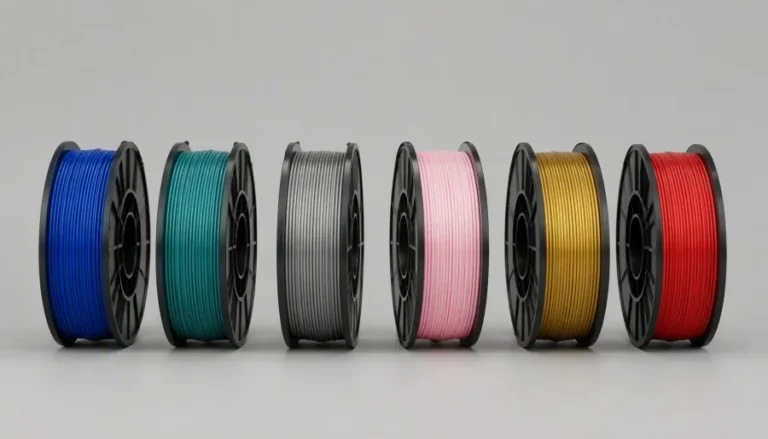
Color is where private-label programs live or die at the returns desk, and the discipline is unglamorous: physical samples first, Pantone references second, screen images as direction only, never as the standard. A physical sample approved in writing becomes the retained reference, the golden sample, against which every subsequent batch is compared. Without it, “the color is slightly off” is a matter of opinion. With it, it is a matter of measurement against a shared standard.
Honesty about the boundary matters here as much as the process: no manufacturing process delivers zero color difference between batches. What a controlled program delivers is a defined tolerance, a retained standard, and a reorder process that compares new production against the reference instead of memory. That is what consistency actually means in manufacturing terms, and a supplier who explains it that way is describing a process rather than selling a wish.
Step Three: Approve the Packaging, in Writing, at Every Level
Packaging approval in a private-label program is a chain, and every link generates a document:
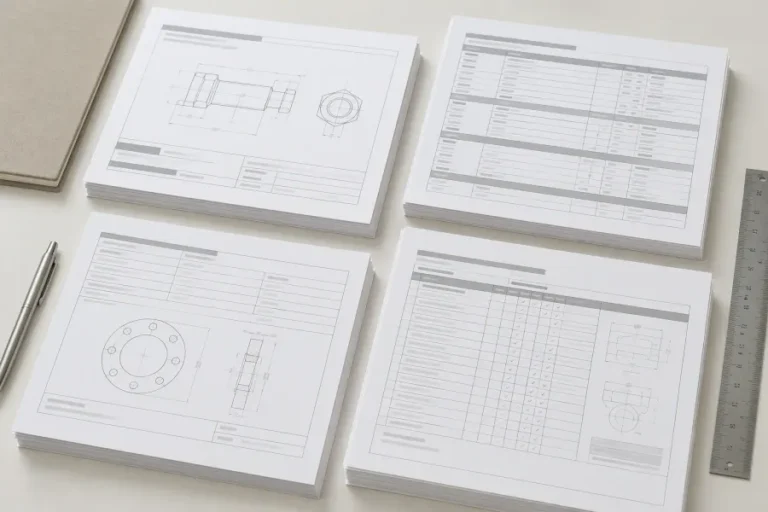
- Label proof: artwork, text, barcode values, and placement, approved and signed before anything prints.
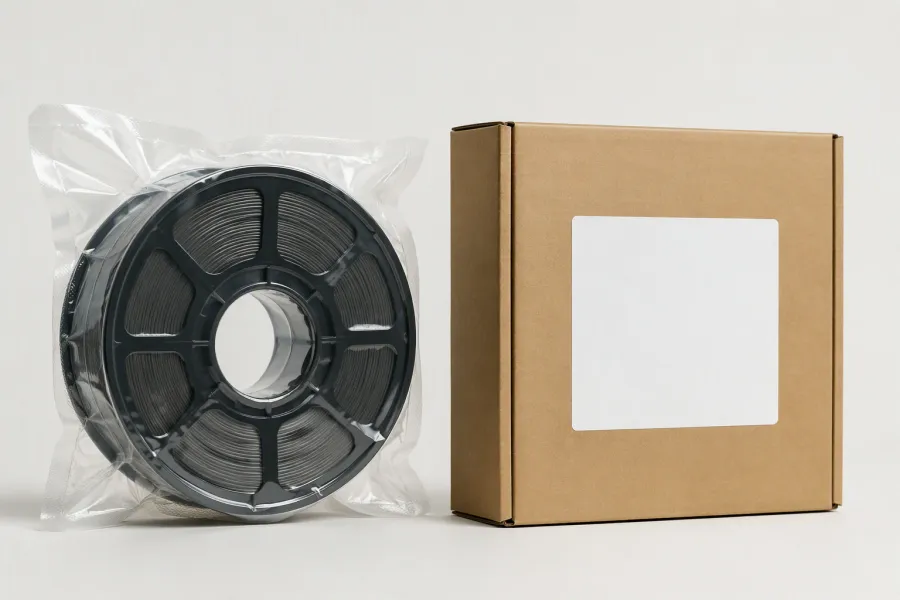
- Box and spool proof: dieline, material, print quality, and the way the spool presents through any window.
- Barcode verification: always scanned, because a mis-encoded barcode costs real labor at the fulfillment center.
- Market variant review: each market your brand sells into gets its own proof cycle for its packaging variant. Our packaging guide covers the market-variant logic and the arrival inspection that closes the loop.
The scale structure respects the same sequencing. Programs start in neutral or existing packaging while the product proves itself, move to labels and barcodes on standard boxes, and graduate to fully custom boxes and spools once the volumes justify the design work; the custom tier referencing a thousand spools per design, with packaging minimums quoted separately from filament minimums at every level.
Step Four: Define What Customization Actually Means
The boundaries between program types are worth naming precisely, because proposals blur them. Private label applies your brand to a confirmed product: labels, boxes, spools, barcodes, and manuals. Light customization adjusts colors, packaging combinations, and controlled parameters within the existing material range, with an approved sample as the reference. A genuinely new formulation, with new material properties or performance targets, is a development project, evaluated separately for cost, minimums, testing, and timeline. Programs drift into trouble when a development project is sold as a customization, or a customization as a private label; the full chain, run honestly, sorts each proposal into the right category before commitments are made.
What Changes When Volumes Grow
As the program scales, the approval chain does not change, but two additions earn their place. A rolling forecast replaces ad-hoc reorders, giving the supplier production-planning visibility and the buyer more reliable lead times. And the change-control conversation begins: what happens when a raw material lot changes, a packaging supplier is switched, or a process is adjusted? In a program with documentation, a change is notified, its impact is assessed against the retained standards, and the golden sample decides whether it matters. Change notified and assessed, and never silently absorbed, is the difference between a calm program and a program in constant renegotiation.
Step Five: Keep Order Twelve Looking Like Order One
The quiet machinery of reorder consistency is documentation, and it is the part competitors’ service pages never describe. The batch that ships against your program carries the same SKU specification, is compared against the same retained color standard, and releases against the same inspection record as the batch you approved. Your file, from specifications to golden samples to signed proofs to batch records, is the program’s memory. When a question arises on reorder nine, the file answers it; a thin file invites disputes.
Confidentiality is part of that machinery. A private-label program is confidential by default: the supplier does not disclose your name, your designs, your volumes, or your markets, and a mutual NDA is available where the relationship warrants one. Regional exclusivity, when buyers raise it, is a conversation for after the program has proven itself through several successful orders and a rolling forecast, because exclusivity granted before track record exists prices a risk no one has measured.

Starting Below the Custom Tier
The entry path matters because most brands cannot start at a thousand spools per design, and should not need to. A private-label program can begin with a mixed-SKU trial at the ten-spool entry point, in neutral or existing packaging, proving the product on the buyer’s own machines. The first commercial step begins at a hundred spools, still on standard packaging with labels and barcodes applied, and the full custom tier at a thousand spools per design is a graduation the sales data justifies, not a hurdle the program starts behind. Packaging minimums are quoted separately from filament minimums at every rung, so the brand controls its own pace.
The production clock deserves the same clarity. Nothing runs until every approval in the chain signs: the specification, the color standard, the packaging proofs, and the deposit. Once those are in place, production runs ten to fifteen days, not including shipping or customs. The practical implication for brand planning is that the approval chain and the calendar are the same conversation, and a buyer who knows the sequence can predict the total time from decision to delivery.
The Documentation Package
What a well-run private-label relationship produces, over time, is a file neither party can fake: the product validation records, the retained color standards, the signed packaging proofs, the per-batch quality records with traceability, and the change log of every variation the program has survived. That file is the asset. It is what makes the program portable, auditable, and calm, and it turns a supplier conversation into a review of shared evidence.
The path from here, for a buyer with a product to brand, starts on the OEM and private-label page. More about FilaSource is on the homepage.
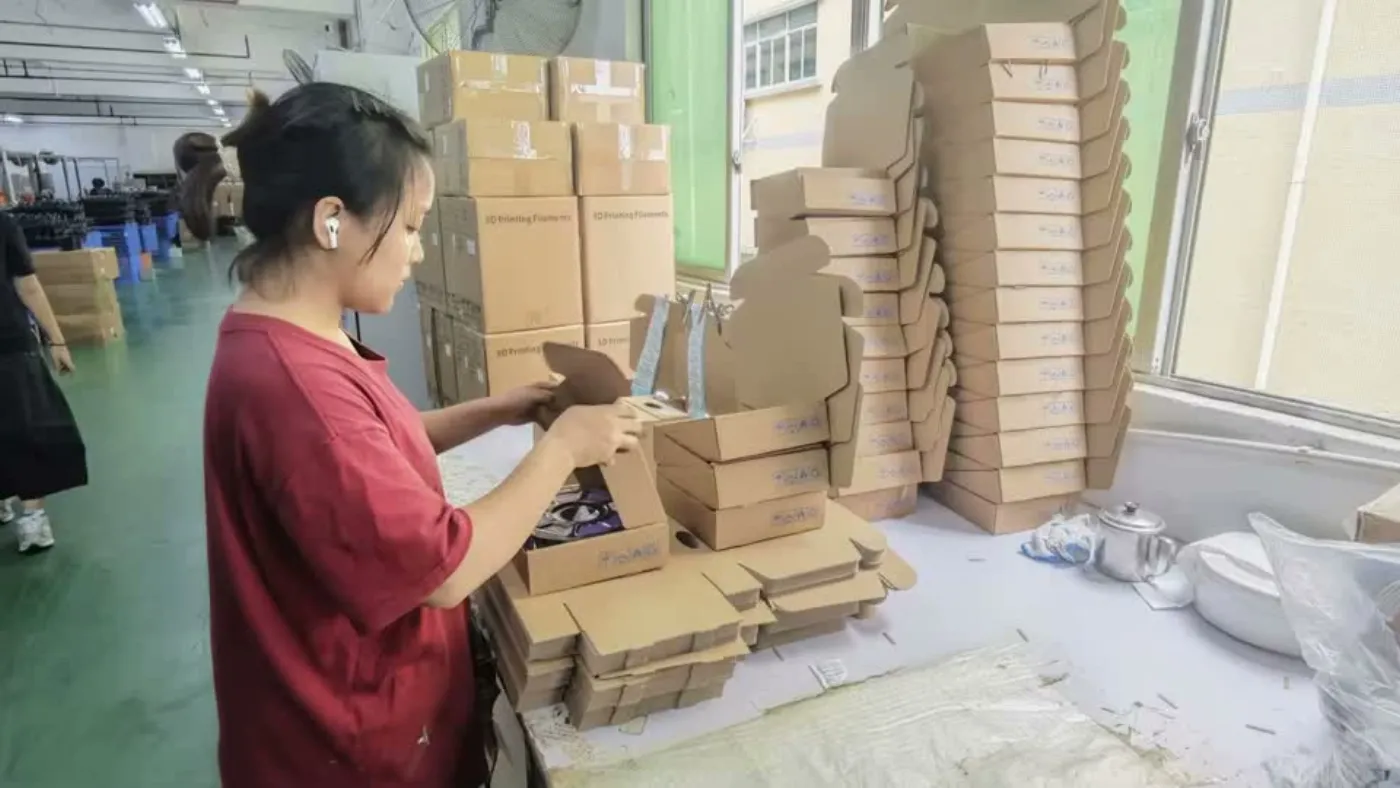
For buyers comparing programs across suppliers. The chain is a framework any competent private-label supplier can describe; what distinguishes programs is whether the chain produces artifacts or just assurances. Ask to see a sample golden-sample record, a signed proof, a batch release document. A supplier who can show you the file before you are a customer will maintain the file after you are one.
Frequently Asked Questions
What is the minimum for private-label filament?
Full custom packaging references a thousand spools per design, with packaging minimums quoted separately from filament minimums. Programs typically start in neutral or labeled packaging at far lower volumes and graduate to custom as sales data justifies the design investment.
How do I keep colors consistent across private-label reorders?
Through retained physical standards. The approved sample, the golden sample, becomes the comparison reference for every subsequent batch, and reorders are matched against it, with a defined tolerance, and with screens serving as direction only. Two-batch validation before the first commercial order establishes the baseline.
What should be approved before a private-label order goes to production?
Five things in writing: the product specification, the color standard (physical sample first), the label and barcode proof, the box and spool proof, and the quality criteria the batch will release against. Each item not in the file is a future disagreement.
Is regional exclusivity available?
It is a conversation for established programs, typically after several successful orders and a rolling forecast, and it is typically structured around region, product, and volume commitments, confirmed per program. Granting it before track record exists prices a risk no one has measured.
How is my brand information protected?
Private-label programs are confidential by default: no disclosure of your name, designs, volumes, or markets without written authorization, and a mutual NDA is available where the relationship warrants one. The confidentiality covers the program’s existence as well as its details.