Every filament listing says the spool was checked. Nobody tells you what that means, and the honest answer varies more than the price does. On some lines it means a laser gauge watched every meter of the strand and the batch carries a record you can read. On others it means a person glanced at the first spool of the morning. Both can print the word “tested” on the box.
Filament quality control becomes less mysterious when you stop treating it as one thing. In a working plant it is four separate checks at four separate moments, each with its own failure modes and its own paperwork. The layers run from pellet to released spool, and each leaves a record you can hold. The companion pieces on the full manufacturing process and the extrusion line walkthrough cover where product comes from; the layers below cover how bad product gets stopped. Keep the four layers in mind when you read any supplier’s listing, because “quality control” in a product page can honestly mean any one of them, or dishonestly mean none.
Four Places Quality Gets Checked
Layer one is incoming material: pellets and masterbatch inspected before they touch a line. Layer two is in-line: diameter and surface monitored continuously while the strand runs. Layer three is finished goods: every spool inspected, with additional random sampling lot by lot. Layer four is print validation: spools from actual production batches run on printers before release.
The layers exist because each one catches what the previous ones miss. Incoming checks stop a bad resin lot before it becomes a string of bad batches. In-line monitoring catches what the process drifts into during a run. Finished-goods inspection catches what formed despite a good run. Print validation catches the failures no measurement sees. Skip a layer and the failure it would have caught ships to your customer wearing your brand.
The layers also decode listing language. “Tested on our printers” is layer four, if it’s true. “±0.02 mm tolerance” is layer two, and only means something with the log behind it. “Fully inspected” is layer three. “Premium materials” is none of them; it’s an adjective. When a product page mixes those freely, you’re reading copy, and the copy is doing the work the records should do.
Incoming: Where Batches Are Won
The cheapest quality decision a factory makes happens before anything melts, and it’s the one most buyers never ask about. Pellets arrive in lots. A lot with moisture already in it, or melt flow drifting outside the grade’s normal behavior, produces symptoms downstream that look like process problems and get treated like them, badly, for days. Three things matter at this gate: moisture in the resin, flow behavior, and lot identity, so that whatever runs later traces back to what arrived. Masterbatch belongs here too, since color consistency on your shelf begins as a dosing record at this gate. Our assessed facility keeps written incoming inspection procedures with retained records, which sounds bureaucratic until you’ve traced a stringing complaint back to a single resin lot and found the paper already waiting.
The buyer’s version of this layer is a short set of questions: do you inspect incoming material, what do you check, and can I see a lot record for the batch I’m buying? Suppliers who brush the question off are telling you their quality starts one layer later than yours should.
In-Line: The Gauge Never Blinks
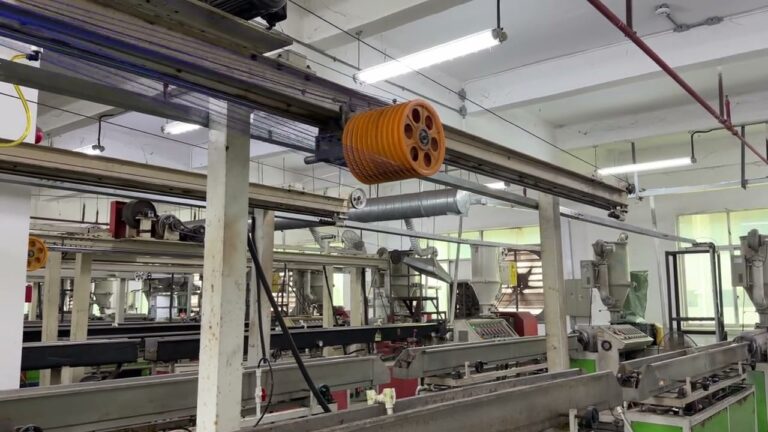
On any modern extrusion line, a laser gauge reads the strand’s diameter continuously and the line corrects itself when the reading drifts. Our specification holds 1.75 mm at ±0.02 mm, monitored in-line during production, and the reading becomes a log: the strip-chart record of the whole batch, meter by meter, that we’ve recommended buyers request elsewhere. Reading one is a skill worth an afternoon. You’re looking for two patterns: noise, which is normal and small, and drift, which is the reading leaning one direction over the run. A log that shows tight noise around the target with occasional small corrections is a healthy line telling the truth. A log that wanders, or that stops and restarts around a long flat gap, is telling you something about the run that the summary numbers will never mention. The line-side mechanics of how that balance works are covered in the extrusion line walkthrough; from the quality side, what matters is that the monitoring is continuous and the log survives the run.
Finished Goods: Full Inspection Plus Lot Sampling
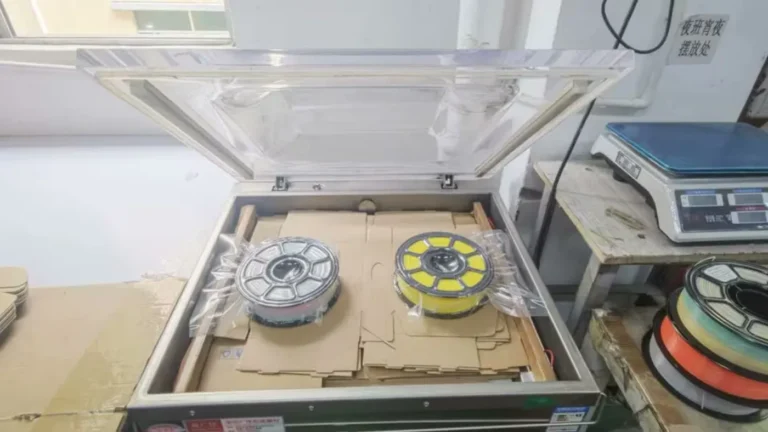
After winding, every spool gets inspected — a claim the Intertek assessment records as 100% finished inspection for the facility behind FilaSource. On top of that, random samples are pulled from each lot for a closer look. The assessment also records eight QA/QC staff and quality control on all production lines. Numbers like those describe scale. The practice behind them is what your receiving dock lives with: seals intact, labels correct, weight as specified, wind clean under the film. Your dock can mirror the layer in a few minutes per pallet: vacuum film still taut, desiccant present in each bag, box and label matching the packing list, and a spot-check weigh-in on one spool from each lot. Log what you see. If a supplier’s finished-goods record says clean and your dock photos say otherwise, you’ve just produced the most persuasive document in the relationship.
Net weight belongs in this layer because it is where short-weight complaints live. A 1 kg specification means 1 kg of filament, weighed and recorded separately from the spool and packaging around it. When a spec sheet says 1 kg, ask whether the weigh-in is net or gross, and check one spool per lot at your own dock.
Print Validation: Spools That Actually Print
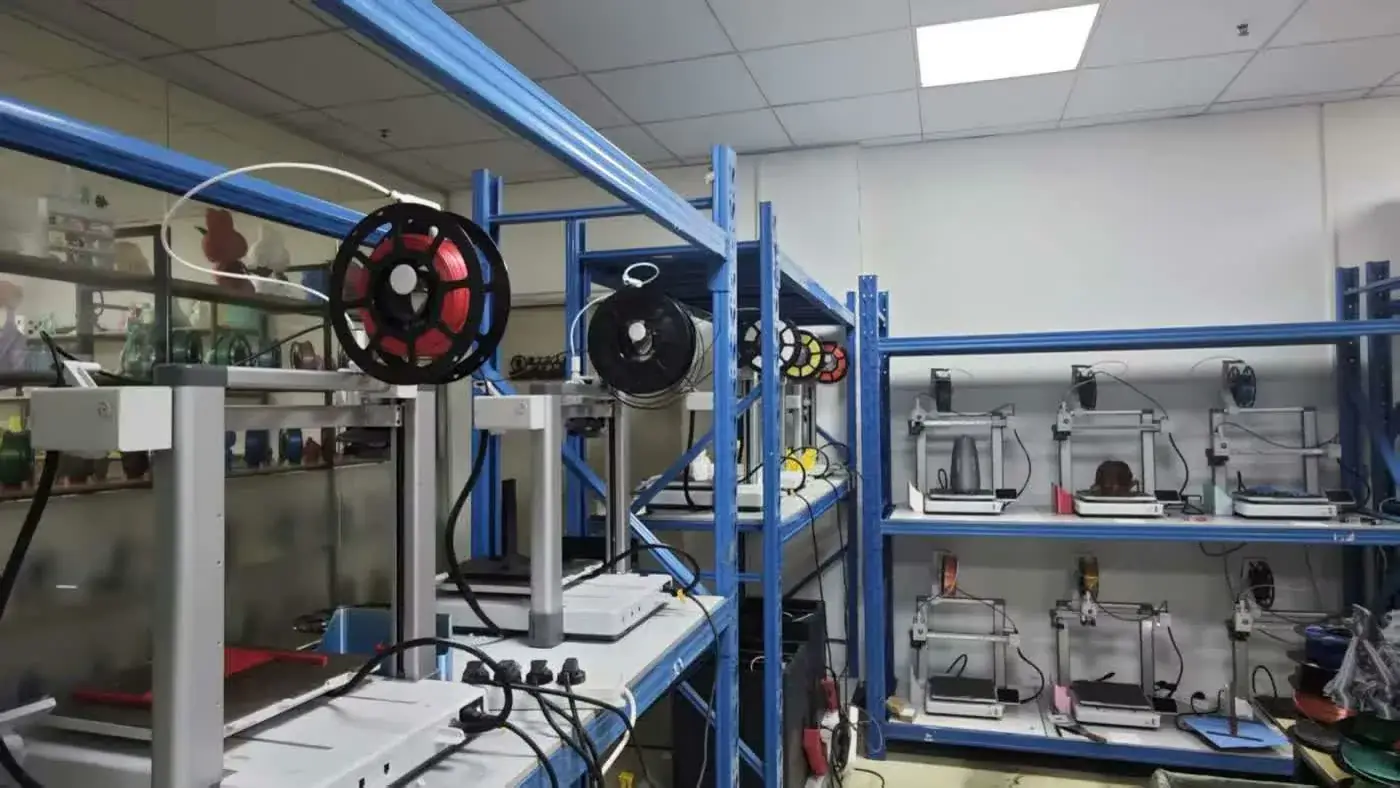
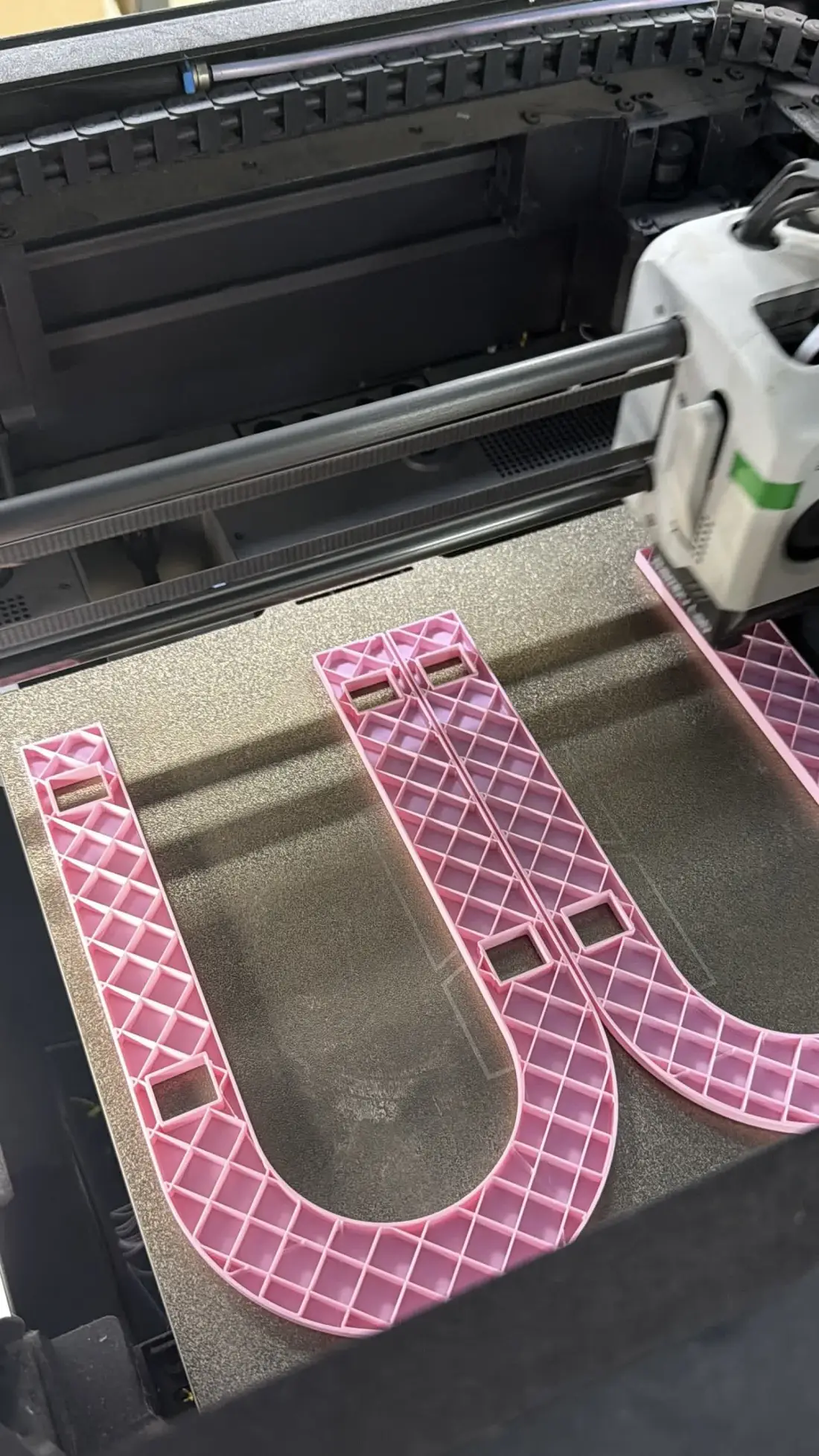
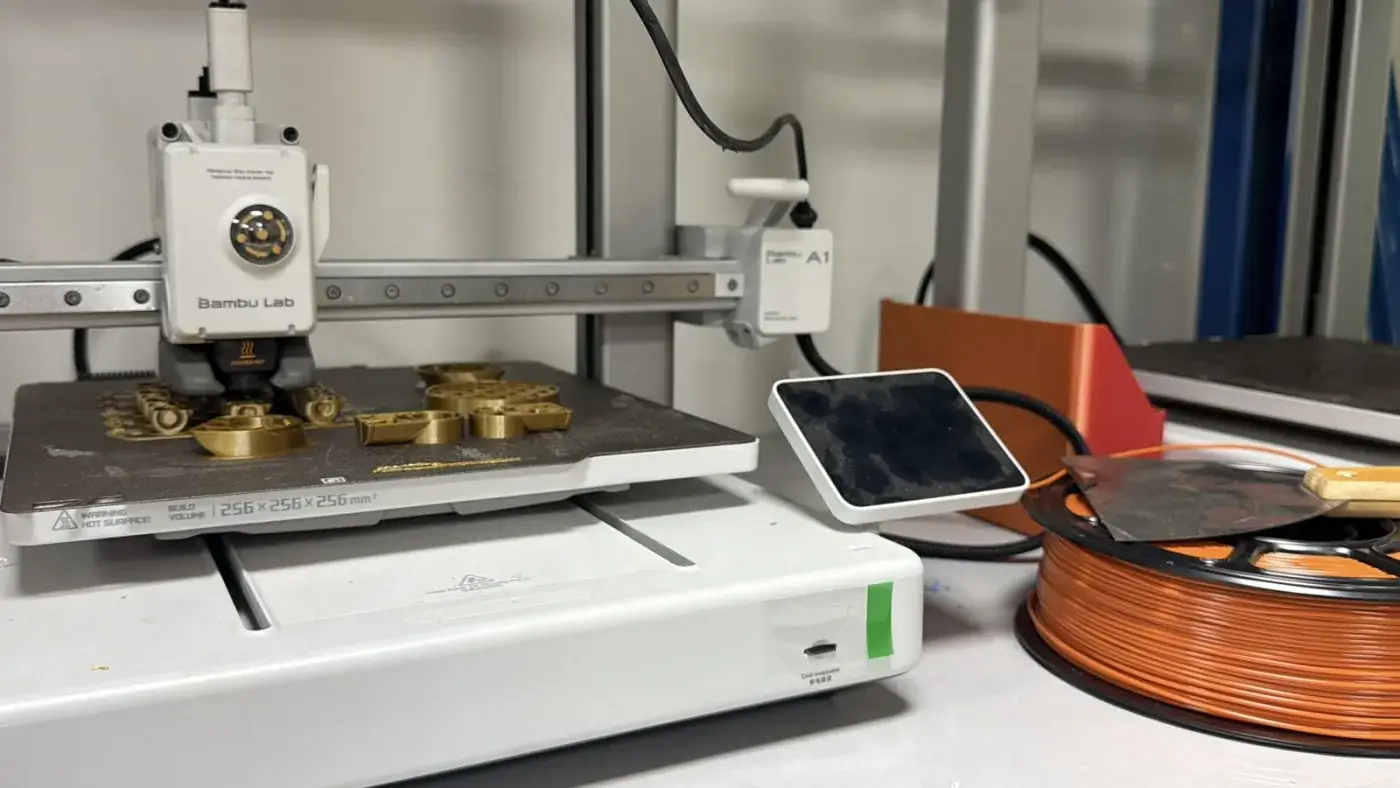
The layer most factories skip is the one that most resembles your reality. The assessed facility runs fifteen 3D printers as test equipment: spools pulled from production batches get printed before those batches release. These are production spools, off the same line that will fill your order, run through the same failure modes your customers will find or miss.
This is the layer that catches the failures measurement misses, and it maps cleanly onto what your own test bench should check. Surface quality shows contamination and cooling problems, while dimensional checks on a printed part show how the tolerance behaves through a real extrusion path. The long prints are the ones that matter most, because uninterrupted runs expose winding and feeding behavior that no single measurement predicts. A buyer replicating even a simplified version of this, one long print per batch on a known model, inherits the strongest layer of factory QC for the cost of a spool. A diameter can sit perfectly in tolerance while a contaminant streaks the surface, or a wind crosses itself partway into the spool. Printing the actual product finds these. If a candidate supplier lacks print validation, plan to supply that layer yourself: an uninterrupted test print per batch on a model you trust, logged like any other record.
Traceability and the Honest Gap
Traceability ties the layers together. Finished and packed product traces through batch identifiers back to raw-material lots, with a documented procedure, per the same assessment. When a complaint arrives, that linkage converts a dispute into an investigation: the batch, the line window, the resin lot, and the gauge log for that day.
The honest part: a quality story that never mentions a gap is a brochure. At the time of assessment, the facility had no closed-loop corrective-action system, no supplier-evaluation program, and no product-alert or recall procedure. In practice, problems get caught and records exist, but the machinery that makes a failure permanently teach the process did not exist yet at the time of the assessment. What a good answer sounds like, when you ask: containment first (where is the affected batch, has it shipped), root cause comes next, followed by a fix and verification that it held. You’re listening for whether those steps exist as a habit or got invented for your call. A supplier mid-maturity who says “we don’t have the closed loop yet, here’s what we do instead” has told you something more useful than a polished blank. The questions, and what they reveal about how a supplier matures, are covered in our guide to reading a production assessment.
What to Request
The layers translate into a short list of documents, one per layer:
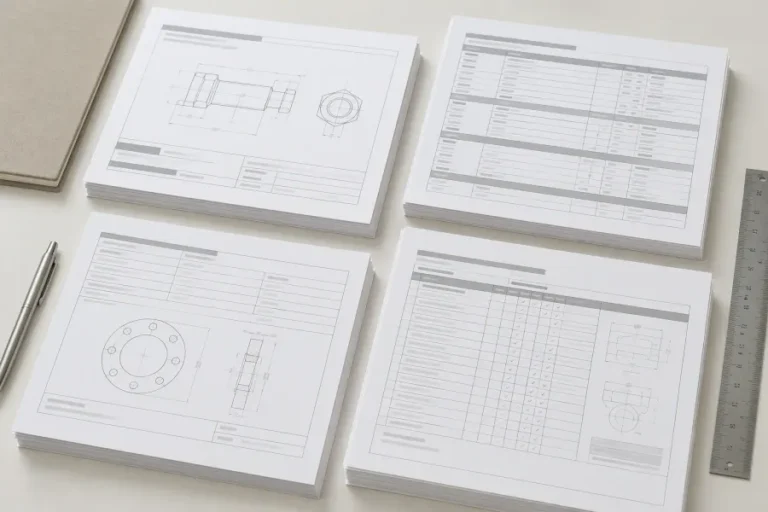
- Diameter log from the in-line gauge, covering your batch’s run.
- Incoming lot record for the resin and masterbatch behind it.
- Finished-goods inspection result for the spools shipped to you.
- Print-validation outcome from the test printers on that batch.
- Traceability sheet tying your spools to their lots and line windows.
Then close the loop with your own test: at least two independent production batches, pass/fail criteria written before the first print, judged on your machines. Their records and your prints, agreeing, are the whole of supplier quality assurance. The documentation package sits behind the OEM and private-label manufacturing qualification path, and more about FilaSource is on the homepage.
Frequently Asked Questions
How is filament quality controlled in production?
Through four layers: incoming material inspection, continuous in-line diameter monitoring, finished-goods inspection with lot-by-lot sampling, and print validation of production spools. Each layer catches failures the previous ones miss, and each produces records a buyer can request.
What does 100% inspection actually mean?
Every spool is inspected, with random samples pulled from each lot for closer checks. It is a strong floor, and it works alongside the other layers: inspection catches visible defects, while the gauge and print validation catch what eyes cannot.
What is lot sampling in filament QC?
Beyond full inspection, additional spools are randomly selected from each production lot and checked more deeply. The lot structure is what makes traceability work later: a finding ties back to a batch, a line window, and a resin lot instead of dissolving into “somewhere in that shipment.”
What quality records should a buyer request?
Five cover the layers: the diameter log, the incoming lot record, the finished-goods inspection result, the print-validation outcome, and the traceability sheet. Validate them against your own prints on two independent batches before a commercial order.
What does batch traceability include?
A batch identifier on the finished spool, linked to the production records and raw-material lots behind it. In practice it’s what turns a complaint into an investigation with dates and evidence, instead of an argument about whose printer is at fault.