Every filament catalog has a moment where PLA runs out of answers: the part gets dropped, the enclosure sits near warmth, the customer handles it daily. That moment is why PETG filament exists. It is the workhorse polymer that trades a little of PLA’s crispness for a lot of toughness — and for a buyer, it is the material that decides whether your functional range earns its shelf space or generates its returns.
What is PETG filament, from a sourcing perspective rather than a chemistry lecture? This explainer covers the properties that should drive SKU decisions, how the material prints at production scale, the seven PETG series and the channels they serve, and the specification sheet to hold any supplier against. Properties first, then the buying points — because the second part only makes sense once the first is clear.
What PETG Actually Is
PETG is PET — the same polymer family as drink bottles — modified with glycol. The modification matters more than the acronym suggests: glycol disrupts the resin’s tendency to crystallize, which makes the material tougher and easier to extrude and print than unmodified PET. In spool form, PETG ships as a clear or pigmentable filament that runs on the same 1.75 mm hardware as everything else in a standard catalog.
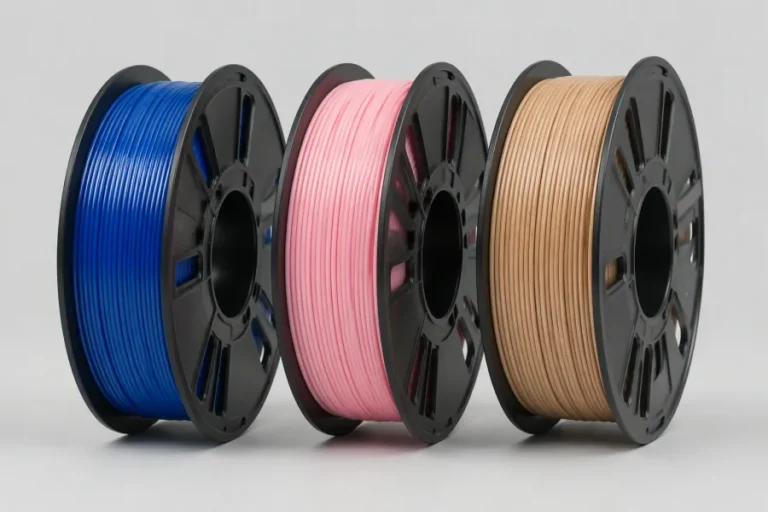
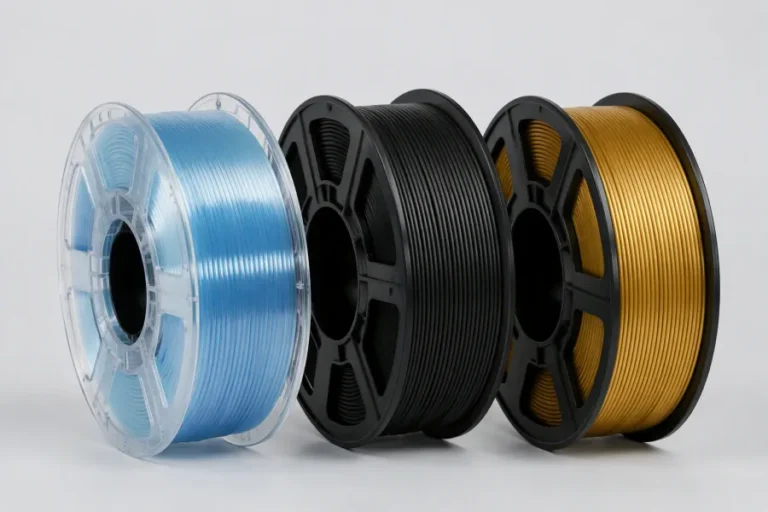
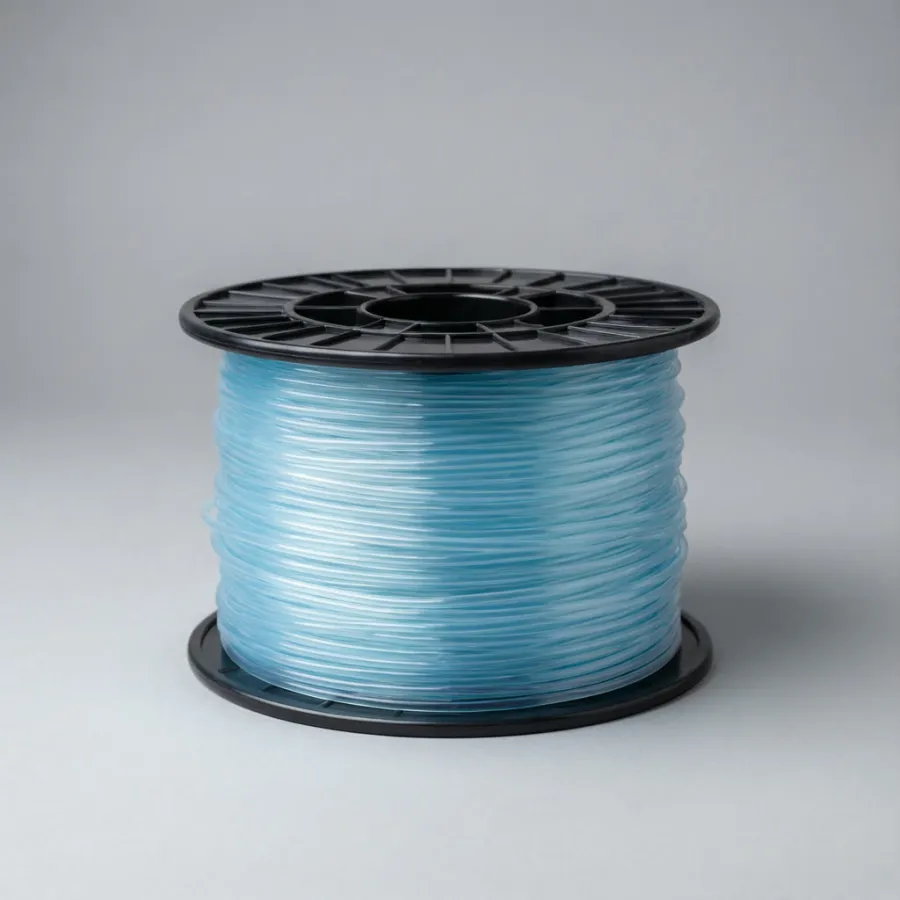
One property follows directly from the chemistry and is worth a line of its own: PETG is naturally transparent. Colored grades cover the full catalog range, but the material’s clarity in its natural state is a genuine product advantage for containers, display pieces, and any SKU where seeing inside the part is the point. Our PETG Basic series includes transparent and translucent options for exactly that reason.
What the chemistry also brings — and every buyer should know before the first pallet — is moisture sensitivity. PETG absorbs water from the air, and wet PETG announces itself at the printer as stringing, bubbles, and weak layers. That single trait drives most of the packaging and storage discipline in the rest of this article.
The Properties That Drive SKU Decisions
Four properties decide where PETG belongs in a catalog. Toughness: PETG bends where PLA snaps — published material guides place its impact resistance between PLA and ABS. Parts that get handled, clamped, or dropped are PETG territory. Layer adhesion: printed layers bond tightly, so functional parts fail in the material, not at the seam. Chemical resistance: PETG holds up against common oils, detergents, and household chemicals that craze or weaken more brittle resins — one reason it is a common choice for container and technical SKUs. Heat behavior: PETG tolerates meaningfully more service heat than PLA, though under sustained load at higher temperatures it creeps, and it is not an engineering-resin substitute. For specification purposes, treat it as the step up from PLA.
Translated into assortment logic: if your channel sells display and décor, PETG is your durability option. If it sells tools, brackets, enclosures, or anything with a duty cycle, PETG is the default and PLA is the exception. For the full head-to-head — including cost per successful print — see our PLA vs PETG production comparison.
Read the mix as a signal, too. A catalog whose functional range outsells its visual range is telling you where your customers’ stress actually lives, and the returns bin agrees: breakage complaints route back to a toughness decision made at the SKU-planning stage, months earlier. A well-chosen PETG range covers the handling your parts will receive after they leave you.
Printing PETG: Temperatures, Bed, Stringing
PETG prints hot and prints well — within its window. Our specification runs nozzle temperatures of 220–255 °C with a heated bed of 50–80 °C, and validated settings ship with every order so your first spool is not your tuning session. Two practical notes from the production side:
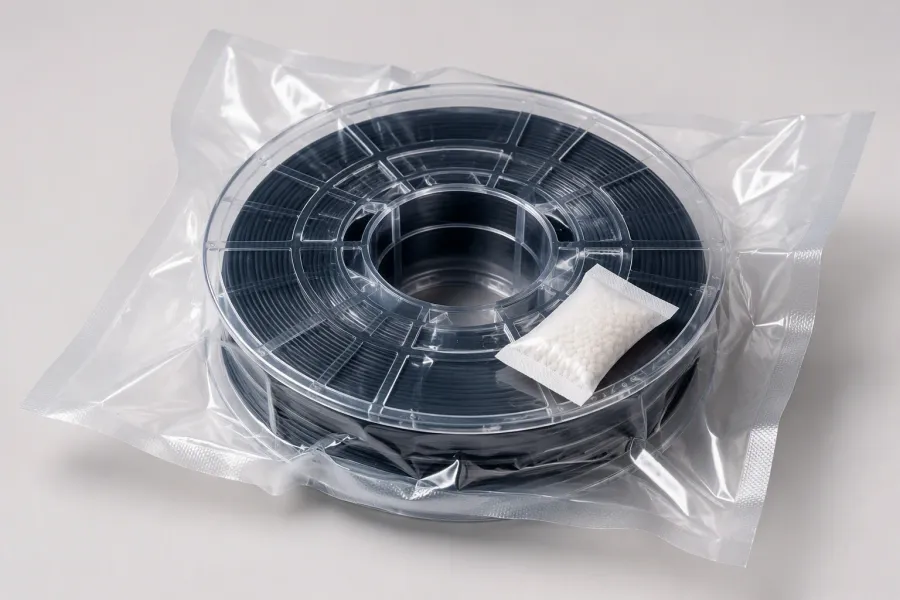
Stringing is a moisture and settings problem, not a fate. PETG’s reputation for wispy strings is mostly a reputation for being printed wet or uncalibrated. Dry spools, tuned retraction, and correct temperatures keep it clean — published testing indicates that drying improves printed part properties. The supplier-side question is whether your source dries and seals consistently; the buyer-side discipline is storage for opened stock: first-in-first-out for sealed spools, a dwell limit for anything opened, and the per-material re-drying guidance in hand before the first stringy week teaches it to you. Enforcement can be as simple as a dated label on every opened spool and a drying station booked into the weekly schedule — the dwell limit only works if someone can see when it expired. Every spool we ship is vacuum-sealed with desiccant, and each material carries its own drying specification available on request.
No enclosure required. PETG warps far less than ABS and prints open-air on standard beds — which is why it, not ABS, is the accessible functional material for most fleets. Adhesion is rarely the problem; if anything, PETG bonds enthusiastically, so peeling it from a cold bed patiently beats chiseling it from a hot one.
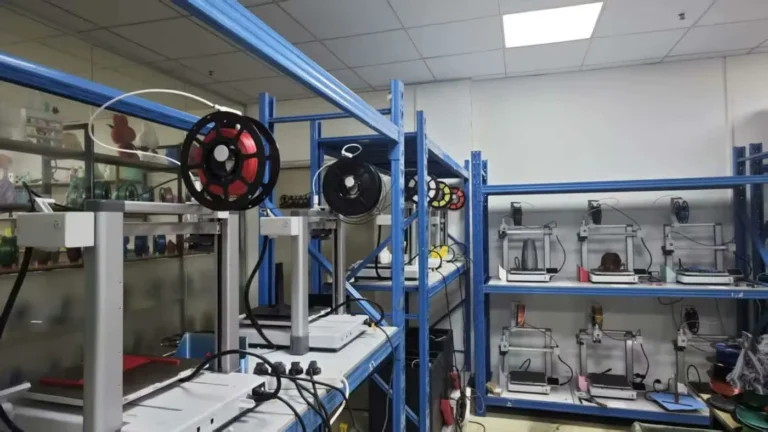
At fleet scale, the settings conversation becomes a pass/fail conversation. Write stringing tolerance into your trial criteria — a defined test print, photographed at a fixed distance under the same light, judged against a reference spool — rather than letting each operator have opinions. Give every machine class its validated profile instead of inheriting the loudest printer’s numbers, and budget operator time honestly: PETG asks for a little more attention than PLA and pays it back in parts that survive handling. None of this is difficult; it is the operating baseline for PETG at volume.
PETG in a Catalog: Seven Series and Where They Sell
A PETG range is easier to plan as jobs, not as a single material. Ours runs seven series, each answering a different shelf question:
- Basic — the functional foundation: containers, brackets, and technical parts, including the transparent and translucent options.
- Dopamine — saturated, high-energy colors for retail programs aimed at younger markets.
- Metallic — metal-look finish without post-processing; showcase models, props, trophies.
- Marble — stone texture with PETG durability; layered décor and architectural display.
- Rainbow — multi-color transition with PETG strength; gift and creative retail.
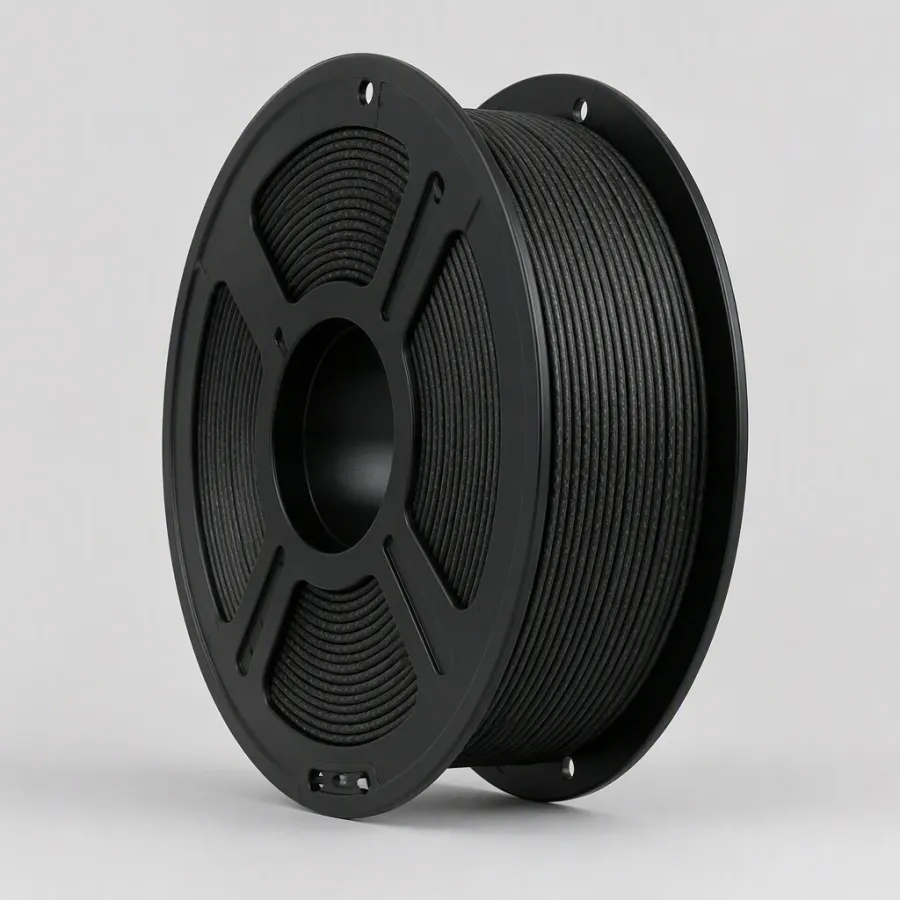
- PETG-CF — carbon fiber reinforced: stiff, matte, technical; jigs, fixtures, functional prototypes.
- PETG-GF — glass fiber reinforced: improved stiffness and dimensional stability for load-bearing and industrial parts.
The reinforced grades carry one operational note that belongs in any purchase order: CF and GF filaments are abrasive. Specify hardened steel nozzles — standard brass wears visibly faster against fiber-filled material, and that wear shows up as inconsistent extrusion long before anyone inspects the nozzle.
In practice the seven series sort by who is buying them. A workshop supply channel lives on Basic and the two reinforced grades, with clarity options for guards and enclosures. Gift and creative retail takes Dopamine, Rainbow, and Metallic, where PETG’s toughness simply means fewer damaged SKUs on the shelf and in transit. Décor-oriented sellers find Marble sells the finish PETG’s durability protects. A print farm typically starts with Basic in a few core colors, adds CF once jig work appears, and expands outward as its job mix earns it — the same validate-then-expand logic we recommend for any new supply relationship.
What to Specify When Buying PETG
PETG rewards buyers who treat it as an engineering purchase rather than a commodity. The specification below is the one our manufacturing partner’s PETG line holds to — the sheet our spools are produced against — so use it as the checklist for any PETG filament supply conversation:
| Specification | What to require, and why |
|---|---|
| Diameter & tolerance | 1.75 mm at ±0.02 mm, in-line monitored — tolerance drift is fleet recalibration |
| Nozzle temperature | 220–255 °C window, with validated settings per shipment |
| Bed temperature | 50–80 °C window, matched to the settings sheet |
| Net weight | 1 kg net per spool, weighed and recorded — separate from gross with spool |
| Packaging | Vacuum-sealed with desiccant per spool; the seal is the moisture spec |
| Quality control | In-line diameter monitoring plus finished-goods inspection on every batch |
| Traceability | Lot tracking from raw material to delivered spool — the mechanism that turns complaints into investigations |
For the full mechanics — stages, timelines, and the paperwork that speeds them up — see our guide to qualifying a second filament source. Behind the table sit the records that make it real: diameter logs, drying specifications, and batch traceability are all requestable documents, and the article on how filament is manufactured explains where each one comes from in the process. Validation before volume stays the rule: two independent production batches, pass/fail criteria on your own machines, then the commercial conversation.
PETG Next to Other Materials
Briefly, because the full treatment lives elsewhere: versus PLA, PETG gives up surface crispness and print speed for toughness, chemical resistance, and heat headroom — our PLA explainer and the production comparison cover both directions of that trade. Versus ABS and ASA, we are deliberate about boundaries: those engineering materials are outside our confirmed supply range until their specifications, quality data, and documentation complete validation, so we do not sell them on enthusiasm. A supplier whose material list grows faster than their evidence deserves another qualification question before any order. More about FilaSource and the second-source model is on the homepage.
Frequently Asked Questions
What is PETG filament made of?
PET, modified with glycol. The glycol disrupts crystallization, giving the filament its signature toughness and printability — plus natural transparency in uncolored grades. It runs on standard 1.75 mm hardware.
Is PETG stronger than PLA?
Tougher, more precisely: PETG bends where PLA snaps, with better layer adhesion and chemical resistance, at some cost in stiffness and surface crispness. If “strong” means surviving handling, choose PETG; if it means holding rigid detail, choose PLA.
Does PETG need an enclosure to print?
No. PETG warps far less than ABS and prints on open-air machines with a heated bed — one reason it is the accessible functional material for most operations. Adhesion is rarely the challenge with a prepared bed.
Does PETG need drying before printing?
Yes, once opened or stored loosely — PETG is hygroscopic, and wet spool symptoms are stringing, bubbles, and weak layers. Suppliers should ship vacuum-sealed with desiccant and provide per-material drying specs; buyers should manage opened-stock rotation.
Can PETG be transparent?
Yes — clarity in its natural state is one of PETG’s genuine advantages, suited to containers, guards, and display parts. Transparent and translucent options are standard in a well-specified PETG Basic series.
Do I need a special nozzle for PETG-CF or PETG-GF?
Yes: hardened steel. Carbon and glass fibers are abrasive, and standard brass nozzles wear out visibly faster — a detail that separates suppliers who run reinforced grades at scale from those who list them on paper.