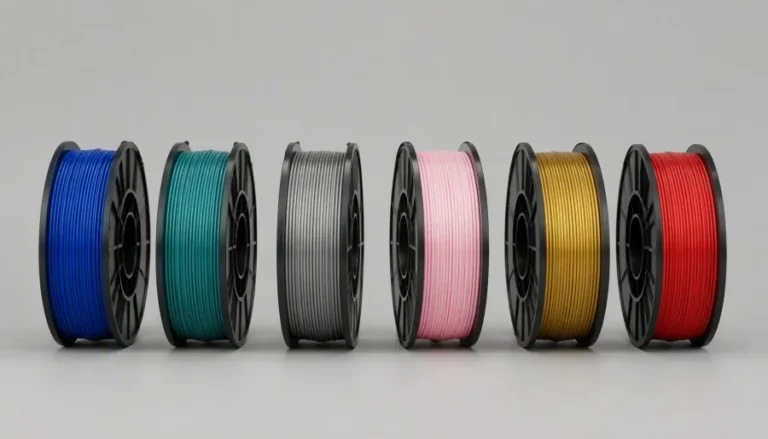
Color is where filament programs quietly succeed or loudly fail. The sample arrives, it looks right under the office lights, the order ships, and six months later a reorder lands one shade off. The customer holding two spools side by side sees it at once. The material didn’t change. What was missing was a defined color reference that both sides could point to, months apart.
The fix is discipline, not talent: physical samples first, Pantone references as the bridge, screens for direction only, and one retained production reference that every batch is checked against. Pantone filament matching is one link in that chain.
The Approval Order: Physical, Then Pantone, Then Screen
The order matters because each step is less reliable than the one before. A physical sample of the actual material shows the real color on the real surface in real light. A Pantone reference is a standard bridge, a shared numbering system that lets two parties in different countries discuss one shade without shipping anything. A screen image is direction only, since monitors and rendering differ and nobody should match production color to a phone.
In practice it runs like this: approve a physical sample of the target material, record its Pantone reference for communication and filing, and use screen images only to narrow options before samples exist. When someone proposes flipping the order, matching production to a screen because the sample “looks close enough,” the reorder dispute is already on the calendar.
One honest limit belongs on the table early. Filament color is built into the material rather than painted onto it, and no manufacturing process delivers zero difference between batches. A controlled program delivers a defined reference and a comparison against it. That’s a different promise, and a keepable one.
Lighting, and Why Two People Saw Two Colors
Color disputes often turn out to be lighting disputes. One spool reads differently under warm office light, cool workshop light and afternoon daylight, and that difference follows the part into a customer’s environment. The professional habit is to fix the viewing condition: compare samples under one agreed lighting setup and photograph the comparison for the file. Put buyer and supplier in front of the same pair under the same light, and many “the color drifted” conversations end within minutes, because often the color didn’t drift. The light did.
How Many Colors to Start With
Start narrow and widen on evidence. A useful planning split for a first program puts most of the volume in core colors (black, white, gray, where reorders concentrate) and a minority in growth shades that test the market. Treat that ratio as a planning heuristic, not a rule, because your first reorder cycle will replace it with real sales data. Every added color multiplies the approval and reorder workload. A brand that can repeat five colors precisely is further ahead than one chasing fifty it can’t.
The Golden Sample
Once a color is approved, that physical sample becomes the production reference: the golden sample. Both sides keep it and refer to it. Every later batch is compared against it, not against memory or whichever print happens to be on someone’s desk. The golden sample turns “this batch looks different” from an argument into something you can check.
The mechanics are simple. Keep the approved sample somewhere dark and stable, not on the shelf by the window. Name it in the order documents. On each production run, compare a sample from the new batch against the retained standard, under consistent lighting, before release. Validating consistency across at least two independent production batches is covered in our quality control guide, and color belongs in that same framework.

Tolerances, Honestly
Professional color management expresses difference as a number: instruments report how far one color sits from another, and suppliers in mature programs quote a tolerance once both sides agree on a standard. Two things should come up in that conversation. The tolerance is defined against the retained reference, and it applies to a comparison method both sides have agreed. What shouldn’t come up is “exact match, always,” or the opposite, “color varies, that’s manufacturing.” The first can’t be kept, and the second is an unmanaged process described as physics.
If your brand runs on color precision, ask where the reference is kept, what comparison happens before release, and what the escalation path is when a batch falls outside tolerance. The answers describe the program better than any brochure. It’s the same verification logic as the structure check, applied to one specific capability.
Where Color Approval Sits in a Program
Color approval is a step in the private-label sequence, not a side conversation. The product is validated first. Then color, packaging, labels and barcodes get approved in writing, and production releases against the approved set. The full chain, including packaging proofs and the documentation file that keeps order twelve looking like order one, is in our private label guide.
For growth colors, the practical advice is patience: approve one shade properly, keep the reference, and prove the reorder matches before widening the palette.

Starting a Color Program
Color programs start where everything else does: a defined project, with SKUs, references and tolerances in writing. The route begins on the OEM and private label page. More about FilaSource is on the homepage.
Frequently Asked Questions
Can you match filament to a Pantone color?
Pantone works as the shared reference for communication and filing, but production matching is done against a physical sample of the actual material. The chain is: physical sample approved, Pantone reference recorded, screens used for direction only.
What is a golden sample in filament production?
It’s the approved physical sample, retained and referenced, that every later batch is compared against before release. It replaces memory and screens as the standard, so color questions become checkable instead of debatable.
Will every reorder match exactly?
No. No manufacturing process delivers zero color difference between batches, and a promise of it is a red flag. A controlled program gives you a defined reference, an agreed comparison method and a tolerance, with each batch checked against the retained standard.
Why not approve color from a screen image?
Screens differ in rendering and calibration, so the same image looks different from device to device. They’re handy for narrowing options early, but approval and the production reference belong to physical samples under consistent lighting.
When should color be approved in a private-label program?
After product validation and before packaging production. The material proves itself first, then color, packaging, labels and barcodes get approved in writing, and every order releases against that approved set.