A quotation arrives with a price per kilogram, and the number looks excellent. A few weeks later the same order has cost you freight that surprised you and a duty calculation nobody modeled, plus enough operator time on re-tuned profiles that the “expensive” competitor’s quote would have been cheaper. Nothing on the quotation was false. The quotation was answering a narrower question than the one your P&L asks.
The number your P&L asks for is landed cost: everything a kilogram of filament costs by the time it sits on your shelf, ready to sell. The procurement literature covers the generic formula well. What it never covers is how each component behaves specifically in filament, and in this industry the components have teeth. The components follow, one at a time.
The Components, in the Order They Bite
Product price is the quotation line, FOB or EXW, the number everyone compares. It’s the honest starting point and the smallest part of the story. Two suppliers a few cents apart on this line can land kilometers apart on the total.
Freight is where filament bites first, for a physical reason: spools are voluminous for their weight. A pallet of boxed filament occupies real space, and carriers price that space. Ocean freight amortizes the volume across weeks of transit; air freight multiplies it. When you compare suppliers, the box geometry matters as much as the spool price, because dense cartons ship more kilograms per cubic meter, and a supplier whose cartons carry more air than product raises the freight cost per kilogram. Our own single-spool carton runs 21.1 by 19.8 by 6.3 centimeters — a figure worth knowing because cartons-per-shipping-position, derived from dimensions like these, feeds directly into your freight quote.
Duty and customs are jurisdiction-specific and predictable once modeled, painful once discovered. The honest practice is to model them per market before the first order, so the broker’s invoice never serves as the first calculation. A landed-cost model that omits duty isn’t a model; it’s optimism with column headers.
Insurance and handling round out the classic formula, and in filament they carry one specific weight: moisture damage in transit is an insurance and handling conversation as much as a packaging one. Sealed cartons that arrive intact keep this line predictable.
Why Filament Bites Harder Than Most Goods
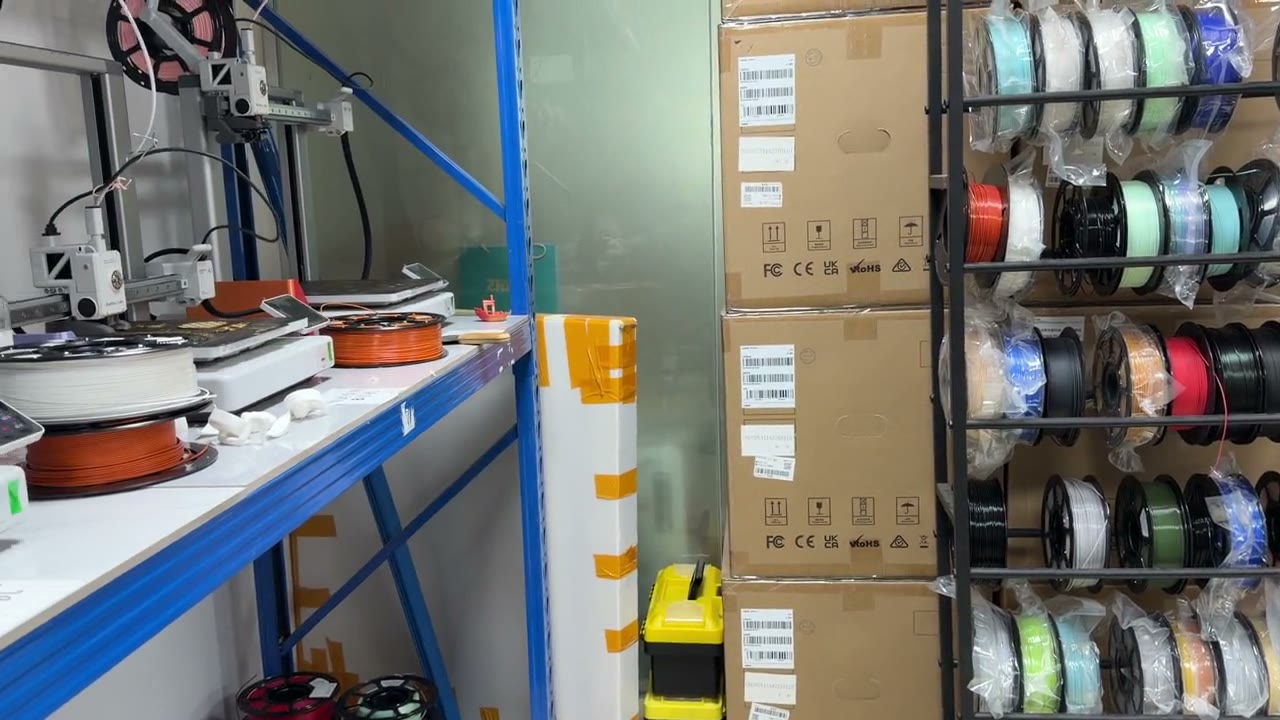
Two physical facts make this industry’s landed cost more dramatic than the generic formula suggests. First, the volume-to-weight ratio: filament ships as hollow cylinders (spools) inside air-filled boxes, so the freight line prices a lot of nothing. Second, the moisture constraint: the product needs sealed packaging and climate-aware logistics, which limits some low-cost freight options and adds packaging cost to the product line. Neither of these facts appears anywhere on the quotation.
The consequence is that packing quality is a landed-cost lever that most buyers never pull. A supplier whose carton fills its shipping position with product rather than air is cutting your freight bill on every order, forever, and that supplier’s higher quotation may justify a second look through the model.
The Components the Formula Forgets
The generic landed-cost formula stops at the dock. For filament, three more components live between the dock and the sale.
Waste rate is the quietest one. A spool that prints nearly all its material into good parts and a spool that loses a share of it to failed prints have different effective prices per usable kilogram, and the difference dwarfs most quotation gaps. The material comparison guide works through the failure economics; the landed-cost version is one sentence: a spool that loses material to failed prints costs more per usable kilogram than its quotation suggests.
Rework and operator time follow from waste. Every failed batch that can be re-tuned costs labor; every failed batch that can’t costs the sale. Suppliers whose batch consistency holds, verified across two independent production batches, keep this line near zero, and that reliability is priced into their quotation whether or not it’s itemized.
Stock-out recovery is the last component, and it’s optional in a way the others aren’t: it exists only when supply fails. A qualified second source, able to enter production within roughly fifteen days, converts a stock-out from an emergency air-freight event into a planned activation, and the qualification guide covers that hedge’s own economics. The landed-cost frame simply makes the point visible: supply fragility is a cost component, whether or not an invoice labels it.
Building the Model
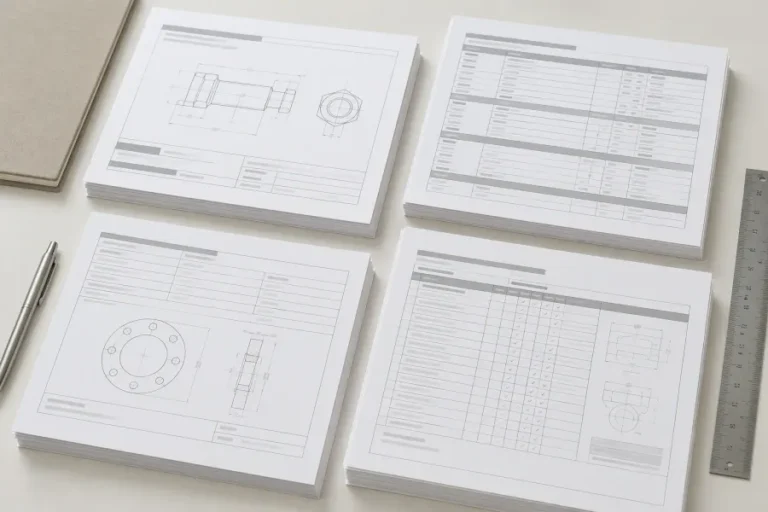
The working model is a one-page spreadsheet with a row per component and a column per supplier, filled top to bottom:
- Quoted price per kilogram, at the Incoterm actually quoted
- Freight per kilogram, calculated from actual carton dimensions and load density
- Duty per kilogram, from the applicable rate for your market
- Insurance and handling, from the freight terms
- Waste percentage, from your own test data on that supplier’s spools
- Rework and operator minutes per batch, translated at your labor cost
Fill it honestly and the ranking reorders. Suppliers who looked expensive on price per kilogram turn out to land cheaper because they pack densely and hold their batches. Suppliers who looked cheap turn out to have been quoting a number that was true and a total that wasn’t.
One term-level caution, because it hides in plain sight: Incoterms change who owns each component. EXW puts freight and export handling on you; FOB hands them off at the port; CIF covers freight to your port but not duty or inland; DDP wraps everything at a price that should, in an honest quote, already contain this entire model. DDP is also the term most worth auditing line by line, because a DDP number that was estimated rather than calculated is a deferred surprise. A supplier who prices DDP per order, from actual quantities and carton specs to destination, is doing the same arithmetic, applied on your behalf.
The Negotiation the Model Enables
A filled model changes the supplier conversation in a specific way: it converts price negotiation into component negotiation. When both sides can see that freight is the dominant line, the productive conversations start: mixed-SKU consolidation to fill a container position, plus carton spec changes that improve density. None of those moves touches the price per kilogram, and every one of them moves the number your P&L cares about.
Suppliers who welcome component-level negotiation are, again, telling you something. The ones who insist on discussing only the unit price are keeping the conversation where their quote looks best.
Two practical habits keep the model honest over time. Refresh the waste and rework lines from actual order data every quarter, because suppliers drift and the model should drift with them. And archive one completed model per supplier per year, so the negotiation conversation can reference what was documented last time, skipping what anyone remembers.
The archived models also compound into a quiet scorecard: a season of filled spreadsheets is a season of ranked evidence, and it documents how a supplier performs between sales calls, when the quotation is no longer the topic.
Questions That Surface the Truth
When you’re comparing suppliers, the landed-cost frame converts vague questions into precise ones. The vague question is whether a price is competitive; the precise ones are: What are the carton dimensions and how many kilograms per shipping position? What is the mixed-SKU packing policy, and can a trial order combine materials to amortize freight? Which Incoterm is the quote actually on, and what does the DDP calculation include? What is the supplier’s own measured batch-consistency record, so the waste line in the model runs on evidence?
Suppliers with real answers welcome all of these, because the answers are their strengths. Trial orders make the model testable at small scale. A mixed-SKU trial in standard packaging exposes the freight and packaging components alongside batch behavior, all before you commit commercial volume. The filament distributor relationship is where this model lives on the supplier side, and more about FilaSource is on the homepage.
One more compounding effect worth naming: a buyer who runs this model consistently starts negotiating with evidence. When a supplier proposes a price increase, the model shows whether the increase lands on a component that has actually moved, and a negotiation grounded in shared numbers is shorter and calmer.
Frequently Asked Questions
What is landed cost in simple terms?
Everything a product costs by the time it’s on your shelf: the quoted price, plus freight, duty, insurance, and handling. For filament, honest models add waste rate, rework time, and stock-out risk — the costs between the dock and the sale.
Why is filament freight so expensive relative to the product?
Volume. Spools are light for the space they occupy, and carriers price space. Dense carton packing and mixed-SKU loads amortize that volume across more kilograms, which is why packing quality belongs in supplier comparisons.
Which Incoterm should a filament buyer use?
Whichever one both sides calculate honestly. EXW and FOB give you control and visibility; CIF covers ocean freight but not duty or inland; DDP wraps everything, and is the term most worth auditing line by line to confirm it was calculated, not estimated.
How do I compare two suppliers with different prices?
Build the one-page model: quoted price, freight from actual carton dimensions, duty for your market, waste from your own test data, and labor per batch. The ranking that survives the model is the ranking to act on.
The model also disciplines the reverse error: paying a premium for reliability you don’t use. A buyer whose parts are simple, whose failure tolerance is high, and whose volumes are small may genuinely not need the supplier whose consistency commands a premium. The model makes that a decision with evidence, which is the spreadsheet doing its job.
Can a trial order test landed cost?
Yes, and it costs less than any single component it tests. A mixed-SKU trial in standard packaging tests each landed-cost component, from freight density to seal survival to batch behavior, before commercial volume commits.