The plus sign on a filament box does a remarkable amount of unpaid work. It implies engineering and justifies a price step, all without carrying any agreed definition across the industry. One manufacturer’s PLA+ is another’s basic PLA with better marketing. That should make you cynical about the symbol, and it doesn’t have to make you cynical about the material, because a real modified PLA is a genuinely useful thing. The skill is telling the two apart.
So: what is PLA plus filament, asked in earnest? Most buyers meet the phrase the way they type it, “what is PLA plus filament,” followed by years of disagreeing forum threads. A legitimate plus buys you two things, and a supplier’s plus means exactly what its test data says it means. Checking both claims before the price step reaches your catalog is the rest of the job. Then the catalog question, because PLA and PLA+ work best as complementary tiers, with the PLA explainer covering the base material in depth.
What PLA+ Means, and Why It Doesn’t Mean One Thing
PLA+ — usually typed out as “PLA plus” — is modified PLA. The formulation is adjusted, typically through impact-modifying additives, to improve how the printed part behaves: better resistance to knocks, better bonding between layers. The base resin remains PLA-family, and the printing experience stays close to standard PLA, which is the entire commercial appeal.
The modification itself is ordinary polymer work, not a trade secret: toughening agents blended into the base resin so that printed parts absorb energy rather than passing it straight through to a crack. What varies brand to brand is how much, of what, and to what measured effect — the three questions that separate a real plus from a sticker. None of the answers are visible on the spool, which is why the label alone can’t settle it.
The term grew out of a retail arms race, and the forum record shows the scar tissue: buyer threads asking what the plus even means, comparison articles reaching different conclusions about different brands, and manufacturers’ own pages describing different modifications with the same symbol. A useful category name simply got adopted faster than anyone agreed what it means, and the specifics underneath the symbol are where the buying decision lives.
The reason the term causes trouble is that no standard defines the plus. There’s no threshold a filament must clear to wear it, no test it must pass, no body that polices the claim. Retailers know this and price against it anyway. The practical consequence for a buyer: the plus on the box is a starting point for a conversation, and the conversation is about what specific modification was made and what it measurably changed.
What the Plus Typically Buys
A legitimate PLA+ delivers its value in two places. Impact behavior: parts survive drops and handling that would crack standard PLA, which matters for anything a customer touches after the sale. Layer adhesion: printed objects resist delamination, so tall or thin geometry holds together under load. Both effects compound in the parts that generate returns when they fail.
At the printer, a good PLA+ feels like PLA with slightly better manners. First layers go down the same way, dimensional behavior stays in the familiar band, and operators don’t relearn anything to run it — which is exactly why it works as a tier upgrade for channels whose customers would rebel at a genuinely new material. The differences show up in the parts bin rather than in the slicing profile: fewer cracked clips, fewer delaminated tall prints, and replacements in the mail that never needed shipping.
What it usually costs is a little stiffness, since toughness and rigidity trade against each other in modified formulations. And because additives change melt behavior, some grades run best with the supplied settings respected as written. None of this complicates printing meaningfully: PLA+ prints from PLA-typical ranges, with a nozzle window of 200–230 °C and a bed of 45–65 °C, and a settings sheet should arrive with your samples so your first spool isn’t your tuning session.
How to Verify a Plus Claim
Since the label certifies nothing, the verification is yours, and it follows the same discipline as any material claim. Ask what the plus means for the specific SKU, in test indicators. The two that matter most: how the grade behaves on drop-and-clamp parts like the ones you sell, and whether layer bonds hold on tall, thin geometry. Ask for the numbers to come from parts shaped like yours, since demo geometry gets chosen to flatter a formulation. Get the comparison framed against the supplier’s own basic grade from the same production period, too: the honest version of a plus claim is a delta, a measured difference between two spools that left the same plant, and a supplier who can’t produce the baseline can’t really claim the improvement.
Red flags are consistent. A supplier who can’t say what was modified, in any terms. Test data that covers every property except the two a plus exists to change. Demo parts that are always short, thick, and chunky, never tall or thin. And the price tell: a plus priced identically to the supplier’s own basic PLA usually means it is the basic PLA. Treat every one of these as a reason to let the two-batch test decide.
Then close the loop with your own prints. Production-representative samples from two independent batches, judged against written pass/fail criteria on your machines, settle the question the label cannot. Our own practice follows the same honesty rule: test data ships with samples so you can validate the improvement on your equipment and applications, and no unverifiable performance claims get made. When a supplier won’t be specific about their plus, ask for the test data before the conversation continues.
PLA vs PLA+ as Catalog Tiers
Once verified, the two materials stop competing and start dividing work. The comparison as we position it:
| Attribute | PLA | PLA+ |
|---|---|---|
| Impact resistance | Standard | Enhanced |
| Layer adhesion | Good | Improved |
| Surface finish | Matte to semi-gloss | Smooth to silk sheen |
| Print difficulty | Easy | Easy, same workflow |
| Typical retail position | Entry and volume | Mid and premium tier |
| Best for | Prototypes, décor, education | Functional parts, gift retail, brand differentiation |
A channel serving schools and hobbyists puts standard PLA in the entry positions, priced to move, then stocks PLA+ Basic one shelf up as the “upgrade” recommendation, with Silk and Silk Rainbow as gift-season visual SKUs at the top. Nothing about that plan requires the customer to learn a new material, and every tier answers a question the customer was already asking.
In shelf-plan terms, PLA carries the volume: education, prototyping, and every SKU where price per spool decides. PLA+ takes the tier above it, where customers pay for durability without wanting an engineering material’s learning curve. The margin structure tends to reward the split, too, since the plus tier’s price step lands on customers who chose it deliberately, while the volume tier keeps winning on price alone. Channels that skip the middle tier often find their competitors happy to sell it. The full material trade-offs against PETG sit in our production comparison.
The Three PLA+ Series
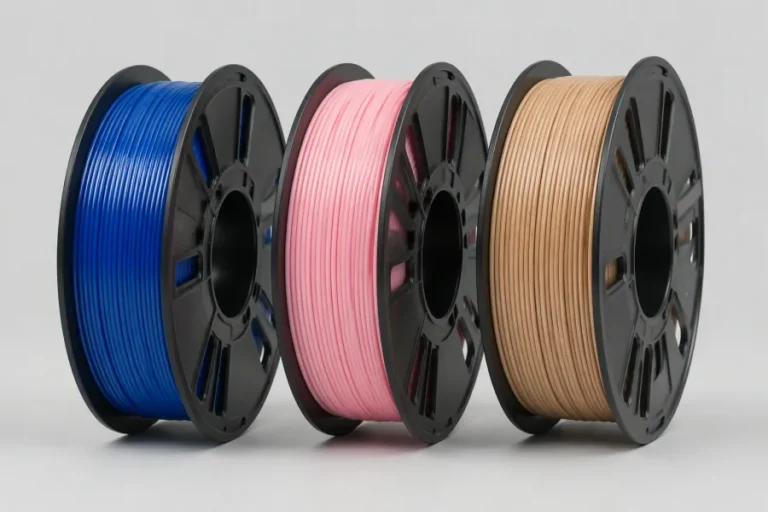
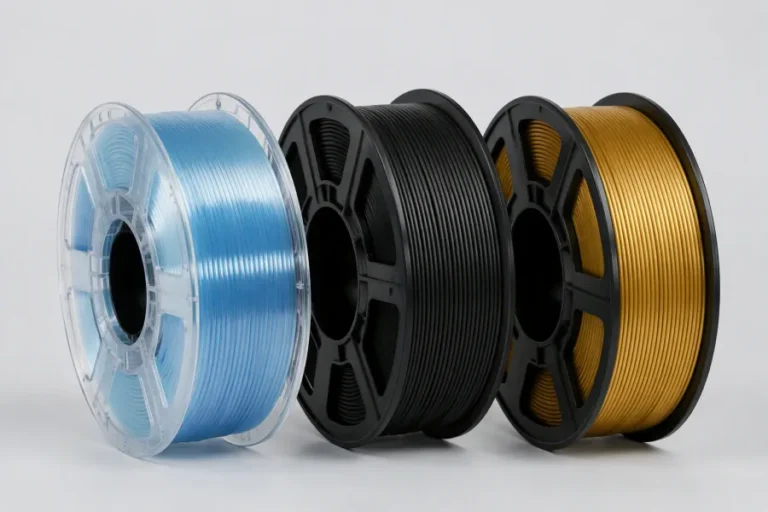
Our PLA+ range runs three series, and each answers a different shelf question. PLA+ Basic is the everyday upgrade: enhanced toughness and a smoother surface than standard PLA, suited to functional prototypes, daily prints, and the retail step-up customer. It’s the workhorse of the tier — the SKU a channel reorders monthly once the plus has proven itself, and the one that carries the qualifier’s test results into repeat volume. Silk delivers a high-gloss, metallic-sheen finish straight off the printer, which photographs well enough to carry a premium price without post-processing. Silk Rainbow combines that sheen with smooth color transitions, built for gift, décor, and showcase pieces where the visual is the product.
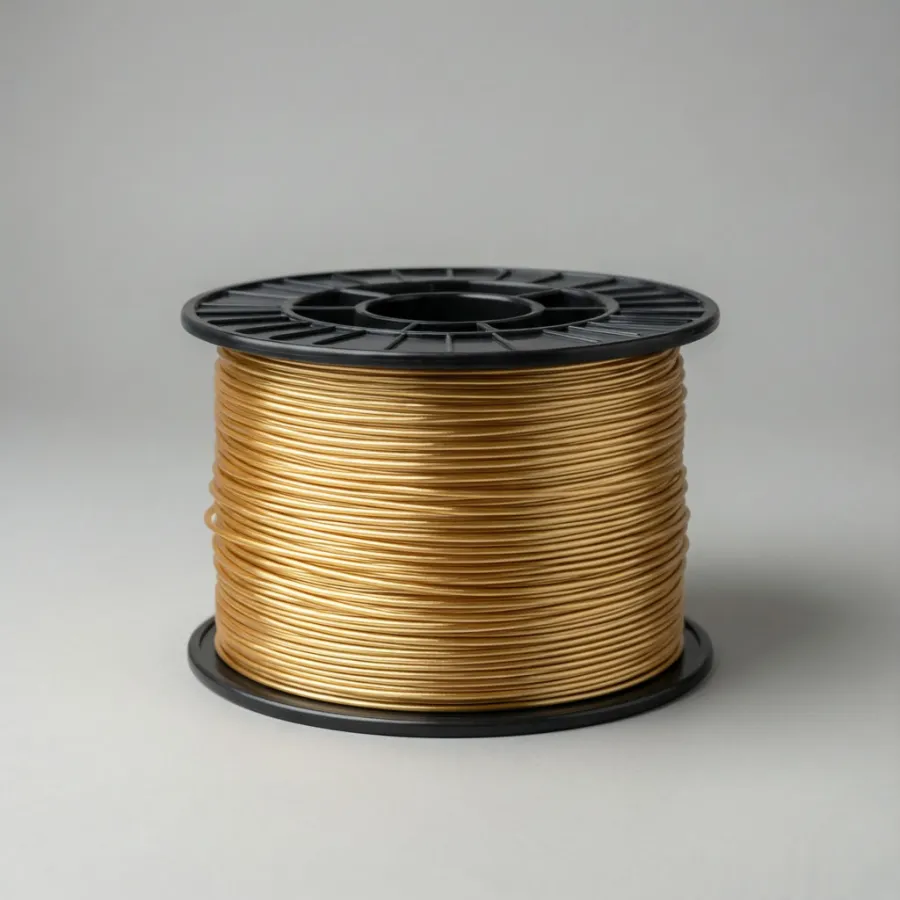
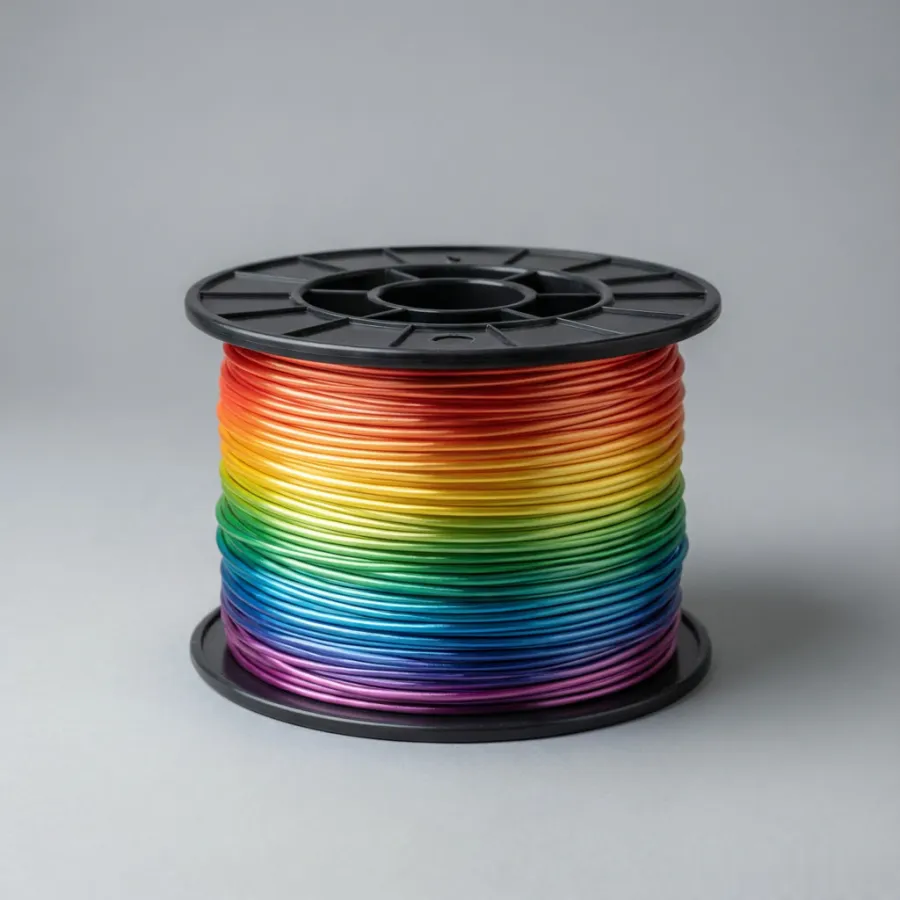
Together the three cover a premium tier without over-complicating a catalog, which is the point. A range of one basic and two visual SKUs upgrades a brand’s shelf presence while keeping the sourcing simple: same material family, same workflow, one qualification effort. For e-commerce, the visual series carry an extra duty — listing photos. Silk and Silk Rainbow photograph like premium product with nothing but good light, and in a marketplace listing the photo is the shelf. A channel that merchandises well can run the premium tier almost entirely on imagery the material provides for free.
Sourcing PLA+
The buying motion mirrors the material’s honest core. Request qualification samples with the test data behind the plus, in the SKUs you’d actually stock, from two independent production batches. Print the parts that generate your returns, on your machines, against criteria you wrote first. If the data and your prints agree, the tier earns its price step; if they don’t, you’ve learned it for the cost of a sample order. The volume ladder behind the motion is modest on purpose: mixed-SKU trials start at ten spools, commercial orders begin at a hundred, and full private-label packaging for the Silk lines runs to a thousand spools per design, with packaging minimums quoted on their own schedule. A buyer can prove the tier at trial cost and scale it only as the shelf data agrees. It’s the same discipline the wider supplier qualification process applies to any material claim, compressed to a single question: does this spool survive what your customers do to it? The PLA+ filament supply page lays out that path for our three series, and more about FilaSource is on the homepage.
Frequently Asked Questions
Is PLA+ stronger than PLA?
Tougher, in the ways modified formulations target: better impact resistance and layer adhesion. Rigidity can dip slightly, since toughness and stiffness trade off. For parts that get handled, the plus earns its name; for parts that need to stay rigid, standard PLA sometimes remains the better call.
What temperature should I print PLA+ at?
Start from PLA-typical ranges: 200–230 °C nozzle, 45–65 °C bed. A settings sheet ships with samples, and final validation on your specific printers during qualification settles the exact numbers for your fleet.
Is PLA+ worth the extra cost?
When your returns come from breakage, yes, because the cost of a cracked part includes the customer’s patience. When your SKUs are display pieces that sit still, the plus buys little. Stock it where your failure modes live.
Does PLA+ need drying like PLA?
Yes, on the same discipline: it’s a PLA-family resin and absorbs moisture, with the same popping-and-brittle symptoms when wet. Sealed packaging with desiccant, first-in-first-out rotation, and per-material drying guidance cover it.
What’s the difference between PLA+ and “tough PLA”?
Mostly the label on the box. Tough PLA is another unstandardized name for impact-modified PLA, and different brands use the two terms interchangeably. Treat both the same way: ask what the modification is, in test indicators, and validate on your own parts before the price step gets your money.