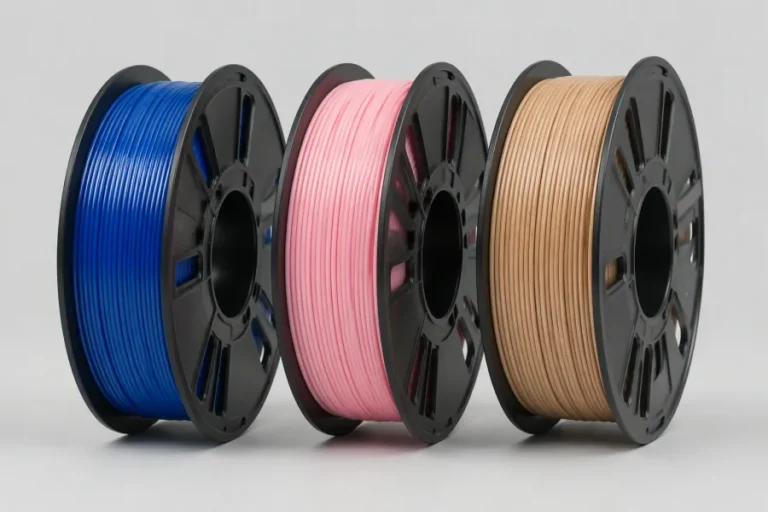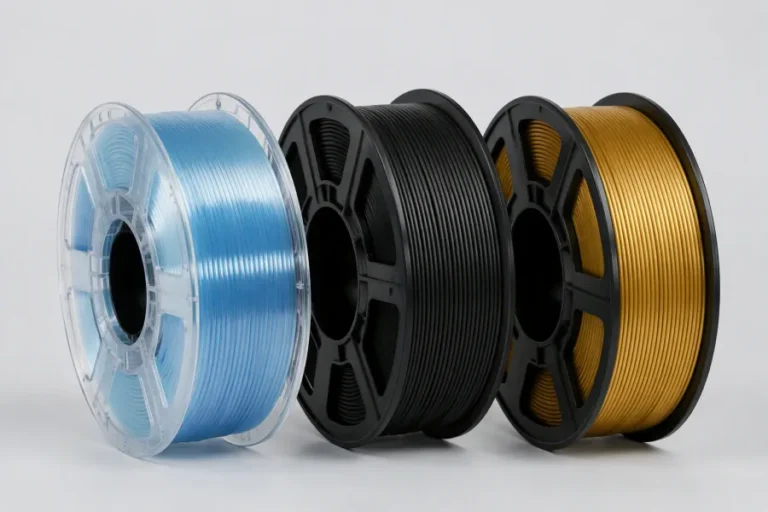
Some filaments photograph better than they print. Silk PLA is the reverse problem: it prints like ordinary PLA and then photographs like jewelry. Under a desk lamp, a silk spool looks like brushed metal; off the printer, the same part looks like a product photograph of itself. That gap between material and appearance is the entire commercial story of silk, and it’s the reason a glossy spool can carry a price step that a matte spool can’t.
Silk PLA filament is a finish story: how the gloss works, where it earns premium shelf position, the printing notes that matter, and how our Silk and Silk Rainbow series position gloss as retail strategy. The PLA explainer covers the base material; this is about the shine.
What Silk PLA Is
Silk PLA is standard PLA filament modified to produce a high-gloss, metallic-sheen surface straight off the printer. The finish comes from the formulation: additives that let the extruded surface settle smooth and reflective instead of matte and diffuse. The material underneath keeps PLA’s habits — easy printing, dimensional crispness, no enclosure — which is why silk earns its position as a finish upgrade rather than a behavior change.
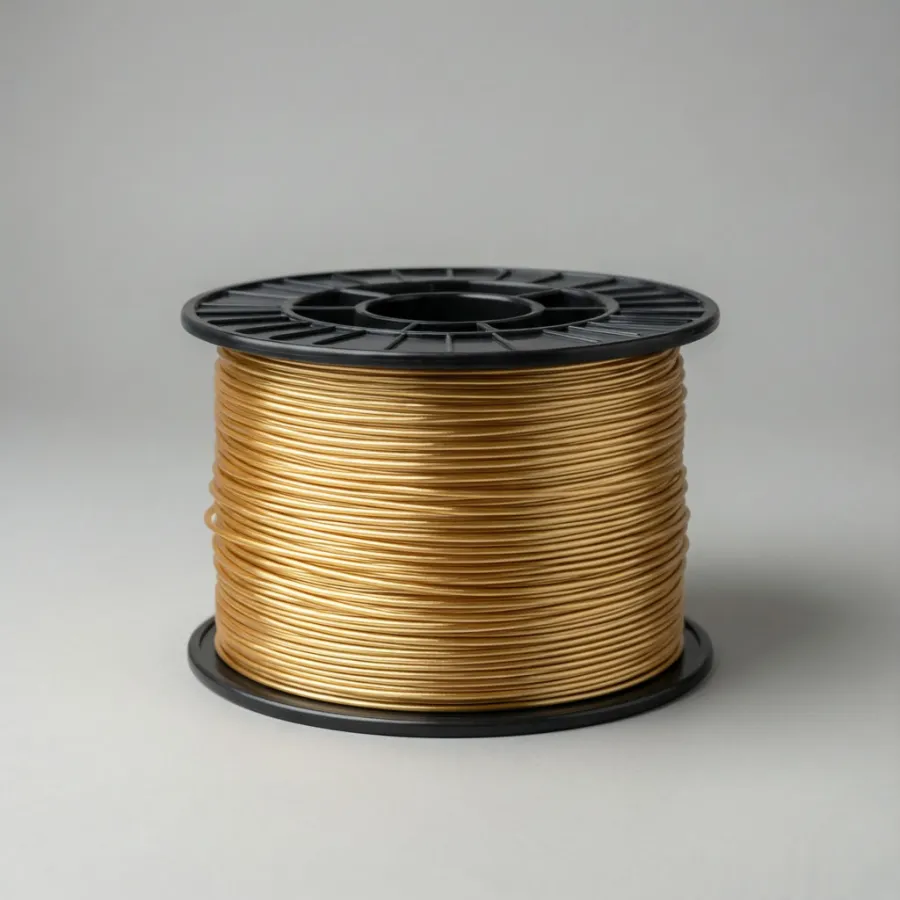
Understanding what the finish is doing optically explains its commercial power. A matte surface scatters light evenly; a silk surface reflects it directionally. Move a silk part under a light and highlights travel across it the way they travel across metal, and the eye reads premium material before the hand touches plastic. Nothing about that is an illusion, exactly; the eye is responding to surface optics.
The Listing-Photo Economy
For e-commerce, gloss is a merchandising decision before it’s a material one. A marketplace listing lives or dies on its primary photo, and the primary photo of a matte part reads as raw material while the primary photo of a silk part reads as product. Channels that understand this shoot silk first, hero SKU in silk and variants in matte, and let the gloss carry the listing’s perceived quality. It is an inexpensive photography upgrade the material performs on its own.
The same economy works in reverse at the returns desk. A silk part that arrives scratched or dusty shows every flaw a matte part would shrug off, so packaging and handling standards for silk SKUs deserve the same attention as the finish itself. Gloss sells the photo, and the unboxing either confirms it or returns it.
Where Gloss Earns Its Price
Not every channel should stock silk, and knowing where it works is the difference between a margin SKU and a slow SKU. The reliable homes:
- Gift and decorative retail, where the part is bought for how it looks under the recipient’s light.
- Showcase and display pieces — awards, trophies, branded ornaments — where post-processing labor would otherwise be spent on polishing.
- Premium e-commerce listings, where the product photo is the shelf. A silk part photographs like finished product; a matte part photographs like raw material.
The honest limit: functional parts. Gloss doesn’t add strength, and a customer who drops a silk bracket has the same broken bracket they’d have dropped in matte. Stock silk where looking finished is the job.
Seasonality deserves a mention, because silk is quietly a seasonal asset. Gift-giving quarters reward visual impact, and the same shelf space in a slow month may sell better as functional matte. Channels that plan silk as a seasonal accent, deep in the fourth quarter and lighter through the spring, tend to outperform channels that treat it as a year-round staple. The material hasn’t changed; the buyer’s mood has.
Printing Notes
Silk prints on the same workflow as standard PLA: standard PLA-typical temperature ranges, no enclosure, ordinary adhesion. The differences are cosmetic-grade rather than mechanical: silk finishes show every scar, so stringing and zits that a matte part hides become visible on a silk part, which makes retraction tuning worth five extra minutes. And because the sheen is directional, test parts photographed at the lighting angle your listings use will tell you more than test parts judged on the bench.
The “plus” question applies to silks too, since ours live in the PLA+ family: the same honesty rule applies as with any plus claim. Ask what the modification means for the specific SKU, in test indicators, and validate on your own parts. Silk is a finish claim, and finish is exactly the kind of claim a sample print verifies best.
Two Series, Two Shelf Jobs
Our silk range runs two series inside the PLA+ range, and they answer different retail questions. Silk is the core: a high-gloss metallic sheen in solid colors, built for display and premium retail where the part needs to look finished the moment it leaves the plate. Silk Rainbow adds smooth color transitions to the gloss, sheen and gradient moving together, built for gift, décor, and showcase pieces where maximum visual impact is the entire product.
Together they let a channel offer a premium tier without importing a new material family: same workflow underneath, same settings discipline, one qualification effort covering the gloss program. For a brand deciding how deep to go, the reliable pattern is solid silk in a handful of jewelry-adjacent colors, rainbow as a seasonal and gift-line accent, and reorder driven by which listing photos keep converting.
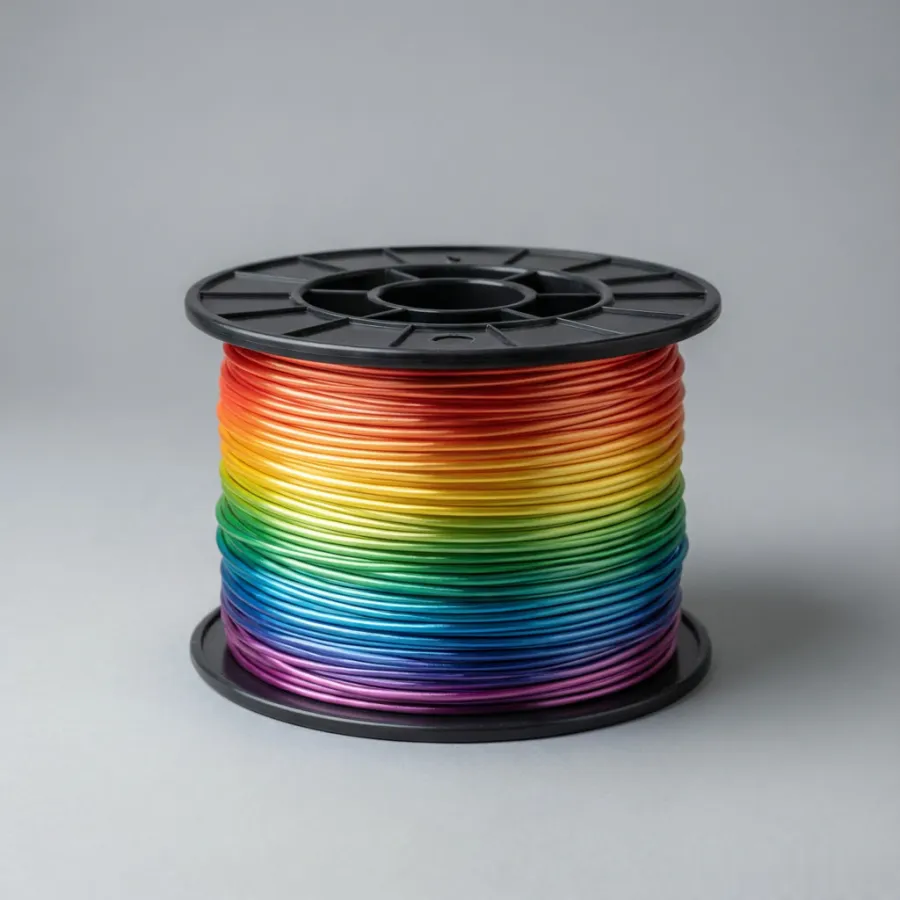
The finish also plays differently across part geometry, and a short planning note saves disappointment. Large flat faces show gloss at its best, one continuous sheet of moving highlight; small intricate parts scatter the effect and can read merely shiny. Curves carry silk beautifully, which is why vases and sculptural pieces dominate silk showcase galleries. If your catalog is mostly small angular functional parts, matte will photograph closer to how the part actually looks in hand.
Cooling and Finish Interplay
The sheen silk is bought for is partly a cooling outcome, and understanding the interplay improves both the print and the finish. Slower cooling tends to produce a smoother, more uniform gloss; faster cooling can lock in a surface that reads slightly frosted under angled light. For parts where the finish is the product, adding a few degrees of part-cooling reduction on the top surfaces — or printing a small test with two cooling values side by side — is a five-minute experiment that shows which direction the finish moves. The material provides the optics; the profile determines how much of the finish reaches the printed surface.
The same logic applies to first layers and external walls. A slightly slower exterior perimeter gives the surface more time to settle smooth, and on silk parts the exterior wall carries the finish. Test, photograph the result under listing light, and lock the profile once the finish matches what sold the spool.
Color Consistency, the Quiet Risk
One verification topic sits unique to silk finishes: color and sheen consistency across batches. The finish that photographs beautifully in batch one can arrive subtly different in batch three, a shift in tone or gloss level that single-spool inspection misses but that a customer holding two orders side by side notices immediately. The protections are the same instruments as any consistency risk: retained color standards, physical reference samples, and reorder validation against the approved reference, never memory.
Our own color discipline handles silk the way it handles any series: color approvals run on physical samples first, and reorder comparisons run against the retained standard. For a channel building a gloss line, that is worth asking any supplier about explicitly, because finish drift is a real failure mode and a preventable one.
For channels selling both, a practical merchandising split is worth writing down: silk for the hero SKUs whose photography carries the store, matte for the workhorse volume where price per spool decides. The two finishes don’t compete for the same buyer in the same moment, and a listing that pairs them deliberately gives each one a job.
Sourcing Silk Honestly
The verification for a finish claim is pleasantly simple: print the sample, photograph it under the light your customers will use, and compare against the reference that sold you. Finish is visible in a way that layer adhesion isn’t. The underlying discipline is the same as any material, production-representative samples from two independent batches with written pass/fail criteria and the records behind both, covered in the qualification path on the PLA filament manufacturer page. More about FilaSource is on the homepage.
Frequently Asked Questions
Is silk PLA stronger than regular PLA?
Not meaningfully. Silk is a finish modification; strength behavior stays in the PLA range. Where our silks carry a plus, the toughness question follows the same verification rule as any plus: ask for the test indicators for the specific SKU and validate on your own parts.
Does silk PLA need special settings?
PLA-typical ranges, no enclosure, ordinary adhesion. The tuning that pays is cosmetic: retraction and temperature refinement that eliminates stringing, because a glossy surface shows every artifact a matte one hides.
Why does silk PLA cost more?
Finish. Modified silk formulations cost more to produce, and the retail position reflects it. In channels where appearance sells, the price step is repaid by the listing photo.
Is silk PLA good for functional parts?
It’s neutral at best. Gloss adds nothing mechanical, and the premium isn’t buying toughness. Choose silk for parts whose job is to be looked at; choose engineering-oriented grades when the job is load.
How do I verify a supplier’s silk quality?
Print samples from two independent batches, photograph them under the lighting your customers will see, and compare against the approved reference. Finish claims hide less than strength claims. The camera is the instrument.