The first sign is usually audible. A printer that ran quietly last week starts popping at the nozzle, a small percussion section nobody asked for, and the surface of the parts starts coming out rough where they used to come out clean. The material hasn’t changed brands; the material has changed state. It took on water from the air around it, and the water is now boiling inside the melt zone, one micro-pop at a time.
Wet filament is a frequent material failure in 3D printing and one that is easily misread, because its symptoms look like printer problems. The diagnosis and prevention half of the moisture story: the four symptoms, the causes of uptake, how materials differ, and the practices that keep the problem from arriving. For the rescue, from drying temperatures to when a spool is past saving, the companion drying guide covers the method.
The Four Symptoms, by Material
Moisture announces itself in four reliable ways, and each material has its own accent:
- Popping or hissing at the nozzle. The signature symptom, present in every material: water flashing to steam in the melt zone, audible and visible as spitting.
- Stringing that appeared overnight. Wet PETG is the classic case, throwing webs between islands that the same spool didn’t throw last month; wet PLA strings too, more moderately.
- Bubbles, steam wisps, and rough surfaces. The strand extrudes as a micro-foam, and parts that used to print clean come out with a rough, pitted skin.
- Brittleness. Wet PLA’s specialty: a spool that snaps when bent, snaps again in the feed path, and gets blamed on the batch, when the cause usually traces to how the spool was stored.
A single symptom warrants attention; a pair of them settles the question. And the diagnosis is confirmed by questions, not accusations: how long was the spool open, how was it stored, which material, what ambient conditions. The same four questions a supplier should be asking you when you report the problem.
The Cost of Getting It Wrong
Before the mechanics, the stakes, because wet filament fails in the most expensive places. A single failed overnight print costs the material, the machine hours, the cleanup labor, and occasionally a customer deadline. A batch of damp spools distributed into a fleet costs all of that times every machine that ran them. And the slow version is the worst: marginal prints that pass inspection but fail in customers’ hands, converting a storage problem into a brand problem with a returns invoice attached.
The prevention spending, from desiccant to dated bags to a drying station, costs a rounding error next to any one of those outcomes. That asymmetry is the entire budget case, and every practice below is priced by it.
What Causes Moisture Uptake
The mechanism is molecular and patient. Filament polymers are hygroscopic: they attract and absorb water vapor from ambient air, and the uptake is driven by three variables: time of exposure, ambient humidity, and exposed surface. A spool open on a dry bench for a day is a rounding error. The same spool, loosely bagged through a humid season, is a support ticket. The physics integrates exposure regardless of intention.
The causes worth distinguishing, because they have different fixes:
- Storage failure: the spool was sealed once and never again. Fix: the dated-bag, desiccant, first-in-first-out discipline.
- Arrival failure: the spool was damp when it landed, in compromised or absent packaging. Fix: the arrival seal check, and a supplier conversation.
- Environment failure: the storage room itself is the problem, and every bag in it is fighting the building. Fix: the room, before the containers.
How Materials Differ
All common print materials absorb moisture; they differ in how loudly they complain. PLA tends toward brittleness and the popping sound, and its symptoms progress from audible to structural. PETG is the more moisture-sensitive of the two workhorses: it strings and bubbles when wet, laying down weak layers, and its long-run prints suffer first. The engineering materials outside our confirmed range, nylon above all, are more hygroscopic still, which is one reason they demand disciplined drying infrastructure.
The material map, compressed to a working rule: for PLA, the enemy is time-open and the symptom is brittleness; for PETG, the enemy is ambient humidity and the symptom is stringing on long runs; for anything beyond those two, assume moisture sensitivity until proven otherwise. Buyers stocking multiple materials should store and rotate them by sensitivity rather than alphabetically. PETG stock belongs in the driest corner of the room.
One failure state sits past all drying, and honest guides name it: prolonged damp storage can hydrolyze the polymer itself in materials like PETG, chemically degrading the resin. A spool in that state prints weak even after a correct drying cycle, and the only fix was preventing it months earlier.
Prevention on Your Side
The storage protocol is boring and total: sealed bag with desiccant the moment a session ends, the open date written on the bag, first-in-first-out rotation so no spool ages invisibly, and a storage room that is dry and stable, away from the wall that sweats. The storage guide covers the full protocol at every scale, from bench to warehouse.
For a buyer, the verification that matters most happens at receiving: before a shipment goes into stock, snap a short length from one spool per lot. Dry PLA bends and whitens under finger pressure; damp PLA cracks clean with a brittle report. That one physical check, performed on arrival rather than after a failed print, catches the moisture problem while the evidence still photographs well.
The Fleet Version
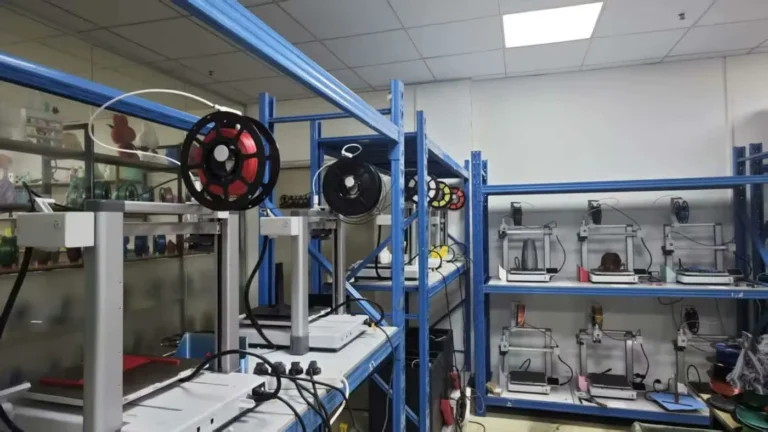
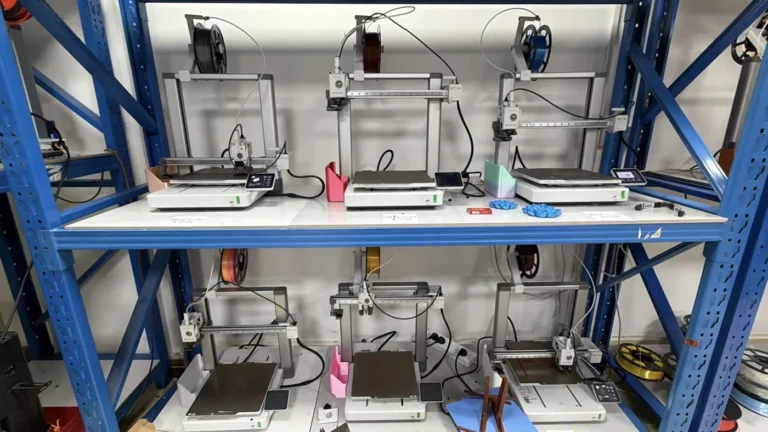
At farm scale, moisture prevention becomes a station on the line rather than a habit on a bench. The layout that works: a drying station as the gateway between storage and machines, sealed bags at the machine with desiccant, and a log at the station recording what was dried and when. Spools flow storage to station to machine to sealed-bag-return, and the only place filament meets open air is inside the printer’s enclosure.
The fleet-specific trap is optimism at shift boundaries: the spool that will get bagged “after this batch,” where after-this-batch meets the humid week. The same-minute discipline costs nothing at the scale of a farm’s labor budget and is the entire difference between a moisture policy and a moisture apology.
Prevention on the Supply Side
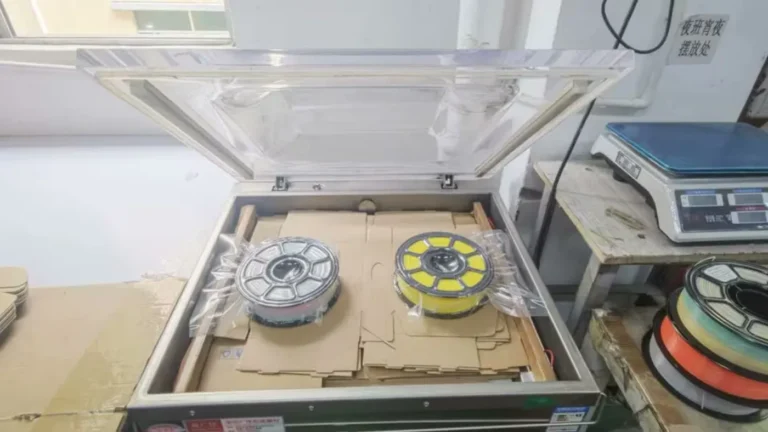
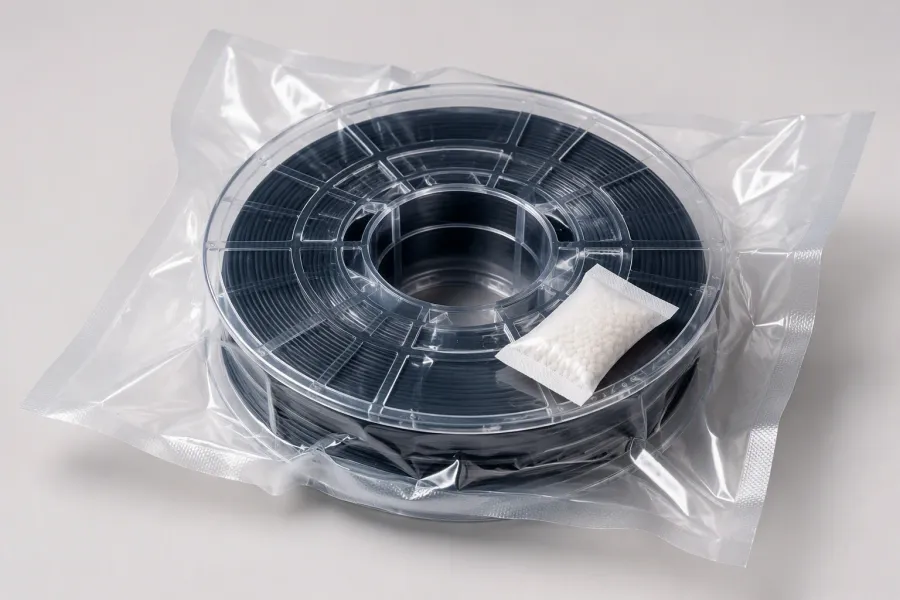
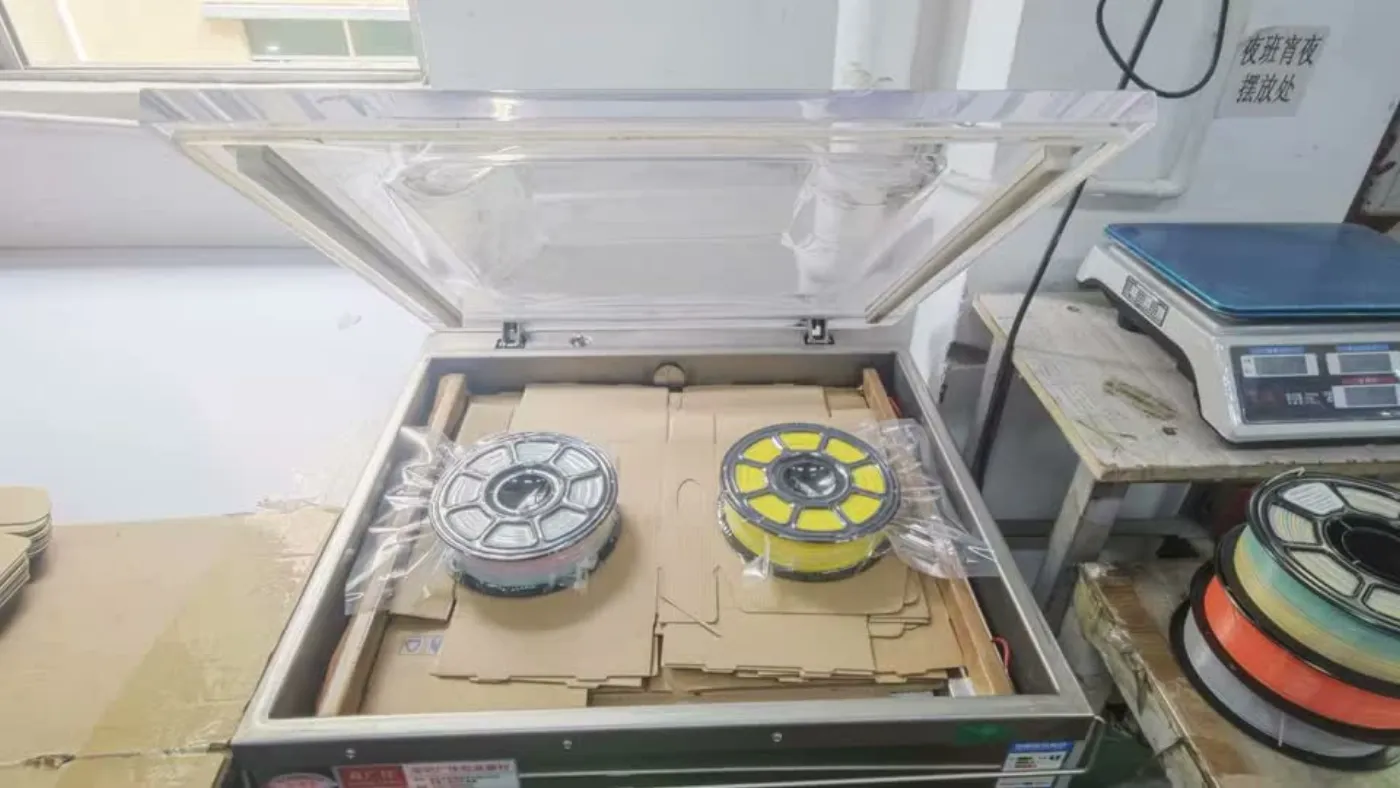
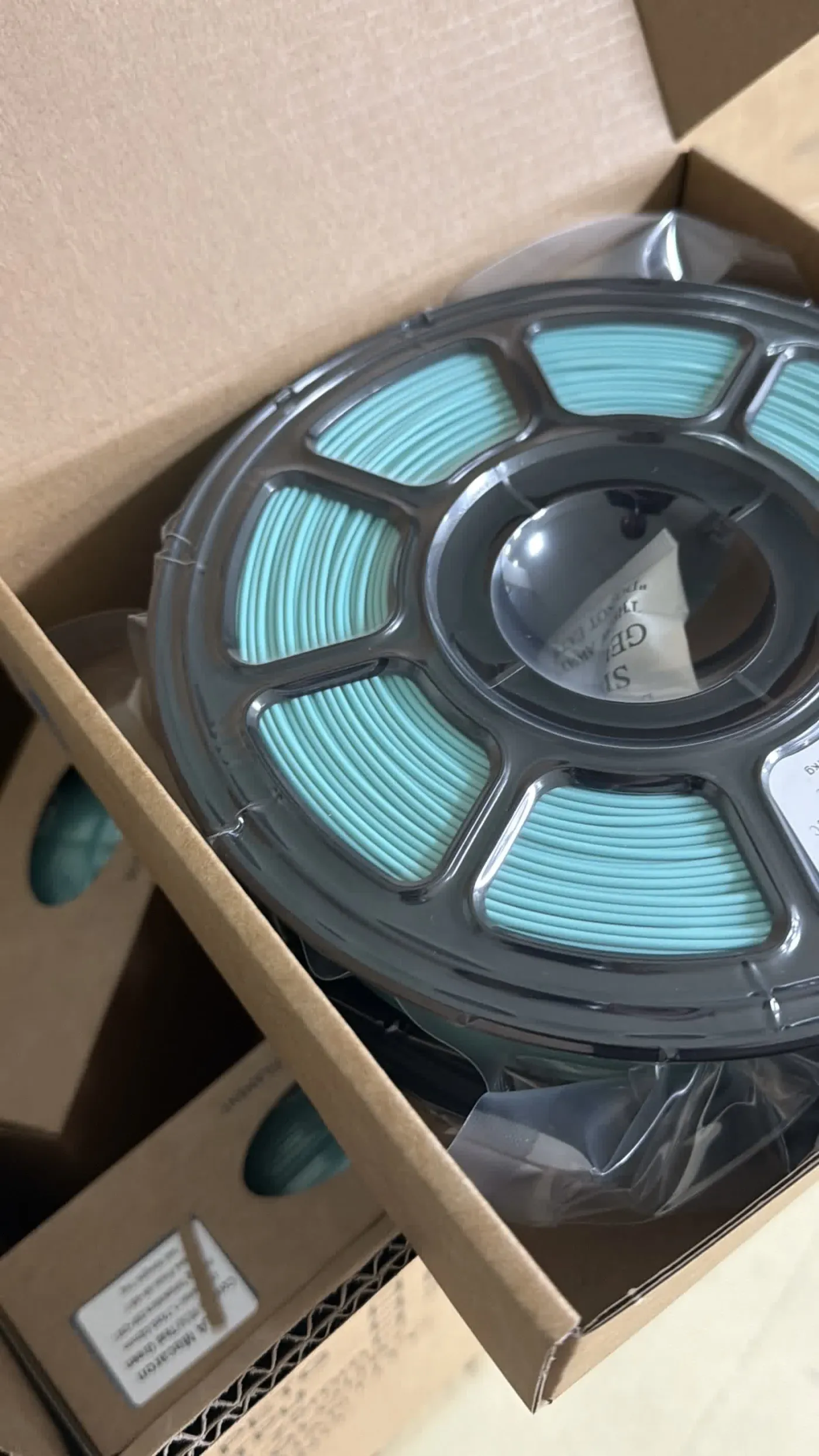
Half of moisture prevention happens before the spool is yours, and it is the half buyers under-audit. Filament that leaves the plant vacuum-sealed with desiccant, in a carton that immobilizes it, arrives with no moisture debt to repay. Filament that leaves in a loose bag arrives at a deficit no shelf protocol repays quickly. The arrival check is therefore the first moisture practice: film taut against the spool, sachet present, carton sound, and photographed when it matters, because a dated photo of an intact seal is the quietest way to end a dispute. The full receiving protocol, including the photo habit, is in our packaging guide.
On the supplier question, the moisture version is specific: does every spool ship vacuum-sealed with desiccant, and is the per-material drying spec available on request? Those two facts tell you how much of the workload the supplier has already absorbed. The PETG filament manufacturer page carries the moisture-handling detail for the material that needs this discipline most. More about FilaSource is on the homepage.
Frequently Asked Questions
How do I know if my filament is wet?
Two or more of the four symptoms: popping or hissing at the nozzle, stringing that wasn’t there before, bubbles and rough surfaces, and brittleness. Confirm with the bend test, where damp PLA snaps clean and dry PLA bends, and the four storage questions.
Can wet filament damage the printer?
Rarely the machine, but steam and spitting can leave deposits in the hotend and nozzle over time, and brittle filament snapping mid-run can stress feed paths. The real damage is to prints: weak layers and failed long runs cost more than any maintenance line.
Why does PETG suffer more than PLA?
PETG is the more hygroscopic of the two workhorses and shows its moisture in the most expensive ways: stringing and weak interlayer bonding on exactly the long prints where the cost concentrates. It rewards sealed arrival and disciplined storage more than any other common material.
Does new filament need drying before use?
Sealed stock with intact packaging and its desiccant: no, print it. Anything with a compromised seal or an unknown history through humid conditions: run the symptom check first, and dry if two or more signs appear. Your supplier’s per-material drying spec is the reference document.
Can a spool be too wet to save?
Yes, and honesty is cheaper than hope. If a correctly dried spool still snaps brittle or prints weak, the polymer has likely hydrolyzed from prolonged damp storage, and no drying cycle reverses chemistry. Retire it to test prints and correct the storage condition that caused the damage.