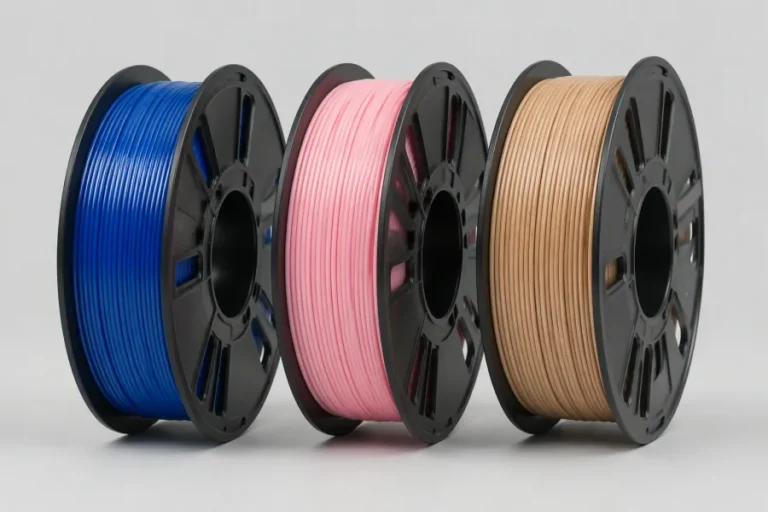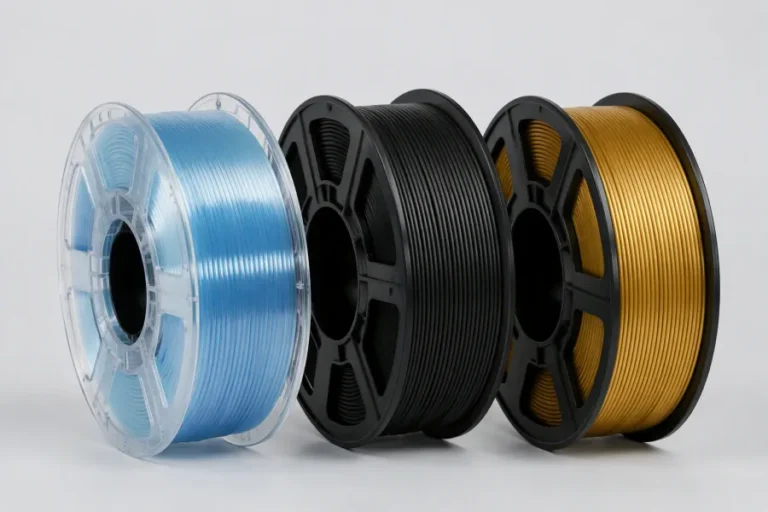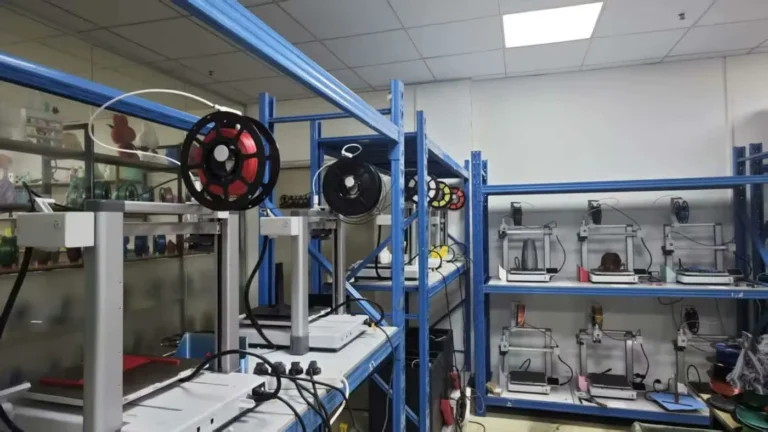
On a shelf full of gloss, the spool that doesn’t shine is the one that gets picked up. That’s the quiet commercial logic of matte PLA: every competitor’s glossy black looks the same under retail lighting, and the finish that absorbs light instead of returning it, reads as deliberate, designed, premium in the way a matte laptop lid reads premium next to a glossy one. For channels whose products all photograph the same, surface finish is one of the few remaining ways to look different.
Matte PLA filament is the anti-glare finish story: what the surface does optically, which channels it earns premium in, how it prints, how our Matte and Matte Rainbow series position it, and how finish consistency is verified, with the finish delivered by the material itself, no post-processing chain attached.
What Matte Finish Actually Is
Matte and gloss are the same physics seen from opposite ends. A glossy surface is smooth at the microscopic level and reflects light directionally — highlights travel across it. A matte surface carries fine, deliberate micro-roughness that scatters light in all directions: no traveling highlights and no glare to betray the texture of the surface underneath.
In 3D printing, that scattering has a specific gift: it hides layer lines. A layer line is a tiny ridge, and on a glossy part each ridge casts its own directional reflection, announcing itself to the eye. On a matte part, the same ridge scatters light in every direction at once, and the visual signature of the layer fades. The printer’s layer lines haven’t changed; their visibility has. For display parts, decorative objects, and anything photographed, that one optical property eliminates a routine criticism of printed objects, “you can see the layers.”
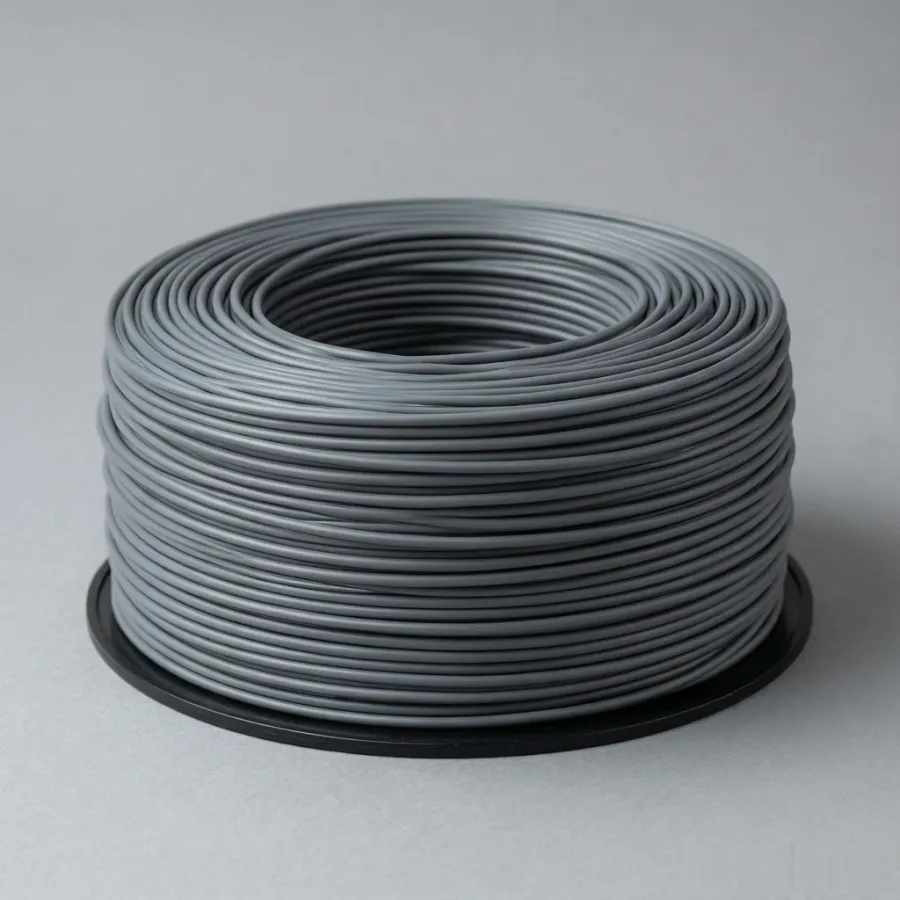
The Anti-Glare Economy
Matte’s commercial power has a second engine beyond look: it removes lighting as a variable. A glossy product photographs differently under every light a channel or reviewer points at it — glare here, hot spot there, and the listing photo that looked perfect at noon looking wrong by evening. A matte product scatters light so evenly that it photographs approximately the same everywhere. For channels running large catalogs, that consistency compounds: one lighting setup serves every matte SKU, where glossy SKUs each need their own angle-hunting. The saving shows up in a photography budget that shrinks.
The same property wins at point of sale. Under retail lighting, a matte part looks identical to how it looked in the listing photo; a glossy part either glares or looks flat, depending on where the store’s fixtures happen to point. The customer receives what the photo promised, and the return rate reflects it.
Where Matte Earns Its Shelf Position
The finish earns premium in channels where the product is looked at closely and handled:
- Décor and home objects, where gloss can feel cheap and matte reads as ceramic or soft-touch industrial.
- Architectural and display models, where hiding layer lines saves hours of post-processing before a client presentation.
- Brand-differentiated retail lines, where a matte product photographed next to competitors’ glossy ones stands apart without changing the underlying material family.
- Photography-adjacent products, where the absence of glare means the product photographs consistently under any lighting setup.
The honest limit is the same as silk’s, inverted: matte is a finish story, and the finish doesn’t buy toughness or heat resistance. For parts whose job is load or duty, matte is a cosmetic choice on top of whatever the base material provides. For parts whose job is to be looked at, matte is often the correct answer.
A worked shelf plan for channels that plan ahead: entry tier in standard glossy PLA at price-driven positions, matte basic one tier up for the décor and gift SKUs where finish photographs, matte rainbow as the seasonal visual line, and a silk accent where gleam sells. Every tier prints on the same PLA workflow, so one qualification effort covers the whole finish program, and reorder decisions come from listing-photo conversion data.
Printing Notes
Matte prints within the standard PLA envelope of PLA-typical temperatures, no enclosure, and ordinary adhesion, because the finish lives in the formulation, with the profile left alone. Two notes worth the operator’s attention. First, matte surfaces are honest about over-extrusion: where a gloss part hides a slightly fat layer in its shine, a matte part shows every surface artifact, so tuned retraction and flow pay off visibly. Second, because matte scatters light, the test for finish quality is the photograph under the lighting your listings or clients use. Photographs, not bench impressions, set the standard.
The PLA explainer covers the base material’s behavior in full; matte inherits it.
The Two Matte Series
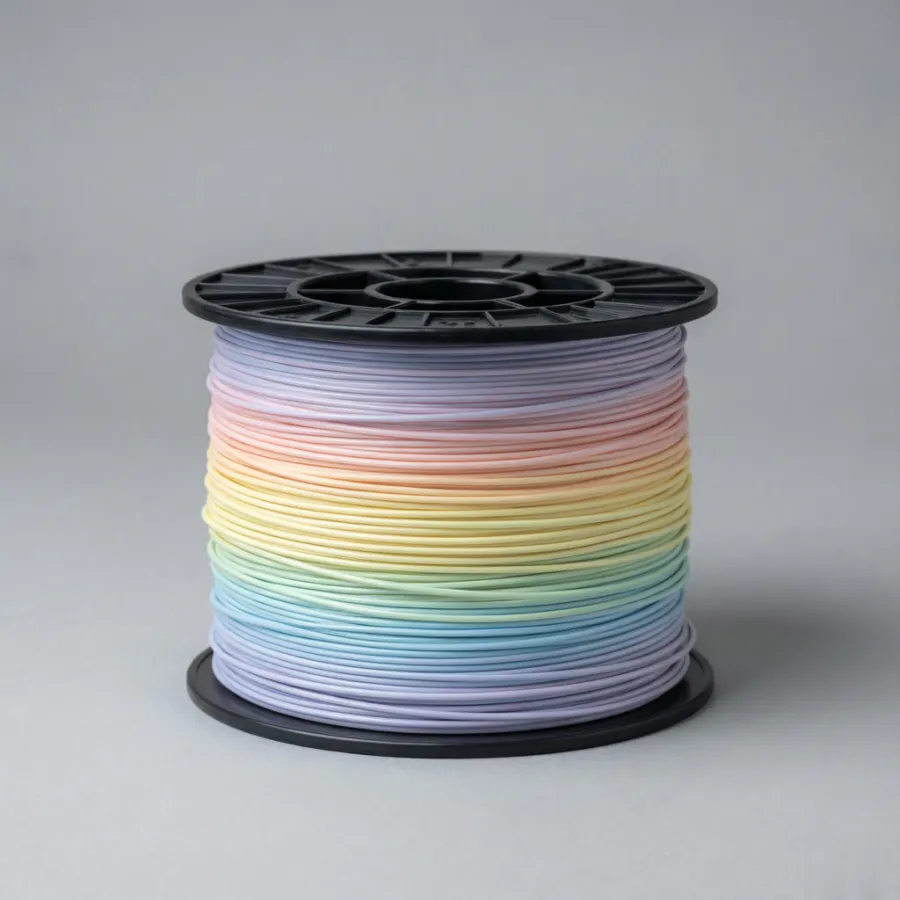
Our matte range runs two series. Matte Basic delivers the core proposition: a stone-like, low-reflection finish in solid colors, built for durable décor, display, and architecture-adjacent SKUs where layer-line invisibility is the product. Matte Rainbow adds smooth color transitions to the matte surface, the gradient moving through a soft, glare-free finish, built for gift, décor, and visual-differentiation lines where the color story matters as much as the finish story.
Together they pair naturally with the silk family in a channel’s premium tier: silk for the products that should gleam, matte for the products that should look ceramic or stone, and the silk guide covers the gloss side of that split. A channel running both finishes covers the two dominant surface aesthetics without leaving the PLA workflow.
Matte and the Post-Processing Math
Worth stating plainly, because it’s the finish’s hidden price advantage: matte eliminates post-processing. A glossy part with visible layer lines needs a sanding-and-priming pass before it looks finished, and that labor accounts for a large share of the finishing cost. A matte part with the same layer lines looks finished as-printed. For channels that sell display and décor objects, matte’s price is largely the sanding hours it removes, and the saving repeats on every part.
How the Finish Gets Into the Material
Matte is not a coating. The finish is engineered into the filament formulation itself, which is why it survives printing and handling, where a surface treatment would wear. The formulator balances the base resin with additives that control how the extruded surface settles as it cools — smooth enough to print cleanly, rough enough at the microscopic level to scatter light. Getting that balance wrong shows up immediately: too little and the part trends glossy with visible layers; too much and the surface turns chalky and marks easily. The difference between a good matte and a bad one is not visible on the spool, which is why the sample print under real lighting serves as the acceptance test.
This formulation-borne finish also means matte behaves consistently across part geometries in a way post-processed surfaces don’t. A sanded part has sanded patches and unsanded corners; a vapor-smoothed part has pooled and thin regions. A matte print is matte everywhere the nozzle has been — the same finish on flat faces, curves, and top surfaces — and that uniformity is what makes it photograph as a single, coherent object.
Finish Consistency Across Batches
The quiet risk in any finish program is drift, and matte has its own version of it. The degree of matte, meaning how much light the surface scatters, depends on the formulation, and a subtly different batch can read warmer or less uniformly frosted than the batch that sold you. Finish drift becomes visible when a customer holds two orders side by side, and a single-spool inspection cannot reach that comparison.
The instruments are the same ones that govern color consistency: retained physical standards, reorder validation against the approved reference (never memory), and a supplier whose color program runs on physical samples, using screens for direction only. Our own discipline handles matte like any series, with physical sample approvals first and reorders compared against the retained standard, and that’s the right bar for any supplier a finish program depends on.
Sourcing Matte PLA
Verification of a finish claim is the simplest verification in filament: print the sample, photograph it under the light your customers will see, compare against the reference that sold you. Two independent production batches, judged against written pass/fail criteria on finish and color, settle the question before volume commits. The qualification path and the spools behind it sit on the PLA filament manufacturer page. More about FilaSource is on the homepage.
Frequently Asked Questions
Does matte PLA hide layer lines?
Visually, yes: that’s the finish’s core property. Micro-roughness scatters light from every layer ridge at once, fading the visual signature of the layers. The geometry is unchanged; only the visibility of the layers changes.
Is matte PLA different from regular PLA in strength?
The finish lives in the formulation’s surface behavior, and the material underneath stays in the PLA family’s range. Choose matte for appearance; the base material handles function.
Does matte PLA need special print settings?
PLA-typical settings, no enclosure. The tuning that pays is cosmetic: matte surfaces show over-extrusion and stringing more honestly than gloss, so clean retraction and flow settings repay the tuning time.
Why choose matte over silk?
They answer opposite aesthetics. Silk reflects light for parts that should gleam; matte scatters it for parts that should look ceramic or stone. Channels running both cover the two dominant surface looks without leaving the PLA workflow.
How do I verify a matte supplier’s consistency?
Print samples from two independent batches, photograph both under customer lighting, and compare against the approved reference. Finish drift shows in photos before it shows on the bench.