A customer once reported it with perfect clarity: “The spool tangled halfway through a long print.” The report could have gone two ways: an argument about whose fault it was, or an investigation with four questions in it. We asked whether the packaging had arrived intact, whether the spool end had come loose at some point, what kind of spool holder was in use, and where in the spool the knot had appeared. The answers matter more than the accusation, because a tangle has several possible parents and only one of them is the factory.
Tangled filament is one of the most common failure reports in 3D printing and one of the most misattributed. This guide covers why spools tangle, the four places tangles are born, how to rescue a print in progress, prevention on your side of the shelf, and what a buyer can ask a supplier to prove about winding quality. One thing you won’t find here is a promise that our spools never tangle, because no honest manufacturer makes that promise, and the reasons why are the reasons this guide is worth reading.
Why Filament Tangles at All
The mechanics are unfussy. Filament reaches your printer as hundreds of meters of springy plastic wound in layers on a spool, and the whole arrangement depends on two conditions: each layer lying at a slight angle to the one beneath it, and the spool end staying fixed when not in use. Break either condition and a loop of filament can pass over a crossing loop; the next pull tightens the crossing into a knot, and the printer feels it as a sudden drag, a grind in the feed gears, or a snapped filament during an unattended run.
What surprises people is how little force it takes. A single loose loop, bounced by a spool holder that wobbles, can walk itself under a neighbor loop across a few hundred rotations. The spool doesn’t need to be dropped or mishandled in any way a normal person would notice. That’s also why tangles so often appear “halfway through” — the crossing may have existed since the outer wraps were removed, waiting for enough spool rotation to travel into the pull path.
The Four Places a Tangle Is Born
Sorting tangles by origin is the useful part, because each origin has a different fix.
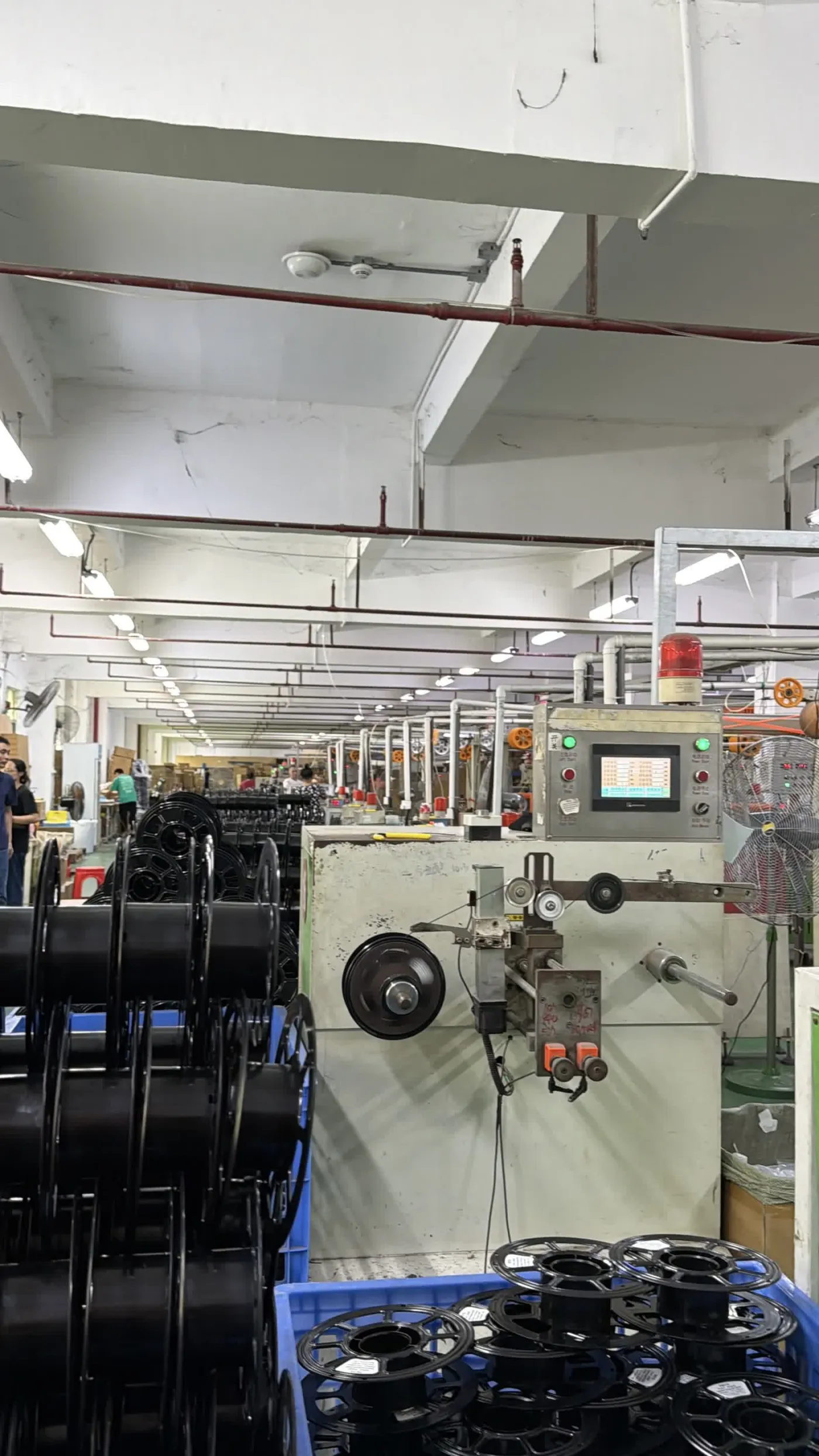
At the factory. A winding fault, layers crossed during spooling or tension uneven across the wind, is born on the production line. These are rare on a maintained line with an operator watching the first article, but they exist, and when they do they tend to cluster: a bad wind tangles early in the spool’s life. This is the origin a buyer can do something about contractually, and the next sections cover what to ask.
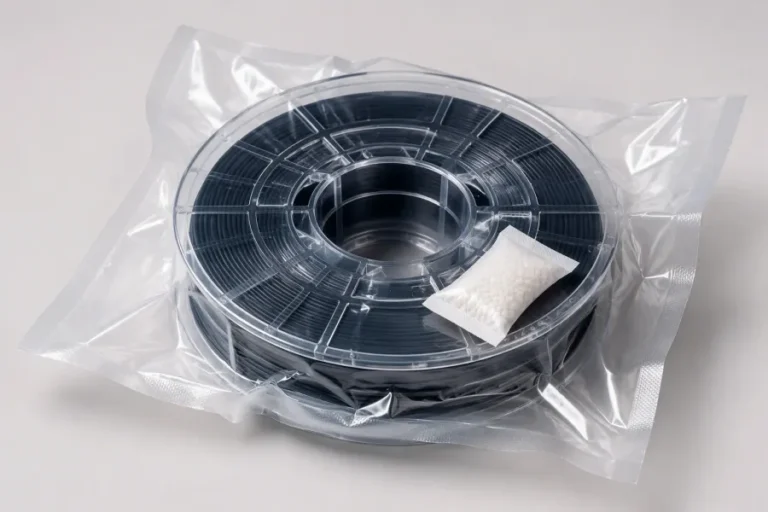
In transit. A spool end that comes loose in a box rides through kilometers of vibration that let the outer wraps relax and shift. This is why end fixing is packaging logic as much as tidiness: a taped or clipped end keeps the outer layer under control until the customer breaks it deliberately.
The transit origin deserves the physics version, because it explains the packaging standard. A carton in motion subjects its contents to repeated low-level shocks: road vibration, container handling, the drop nobody witnesses. A spool free to rotate even slightly inside its box will let the outer wraps creep across every one of those shocks, and a loose end multiplies the creep. Immobilization is therefore not about padding; it is about denying the spool the freedom to move at all, which is why individual boxing with the spool seated firm outperforms a padded but mobile arrangement.
On your shelf. A spool used once, returned to the shelf with its end loose, is a spool mid-arrangement for a knot. Multi-spool storage where unwound spools lean and roll is worse; a box that lets spools touch gives adjacent loops a chance to marry.
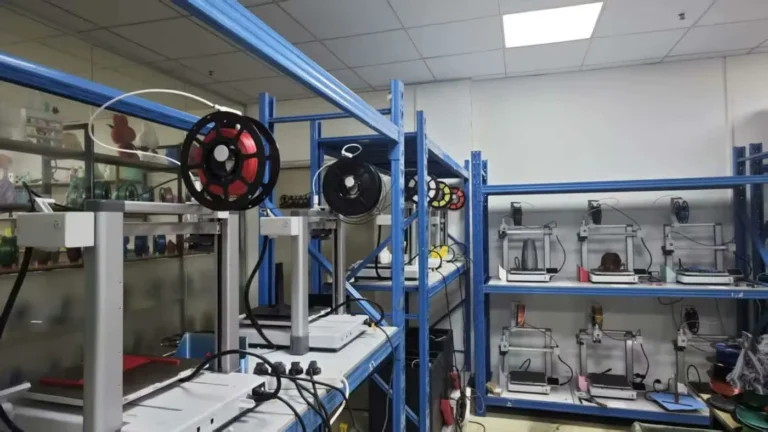
At the printer. The spool holder is the most underestimated culprit. A holder with friction, a misaligned axis, or a diameter that lets the spool wobble adds the motion that walks loose loops under their neighbors. Overbuilt holders are not vanity items; they are the last line of mechanical order between the spool and the extruder.
What to Do When One Strikes Mid-Print
The rescue sequence, for a knot that hasn’t yet snapped the filament.
- Pause immediately. Every additional rotation tightens the knot and stresses the feed path.
- Cut behind the knot, spool-side, so the crossing can be unwound without dragging the extruder path around.
- Free the crossing by rotating the spool backward and lifting the loop; pulling the end only tightens it.
- Re-thread and resume. Most slicers recover from a filament pause cleanly; the part usually survives if the layer was still bonding when you caught it.
If the filament snapped first, the same sequence applies plus a fresh end, and the honest question afterward is where in the spool the crossing sat, because the answer tells you which of the four origins you are fighting.
Prevention on Your Side
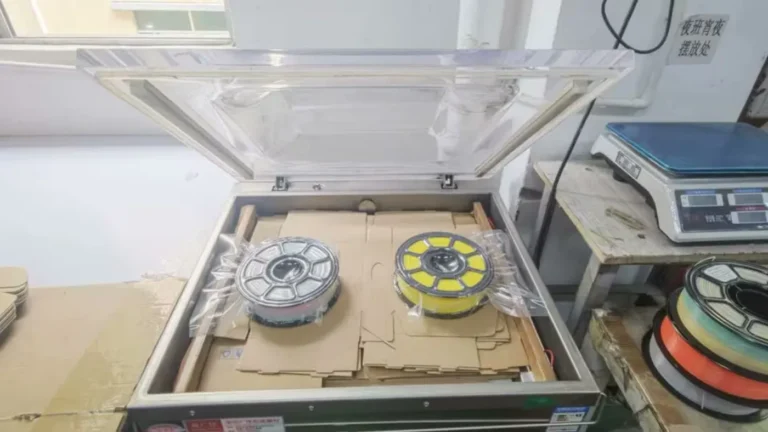
The shelf-side protocol is short and boring. Fix every end, every time, the moment a spool leaves the printer — a clip, a tape tab, or the spool’s own holder slot, every time. Store spools individually, standing or seated so they can’t roll, in the same sealed bags that keep moisture out, with the drying and storage guide covering the bag-and-desiccant half of that habit. And give the spool holder the same engineering respect as the printer it feeds. The checklist is short: friction low enough that a fingertip spin coasts, axis aligned to the feed path so the filament unwinds without lateral scrubbing, width matched to the spool so there’s no side-to-side wander, and a retainer so a spool can’t walk off mid-run. Holders fail quietly. A holder that added drag six months ago has been quietly re-tensioning your extruder path ever since. On a farm, the holder discipline pays at scale, and so does the bookkeeping: one escape per hundred spools is a weekly incident at fleet size, and a tangle log recording spool, batch, crossing position, and holder converts those incidents into a pattern. When the pattern points at one holder design or one arrival batch, the fix targets the actual origin and stops blame from scattering across suppliers and staff.
What a Buyer Should Ask a Supplier
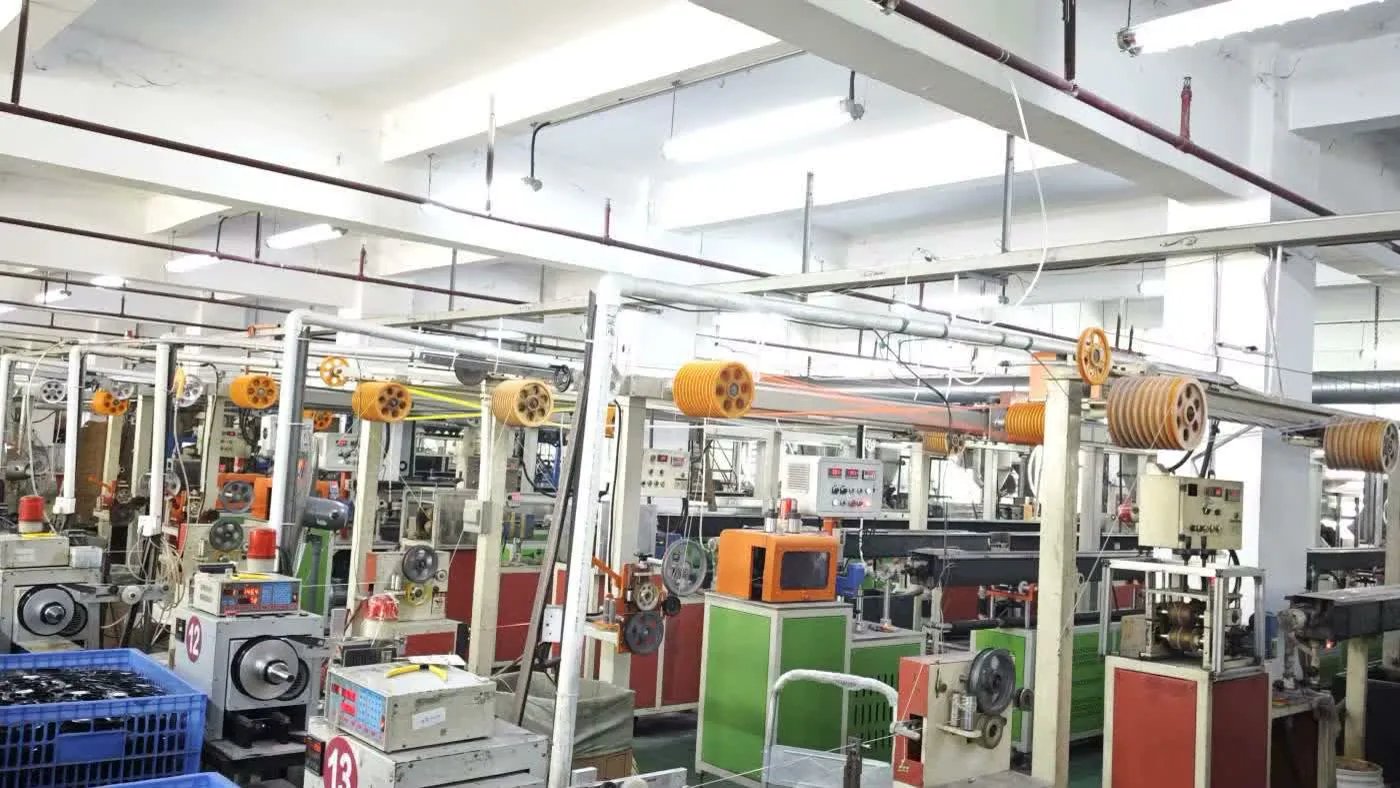
Here is the part the forum threads can’t give you, because they stop at the rescue. A supplier’s winding quality is auditable, in the same way diameter is auditable, through records rather than promises:
- Winding procedure. Is there one, in writing, covering tension, traverse behavior, and layer pattern, or is winding whatever the machine happens to be set to today?
- First-article check at spooling. Does someone confirm the start of each run against the winding spec, the same discipline we describe for changeovers on the extrusion line?
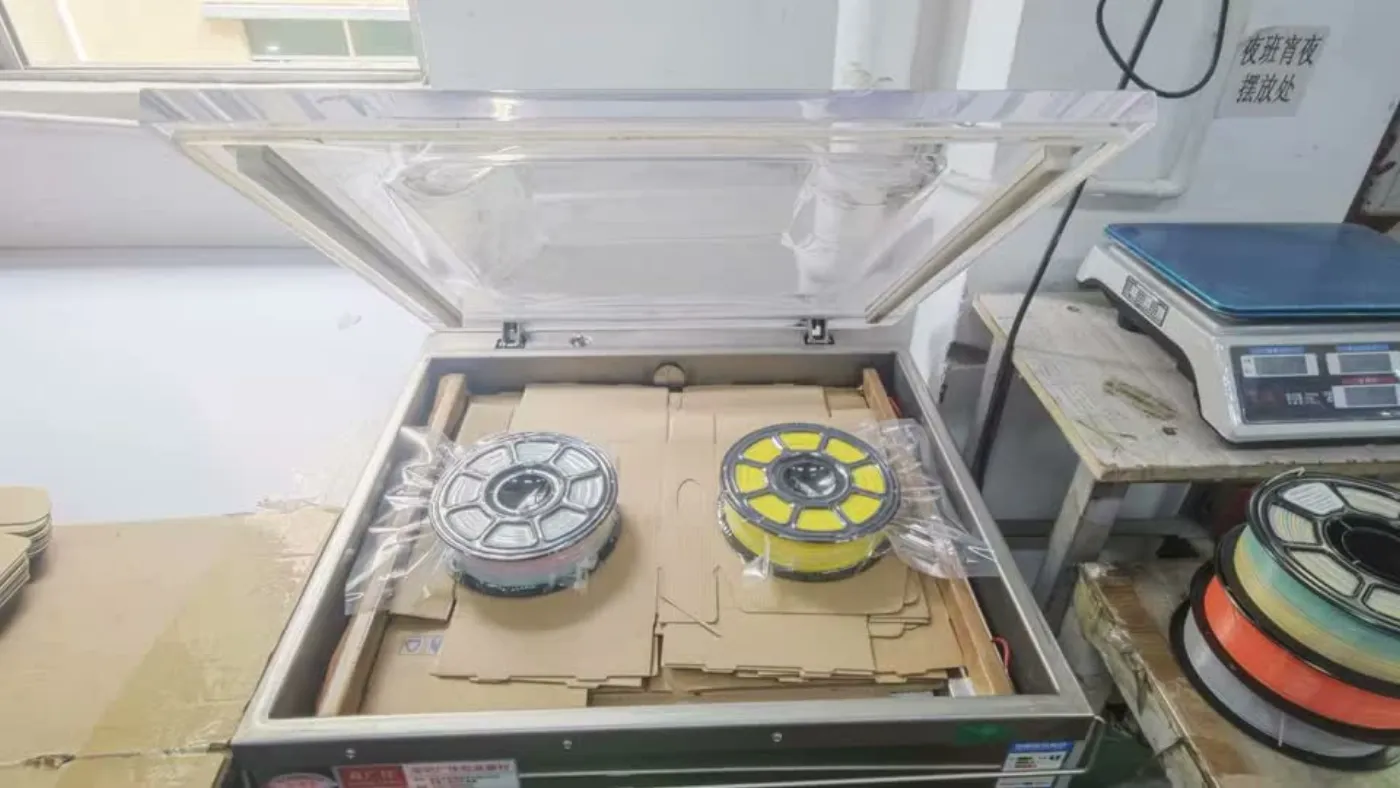
- End fixing standard. How is the spool end secured for shipping, and does that standard appear in the finished-goods inspection record?
- Transit protection. Does the packaging immobilize the spool, or give it a box to bounce in?
- The complaint file. When a tangle is reported, does the supplier ask for the batch, the crossing’s spool position, and the packaging photos, or just send a replacement and hope?
Between the audit questions and the complaint file sits the trial order, which is where winding claims meet reality. A mixed-SKU trial in standard packaging, printed across a weekend of long unattended runs, exercises the exact failure mode this article describes — and does it on spools from two independent batches, so a one-off winding slip can’t hide inside a lucky single run. The trial doesn’t need to be large; it needs to be long enough for the spool’s middle third, where transit-born crossings wait, to pass through the feed path.
That last question is the tell. A supplier whose response to a tangle report is a short list of diagnostic questions is a supplier whose quality system is working. The four questions in this article’s opening are the same ones our own team asks, in the same order, because the answers route each fix to its origin. A supplier who leads with a refund and no questions has decided the tangle isn’t worth understanding, and the next batch will tell you so.
And the honest boundary, stated plainly: consistent winding is a process outcome, built on tension, traverse, first-article checks, and end fixing, and any supplier claiming a spool can never tangle is claiming something no process can deliver. The right standard is “winding managed like every other spec, with records on request.” When you’re qualifying filament supply, that standard and the spools behind it sit on the PLA filament manufacturer page. More about FilaSource is on the homepage.
Frequently Asked Questions
Why does filament tangle mid-print?
Because a crossing formed somewhere between the winder and your extruder: a loose loop passed over a neighbor and tightened by spool rotation. The crossing often exists long before the pull reaches it, which is why tangles appear “suddenly” partway into a spool.
Is a tangle always the manufacturer’s fault?
No, and pinning it without evidence helps nobody. Factory winding faults exist, but loose ends in transit, shelf handling, and wobbly spool holders all produce identical symptoms. The four-question diagnosis, covering packaging, end condition, holder, and crossing position, routes the fix to the right origin.
How do I fix a tangled spool without wasting it?
Pause, cut on the spool side of the knot, rotate the spool backward to free the crossing, then re-thread and resume. Most of the spool survives; the wasted length is usually just the crossing itself.
Do tangles mean bad filament quality?
Not the material quality; winding is a separate discipline from chemistry. A spool can be perfectly dry, on-diameter, and beautifully colored, and still carry a bad wind. Judge winding by the supplier’s procedure and records, and by nothing else on the rescue day.
Are some spool types more tangle-prone than others?
Physically, yes: wider, heavier spools store more energy in their outer wraps, and any inherited looseness has more mass to work with. But the differences between spool formats are small next to the differences between handling disciplines. A standard spool with a fixed end and a seated holder outperforms any premium format with a loose end on a wobbly peg, every time.
What should I check when filament arrives?
Three winding-relevant items in the arrival check: the spool end still secured, the outer wraps tight and orderly, and packaging that actually immobilized the spool. Any of the three failing is worth a photo to the supplier before the spool goes into service.