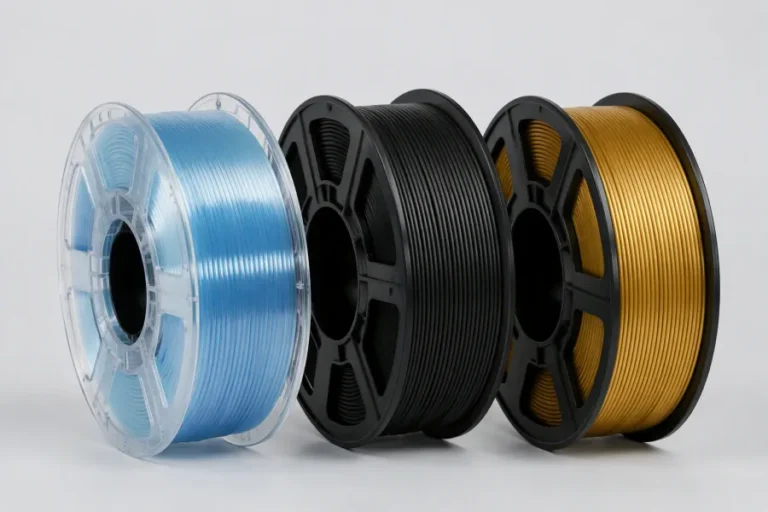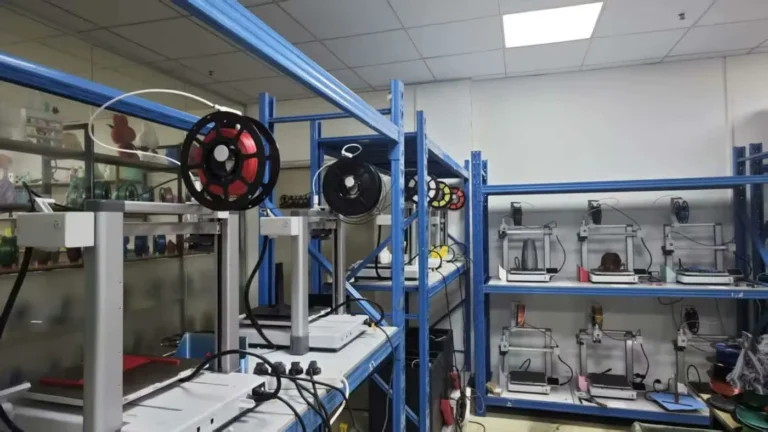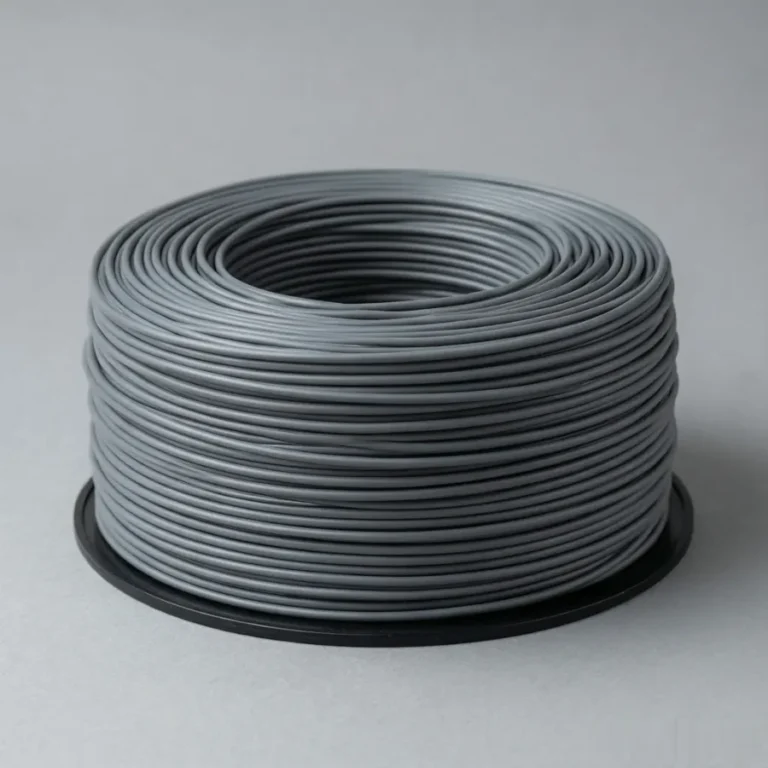
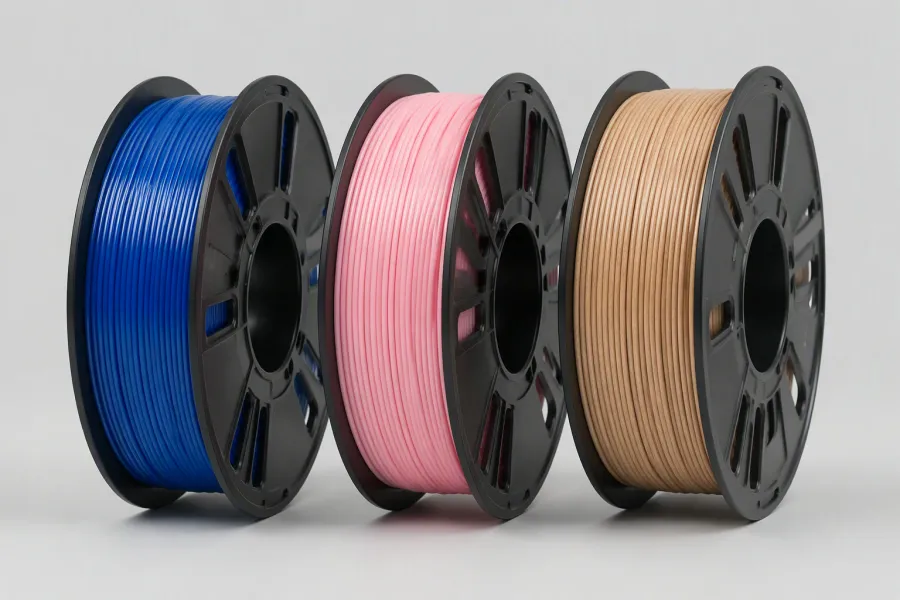
Plain PLA is the easy one in the filament family: little warping, sharp detail, a friendly surface. Carbon fiber changes the bargain. PLA CF filament keeps PLA’s easy processing and adds the stiffness and matte finish that carbon gives any polymer it’s blended into. For buyers sourcing functional parts, jigs, housings and prototypes, it fills a real gap between decorative PLA and engineering materials.
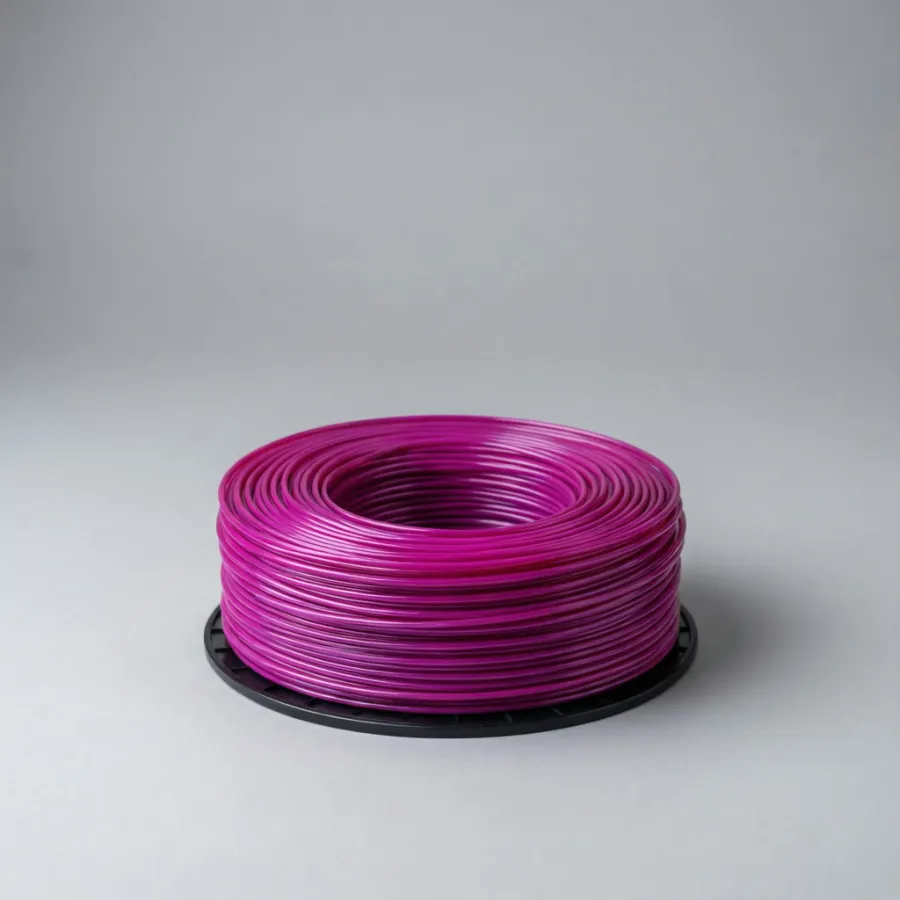
What Carbon Does to PLA
Short carbon fiber segments make PLA stiffer and lighter, which is why CF-PLA turns up in drone frames, brackets, tooling plates and enclosures that plain PLA would flex through. The surface comes out matte and technical, with layer lines much harder to see than on glossy PLA. That’s the same optical effect that makes matte finishes useful, here arriving as a side effect of the fiber. Warping falls too, so large flat parts sit better on the plate.
What you give up is toughness. Stiff materials forgive less, so reinforced PLA bends less before it fails, and impact-heavy applications may be better off with unfilled PLA or another family. Carbon pushes PLA up the stiffness scale and down the flexibility scale at the same time. Whether that’s the right trade depends on the part.
The Nozzle Consequence
Carbon fiber is abrasive, and PLA-CF is carbon-filled, so brass nozzles wear against it noticeably faster. The aperture widens, extrusion drifts, and print quality fades long before anyone suspects the nozzle. Hardened steel is the standard recommendation for carbon-filled grades. Do the swap once, up front: budget the nozzle, fit it before the first spool, and keep that variable out of your material evaluation.
If CF-PLA is the first filled material your machines have run, treat the rollout as a small project: one machine, one profile, a first-article print, then deployment. The PETG-CF qualification guide covers the mechanics in detail, including nozzle economics that apply to PLA-CF too.
What Can Be Stated, and What Can’t
Here’s where the specifications stop. PLA-CF is suppliable, and the details of each grade (fiber content, processing temperatures, spool formats) are confirmed per project, because they belong to the formulation being run and not to the material family. Plain PLA’s window of around 200–230 °C at the nozzle and 45–65 °C on the bed doesn’t automatically describe the filled grade, so you validate against the supplier’s settings sheet for that specific formulation. What holds across our 1.75 mm grades is diameter held to ±0.02 mm with in-line monitoring during production.
Read any CF-PLA specification with one question in mind. Does the settings sheet state the fiber content and the validated window for that exact formulation, or is one datasheet being stretched across a whole family? It’s a quick question, and it heads off the most common letdown with filled materials.
Where PLA-CF Sits in a Range
On a working material map, CF-PLA takes the stiffness slot in the PLA family. Beneath it sit plain PLA for looks and general printing, PLA+ for extra toughness, and matte finishes where surface counts. The PLA explainer and the matte finish guide cover those neighbors. Above it come PETG and the reinforced PETG grades, where chemical resistance or higher temperature tolerance enter the requirements. Parts that need stiffness in a dry, indoor environment are CF-PLA territory. Parts that face heat, chemicals or sustained load belong further up.
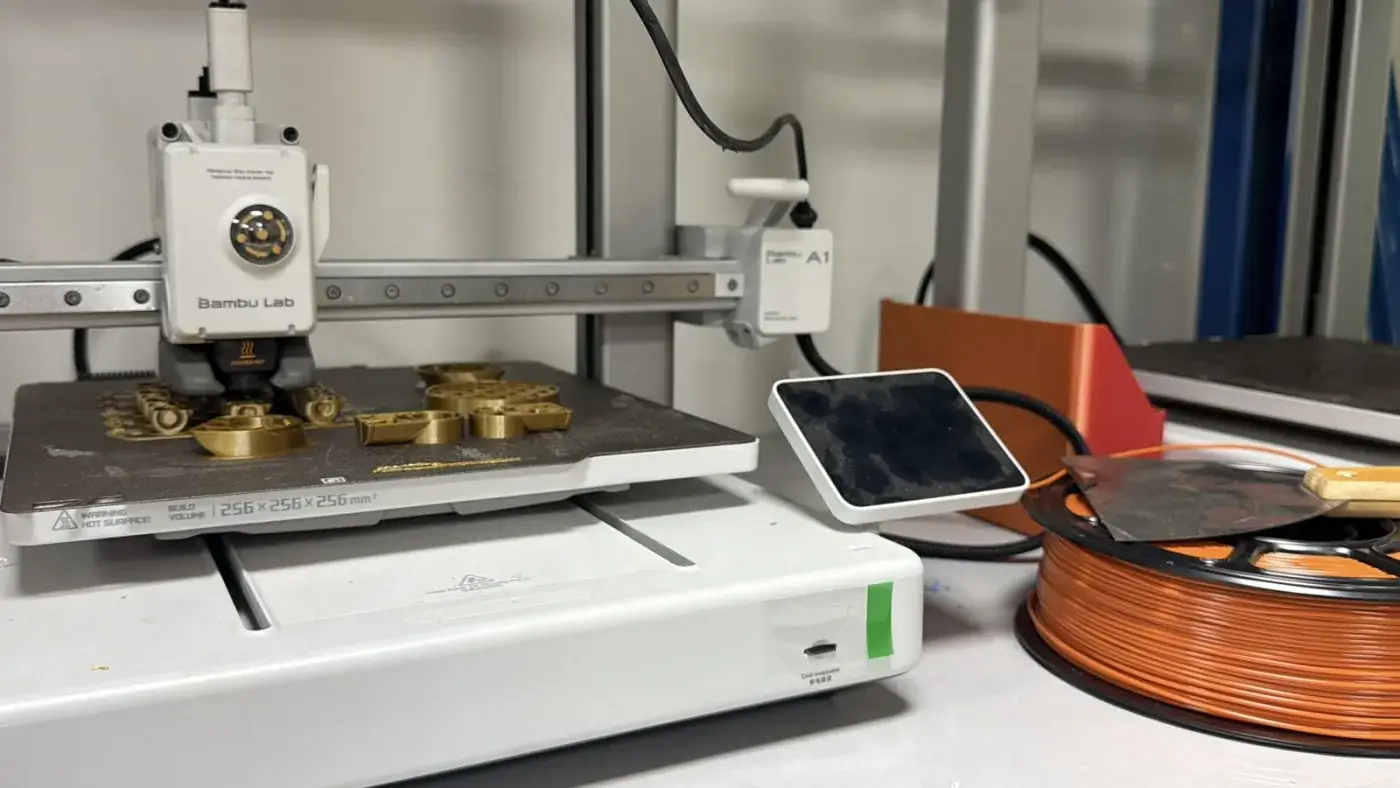
Verification Before Volume
On moisture: plain PLA is more forgiving than PETG, and carbon fiber doesn’t change that chemistry. Filled grades still do better with dry storage and sealed handling, though. Surface defects show early on a matte finish, and the drying parameters for a specific formulation belong in your settings conversation with the supplier. The habit costs nothing and takes one variable out of your evaluation.
The qualification steps match any other grade, with a stiffness test doing the CF-specific work. Print the same test geometry from two independent production batches and compare rigidity, surface texture and dimensional behavior; consistent dispersion shows as uniform finish and predictable stiffness in both. Check each batch’s diameter log against the ±0.02 mm specification, and validate the settings sheet on your own machine before you roll out further. A supplier who sends the log, the settings sheet and a straight answer on fiber content is running a process. One who offers none of the three is leaning on the word “carbon.”
PLA-CF projects run through the PLA filament manufacturer relationship, where formulation specifics are confirmed per project. More about FilaSource is on the homepage.
Frequently Asked Questions
Is PLA-CF stronger than PLA?
Stiffer and lighter, yes; that’s what the carbon adds. Reinforcement trades flexibility for rigidity, though, so impact-heavy parts may do better in plain PLA or PLA+. Judge by the application, not the label.
Does PLA-CF need a hardened nozzle?
Yes. Carbon fiber is abrasive whatever polymer carries it, and brass nozzles wear faster against it. Hardened steel is the standard recommendation, and it belongs in the budget before the first spool.
What temperature does PLA-CF print at?
That depends on the specific formulation, not the family, so it’s confirmed per project through the settings sheet. Plain PLA’s 200–230 °C window doesn’t automatically carry over. Validate the supplier’s numbers on your own machine.
Why does PLA-CF look matte?
It’s the fiber. Carbon in the melt scatters light much as a matte additive does, so the surface prints low-gloss with faint layer lines. Many buyers end up wanting that on visible parts.
How do I check batch consistency in a CF grade?
Print the same part from two independent production batches and compare stiffness and surface texture, with the diameter logs beside you. Uniform results across both mean dispersion and diameter are being held.