
Filament for Print Farms · Repeat Supply
Filament for Print Farms — Repeat Supply with Lot Tracking
Measure filament by successful machine hours, not unit price alone. Validate selected material under your own settings, record the lot and test result, review sealed packing for storage, then use that baseline when planning repeat availability.
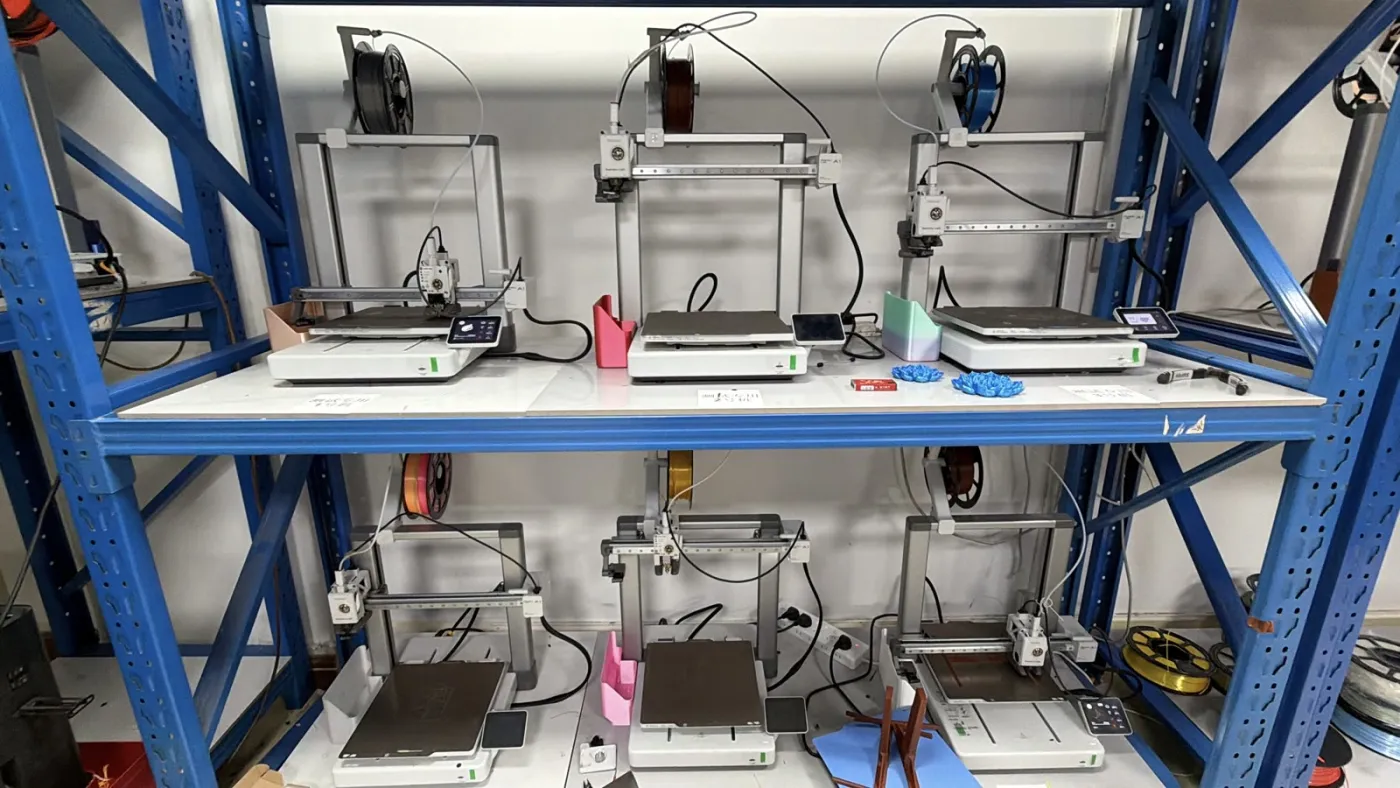
Photograph from the assessed manufacturing partner. Factory address is not published.
01 — The Failure Modes
Why Print Farms Lose Money on Filament
Three failure modes show up in farm operations again and again. Each one points at something your supplier should be doing — not just something you should tolerate.
Hours Lost Mid-Print
A filament that misbehaves halfway through a 20-hour job costs more than the spool — it costs machine time, operator attention and the delivery date. Long-print reliability is something to validate before volume, not discover after.
Re-tuning Across the Fleet
When a new batch prints differently from the last one, every machine in the farm inherits the problem. Written inspection records and lot identification at the manufacturer are what make variance trackable — and preventable in the next order.
Stock That Degrades on the Shelf
Farms hold inventory between jobs, and humidity does its work on open spools. Moisture protection that is packed in at the factory — vacuum bag plus desiccant — buys you storage time that packaging alone cannot.
02 — What We Provide
Filament Supply Built for Farm Operations
Four provisions, each mapped to a failure mode above — all grounded in recorded practice at the Intertek-assessed manufacturing partner.
Production Sample Validation Under Your Settings
Request a production sample and run it on your fleet with your real settings — your printers, nozzles and temperatures within the current label ranges. Decide on volume after the results, not before. Sample details are confirmed per project.
Lot Data for Troubleshooting
Lot identification traces finished or packaged product back to raw material, backed by written inspection records and written complaint procedures. When a batch question comes up, you hand us the lot info and the trail exists.
Sealed for Farm Storage
Every 1kg spool is vacuum-sealed with desiccant in a transparent bag and packed in an individual box before it reaches the carton. Keep bags sealed until the spool goes on a machine and your buffer stock stays print-ready.
Repeat Availability Planning
Plan reorders in quotation bands (10+ to 1,000+ spools) with a standard lead time of around 10–15 days, subject to material, color, quantity, packaging and schedule. Timing is confirmed at quotation so you can schedule farm capacity around it.
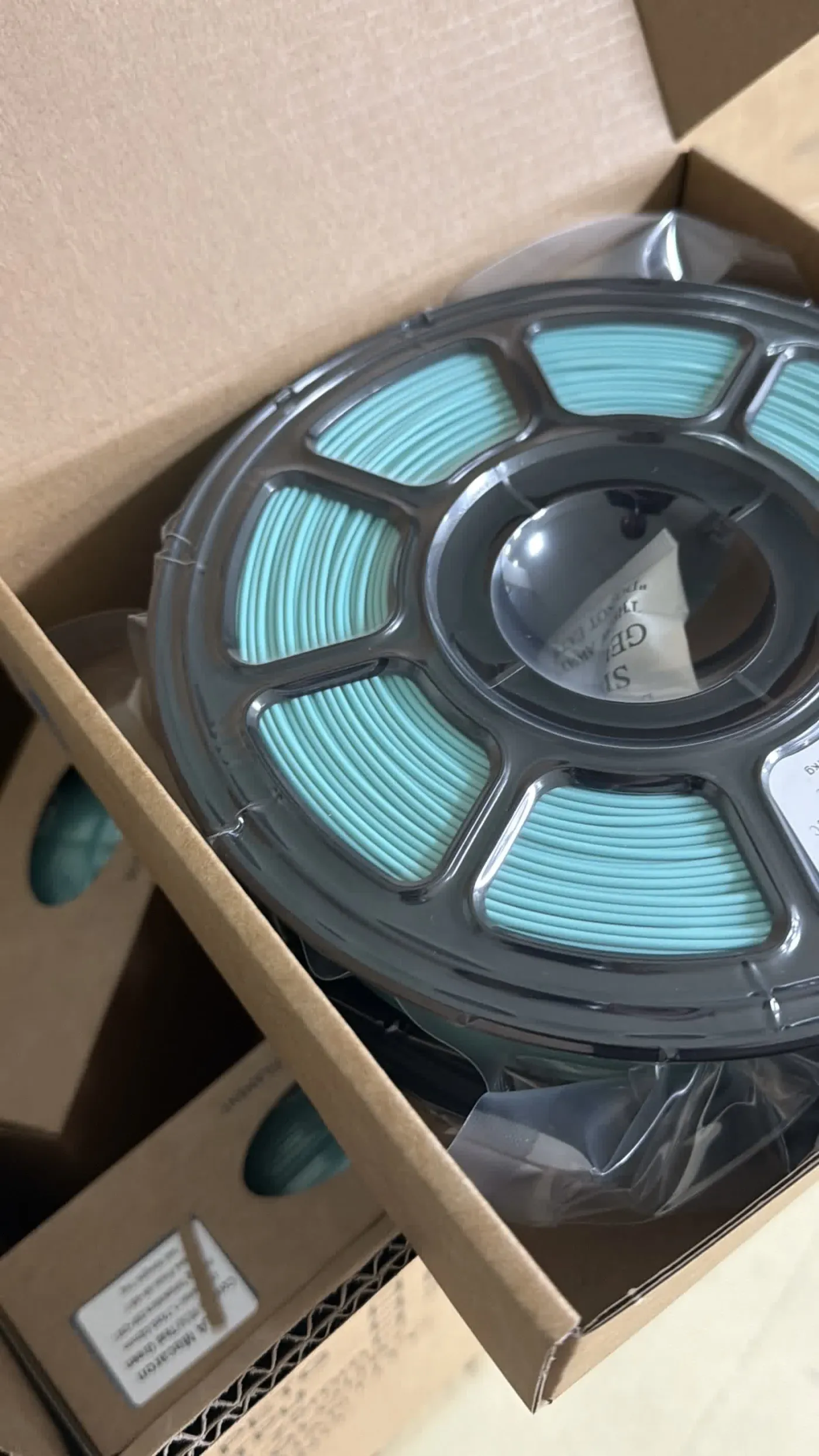
Photograph from the assessed manufacturing partner. Factory address is not published.
03 — Packing for Storage
Sealed Until It Reaches Your Machines
Production flow at the assessed partner runs raw material → pellet drying → extrusion → vacuum sealing → packing → finished goods. Vacuum sealing is a production step, not a shipping afterthought — which is why a spool that sat in your storage for a month prints like one that arrived yesterday, as long as the seal holds.
- Vacuum bag + desiccant per spool, sealed on the line.
- Individual box per spool: 21.1 × 19.8 × 6.3 cm.
- Export carton of 10 spools with published dimensions for freight planning.
04 — Validation Checklist
Production Sample Validation Checklist for Print Farms
Run the sample through this checklist on your own fleet. The record you build becomes the baseline for every repeat order.
| Validation step | What to record | Why it matters |
|---|---|---|
| Machine coverage | Print the sample on at least one printer of each model in your fleet. | Catches model-specific behavior before it appears at volume scale. |
| Temperature baseline | Nozzle and bed settings used, within current label ranges — PLA 200–230°C / 45–65°C, PETG 220–255°C / 50–80°C. | A shared baseline keeps settings comparable across machines and batches. |
| Long-run check | Complete at least one long print per material to the end. | Surfaces feeding and surface issues that only show up mid-print. |
| Lot record | Keep the lot information from the sample’s box or spool. | Lots trace back to raw material — the record you need if a batch question ever arises. |
| Storage practice | Leave vacuum bags sealed with desiccant until the spool is loaded. | Preserves the factory-sealed condition through your storage period. |
05 — Before You Ask